Middle East · ESMA
تقنية الأوزون للإمارات — المعالجة الصناعية وترشيح المياه
تستخدم صناعة المياه المعبأة والمشروبات في دولة الإمارات العربية المتحدة معالجة الأوزون على نطاق واسع كأسلوب معتمد من هيئة الغذاء والدواء الأمريكية (FDA) للتعقيم دون ترسيب مواد كيميائية. تستوفي معداتنا متطلبات معيار الخليج UAE.S GSO 149 الخاص بالمياه المعبأة وتتوافق مع اشتراطات بلدية دبي وهيئة الصحة لأبوظبي. يُوفر فريق التصدير لدينا دعماً كاملاً لإجراءات الجمارك عبر مرفأ جبل علي.
- CE Marking
- ISO 9001:2015
- ISO 12100
- RoHS
>99%
Drinking Water from Desalination
UAE Ministry of Climate Change and Environment (MOCCAE) · 2022
>$500 million annually
UAE Bottled Water Market Value
Euromonitor International — UAE Packaged Water Report · 2022
170+
Accredited Hospitals in UAE
UAE Ministry of Health and Prevention (MOHAP) · 2023
Challenges and Solutions for UAE
Key Challenges in UAE
Post-desalination water requires advanced ozone polishing to meet UAE.S GSO 149 taste and odour standards
ESMA food safety compliance requires validated chemical-free sanitation for bottled water and food manufacturing
Large hospital complexes face hospital-acquired infection (HAI) risks requiring UV-C air and water disinfection
Cooling tower systems in commercial towers risk Legionella outbreaks requiring chemical-free biocide treatment
How We Solve It
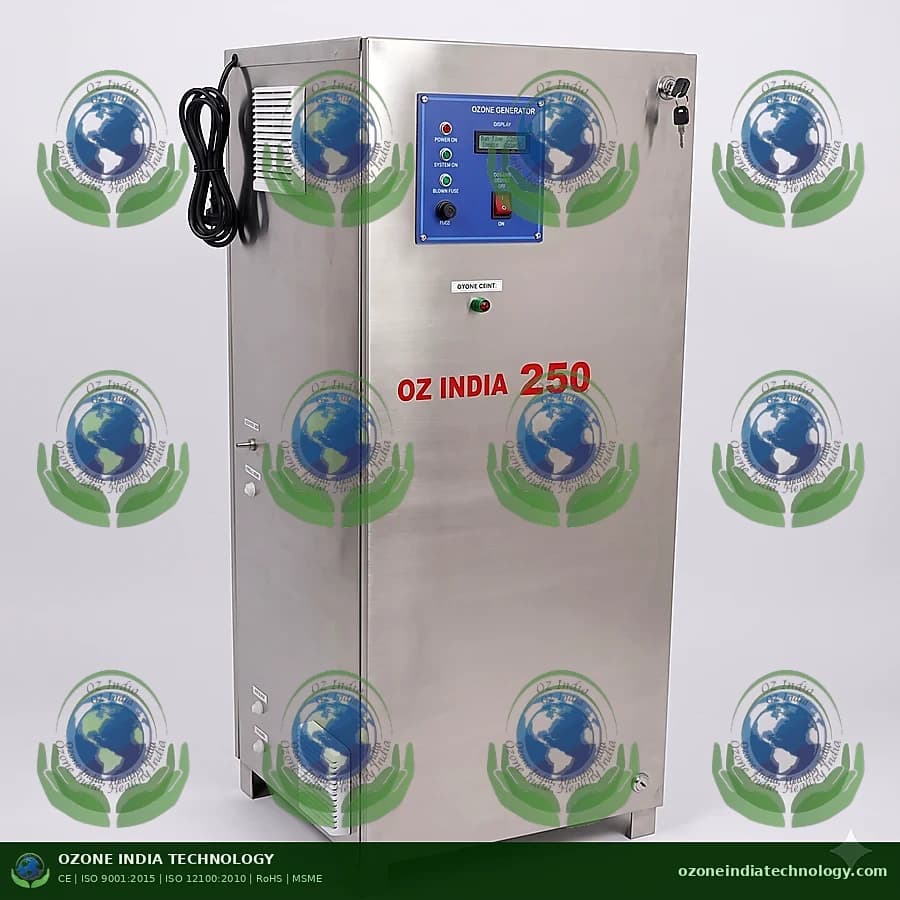
Ozone post-RO treatment eliminates taste, odour, and residual organics in desalinated water per UAE.S GSO 149
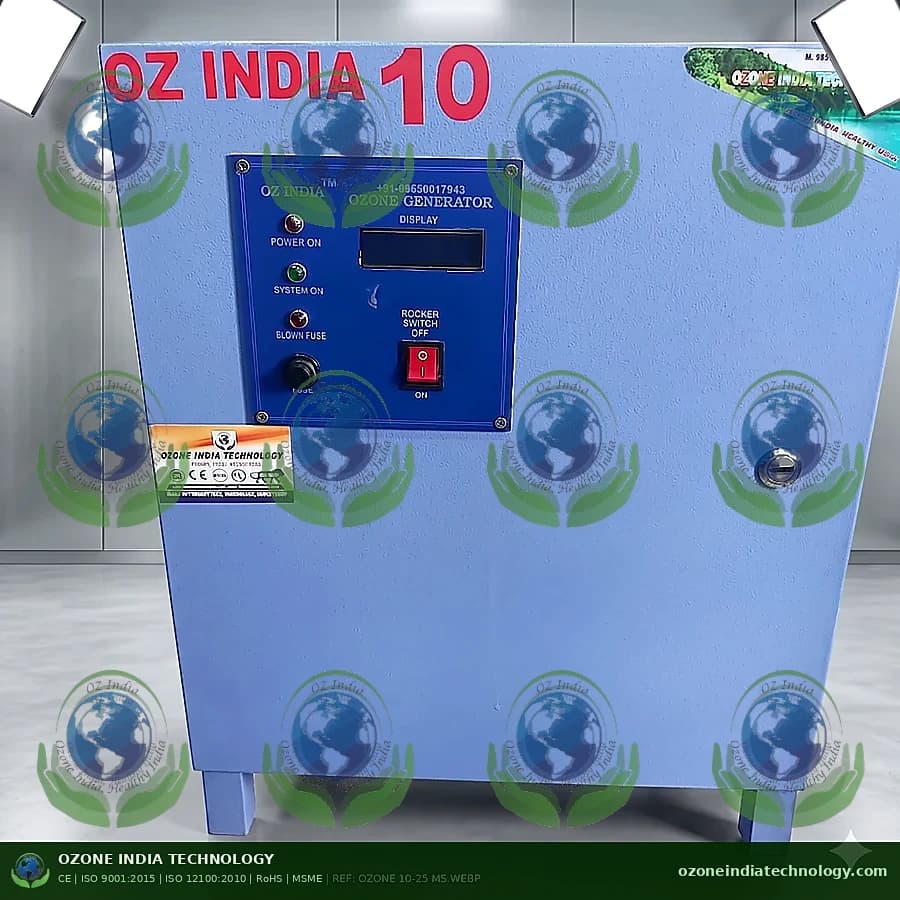
ESMA-compliant ozone food safety equipment for bottled water, food processing, and hospitality industries
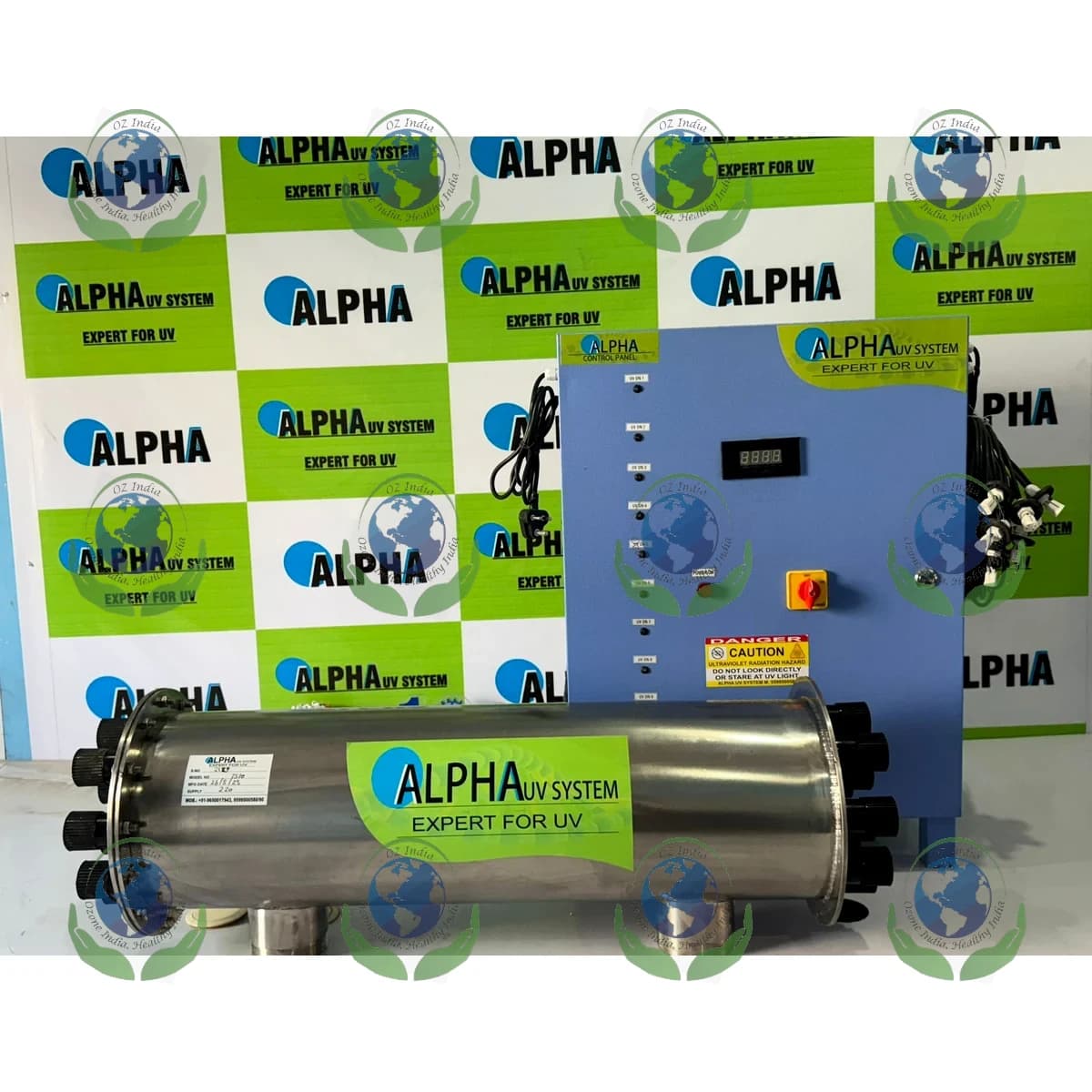
UV-C hospital disinfection systems for air and water reducing HAI risk in UAE healthcare facilities
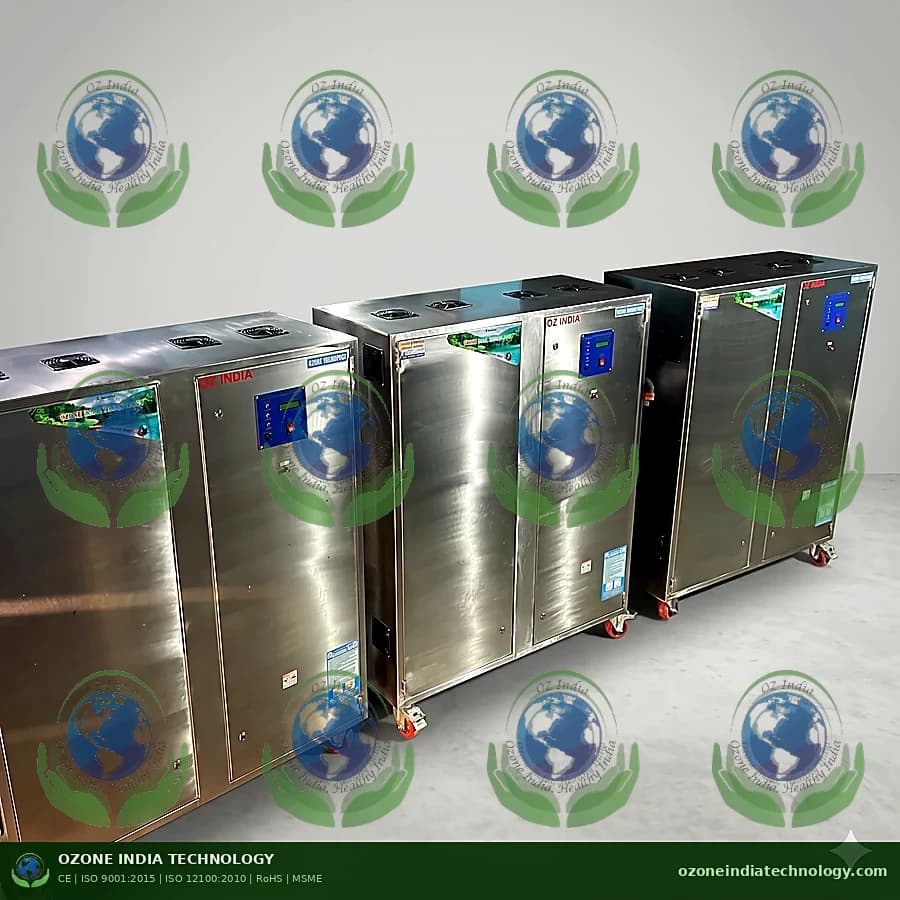
Ozone cooling tower treatment preventing Legionella without chemical biocides — meeting Dubai Municipality requirements
Recommended
Products for UAE
Regulatory Compliance & Why Us
ESMA — Emirates Authority for Standardisation and Metrology
CE & ISO 9001:2015 certified — full documentation for:
- UAE.S GSO 149
- ESMA food safety standards
- DM Dubai regulations
CE Marking
CE-2621A
ISO 9001:2015
UQ-270426AD1
ISO 12100
UQ-27426AD89
RoHS
QA-2704A2
Why Ozone India Technology for UAE?
CE + ISO 9001 certification matching GCC government and healthcare procurement requirements
Jebel Ali port logistics team ensures smooth UAE customs clearance and last-mile delivery
Factory-direct competitive pricing — significantly lower than European supplier alternatives
Dedicated Gulf export team with Arabic technical documentation support
Post-sale commissioning support and remote technical troubleshooting included
Industry Applications in UAE
Industry
Overview
UAE · Middle East
The United Arab Emirates operates one of the world's most water-secure public supply systems built almost entirely on desalination technology: over 99% of the country's drinking water is produced from seawater reverse osmosis and multi-stage flash desalination plants operated by DEWA in Dubai, ADWEA in Abu Dhabi, and SEWA in Sharjah (MOCCAE Water Security Strategy 2036). The nation's strategic groundwater reserves are classified as non-renewable and are reserved for emergency supply. Total desalinated water production capacity exceeded 2.5 billion imperial gallons per day as of 2022. Post-desalination remineralisation, distribution through extensive underground networks in Abu Dhabi and Dubai, and re-chlorination stations introduce contamination risks that ozone treatment — with its broad-spectrum efficacy and absence of halogenated by-products — is uniquely well-positioned to address at storage tank, point-of-entry, and point-of-use stages across the UAE's $500M+ bottled water sector and hospital networks.
The UAE's food and beverage industry is a significant economic driver, anchored by a vibrant retail and hospitality sector serving one of the world's highest concentrations of luxury hotels, food courts, and international dining establishments. The Dubai Food Safety Department (Dubai Municipality) and Abu Dhabi Agriculture and Food Safety Authority (ADAFSA) jointly enforce food safety regulations under Federal Law No. 10 of 2015 concerning food safety. UAE importers and local food processors supplying hotel chains and hypermarkets must comply with Gulf Cooperation Council (GCC) unified food safety standards administered through the Emirates Authority for Standardisation and Metrology (ESMA). Ozone is GRAS-listed (FDA 21 CFR § 173.368) and approved by the UAE Ministry of Economy as a disinfection agent for food contact surfaces, enabling its use without complex local regulatory approvals — a significant operational advantage in the UAE's fast-moving food retail environment.
The UAE's regulatory framework for water quality centres on UAE.S GSO 149 for bottled and packaged water, administered by ESMA, and Dubai Municipality's Technical Guideline TG-002 for food establishment water quality. The MOCCAE Water Security Strategy 2036 mandates adoption of advanced treatment technologies at infrastructure scale. The Abu Dhabi Quality and Conformity Council (QCC) requires CE marking for industrial equipment used in food and water contact applications. Ozone treatment in the UAE's bottled water sector is not merely advantageous — it is near-universal: peer-reviewed data published in Ozone: Science & Engineering confirm that over 85% of bottled water plants globally use ozone as the primary microbial barrier. UAE.S GSO 149 permits ozone as the sole disinfection method for packaged water provided residual ozone at the time of sealing does not exceed 0.3 mg/L — a target routinely achieved with modern controlled-dose ozone systems.
Ozone technology addresses a unique set of challenges in the UAE operating environment. In desalinated water distribution, post-chlorination at re-injection stations produces chloramine by-products in networks where ammonia from remineralisation chemicals is present — ozone replaces or supplements chlorine to maintain microbial safety without chloramine formation. The UAE's 170+ accredited hospitals and medical cities — Cleveland Clinic Abu Dhabi, Mediclinic, Saudi German Hospital Dubai — require sterile water of ultra-low bioburden for CSSD, haemodialysis preparation water, and endoscope washing. Ozone treatment at 0.5–2.0 mg/L achieves 4-log Mycobacterium and Pseudomonas elimination meeting European Pharmacopoeia 5.1.10 standards adopted by UAE healthcare regulators. In the hotel and food service sector, ozone CIP (clean-in-place) systems reduce chemical detergent consumption by 40–60% — a significant operational cost reduction for properties targeting LEED or Estidama sustainability certifications.
Indian CE-certified ozone manufacturers are exceptionally well-positioned in the UAE market for three structural reasons. First, Indian goods account for a substantial share of UAE non-oil imports, and the India–UAE Comprehensive Economic Partnership Agreement (CEPA), signed in 2022, reduced or eliminated import duties on a wide range of industrial equipment categories. Second, the UAE's large Indian expatriate community — over 3.5 million residents — includes procurement engineers and facility managers who have first-hand familiarity with Indian manufacturing quality standards, reducing the trust barrier that European manufacturers never encounter. Third, CE and ISO 9001:2015 certification from Indian manufacturers satisfies QCC and ESMA equipment approval requirements directly, enabling fast procurement cycles for hotel groups, food processors, and hospital engineering departments that operate on quarterly capex timelines in one of the world's most competitive built environments.
Sourced Data
UAE — Market Statistics
All figures sourced from WHO, FAO, World Bank, and national agencies.
- Drinking Water from Desalination
- >99%
- UAE Bottled Water Market Value
- >$500 million annually
- Accredited Hospitals in UAE
- 170+
- Global Bottled Water Plants Using Ozone
- >85%
- Indian Expatriate Population in UAE
- >3.5 million
- UAE Total Desalination Capacity
- >2.5 billion Imperial Gallons/Day
UAE Ministry of Climate Change and Environment (MOCCAE) · 2022
Euromonitor International — UAE Packaged Water Report · 2022
UAE Ministry of Health and Prevention (MOHAP) · 2023
Rice RG, Ozone: Science & Engineering · 1996
Indian Embassy Abu Dhabi — Community Statistics · 2022
DEWA Annual Statistical Report · 2022
Peer-Reviewed Evidence
Research & Scientific Basis
Published studies supporting ozone treatment in UAE's industrial context.
Ozone: A Powerful Oxidant for Potable Water Treatment
Rice RG · Ozone: Science & Engineering · 1996
Rice's comprehensive survey established that ozone at concentrations of 0.2–0.4 mg/L achieves complete elimination of Cryptosporidium oocysts and Giardia cysts in treated water — pathogens that are chlorine-resistant at practical disinfection doses. For the UAE's desalinated water supply, where post-distribution biofilm formation in extensive pipe networks can harbour chlorine-resistant organisms, ozone point-of-entry treatment provides a robust secondary barrier aligned with DEWA and ADWEA water quality assurance frameworks.
Ozonation of Drinking Water: Part I. Oxidation Kinetics and Product Formation
Von Gunten U · Water Research · 2003
Von Gunten established that ozone reacts with bromide — naturally present in desalinated seawater at concentrations of 50–200 μg/L after RO treatment — to form bromate, and that careful CT control below 0.5 mg·min/L limits bromate formation to below WHO and UAE.S GSO 149 guideline of 10 μg/L. This is the single most critical design parameter for UAE bottled water plant ozone systems, and modern PLC-controlled dose systems with continuous bromate monitoring directly implement Von Gunten's CT management protocol.
Microbial Applications of Ozone as a GRAS Antimicrobial Agent — A Review
Khadre MA, Yousef AE, Kim JG · Journal of Food Science · 2001
Khadre et al. confirmed that ozone at 1–2 mg/L applied to food contact surfaces for 60 seconds achieves 4–5 log reduction of Staphylococcus aureus, E. coli O157:H7, and Listeria — the primary pathogens of concern in UAE's high-volume hotel catering and food manufacturing sector. This performance profile satisfies Dubai Municipality TG-002 and ADAFSA audit requirements for food establishment hygiene, enabling UAE food businesses to replace chemical disinfectants with ozone CIP systems that leave zero chemical residues on food contact surfaces.
Parameter Compliance
ESMA Regulatory Parameters
How our certified systems perform against UAE's official limits.
| Parameter | ESMA Limit | Our System Output | Standard |
|---|---|---|---|
| Total Coliform (Packaged Water) | 0 CFU/250 mL | Non-detectable | UAE.S GSO 149 / ESMA |
| Residual Ozone at Sealing | ≤ 0.3 mg/L | 0.05–0.25 mg/L (PLC-controlled) | UAE.S GSO 149 |
| Bromate (Ozonated Bottled Water) | ≤ 10 μg/L | < 5 μg/L (CT-controlled) | UAE.S GSO 149 / WHO GDWQ 4th Ed. |
| Turbidity (Drinking Water) | ≤ 1 NTU | < 0.1 NTU | UAE.S 999 / DEWA Standard |
| Heterotrophic Plate Count (Packaged Water) | ≤ 100 CFU/mL | < 1 CFU/mL | UAE.S GSO 149 |
| Pseudomonas aeruginosa (Healthcare Water) | Non-detectable in 100 mL | Non-detectable (4-log kill at 0.5 mg/L) | European Pharmacopoeia 5.1.10 (adopted UAE MOH) |
Sector Breakdown
Industry Applications in UAE
Key sectors, production scale, and how ozone technology addresses each challenge.
| Sector | Scale / Value | Challenge | Our Solution |
|---|---|---|---|
| Bottled & Packaged Water | >$500M market | UAE.S GSO 149 zero-coliform compliance; bromate control from desalinated seawater source; consumer demand for chlorine-free products | PLC-controlled ozone generators 2–50 g/hr with continuous residual and bromate monitoring integrated with bottling line PLC |
| Hotel & Hospitality Food Safety (Dubai, Abu Dhabi) | UAE hospitality sector >$25B GDP contribution | Dubai Municipality TG-002 food establishment water standards; high-volume CIP frequency; LEED Estidama chemical reduction targets | Ozone CIP systems replacing chemical disinfectants; 40–60% reduction in detergent use; zero chemical residue on food contact surfaces |
| Healthcare & Hospital Sterile Water | 170+ accredited hospitals | Pseudomonas and Mycobacterium in haemodialysis prep water; CSSD water bioburden; Legionella in cooling circuits | Ozone treatment 0.5–2.0 mg/L achieving 4-log elimination meeting EU Pharmacopoeia 5.1.10 adopted by UAE MOH |
| Commercial Aquaculture & Fish Markets | ~$200M UAE seafood retail & food service | Pathogen control in live fish holding tanks; ambient temperature 40–45°C degrading chlorine efficacy | Ozone recirculation at 0.1–0.3 mg/L maintaining water quality in high-temperature ambient conditions where chlorine is unstable |
| Industrial Cooling Towers (Legionella Control) | Mandatory regulatory compliance | Legionella pneumophila in cooling circuits; UAE Public Health Authority guidelines; chemical biocide costs | Ozone injection at 0.1–0.2 mg/L into cooling water circuits achieving Legionella suppression below detectable levels |
| Food Manufacturing & Fresh Produce Washing | UAE food processing sector ~$10B | ADAFSA food safety audits; E. coli and Salmonella on imported produce; zero-chemical-residue export requirements | Ozone fresh produce wash systems at 1–3 mg/L achieving 3–5 log pathogen reduction with GRAS-compliant zero chemical residues |
Bottled & Packaged Water
>$500M market
UAE.S GSO 149 zero-coliform compliance; bromate control from desalinated seawater source; consumer demand for chlorine-free products
PLC-controlled ozone generators 2–50 g/hr with continuous residual and bromate monitoring integrated with bottling line PLC
Hotel & Hospitality Food Safety (Dubai, Abu Dhabi)
UAE hospitality sector >$25B GDP contribution
Dubai Municipality TG-002 food establishment water standards; high-volume CIP frequency; LEED Estidama chemical reduction targets
Ozone CIP systems replacing chemical disinfectants; 40–60% reduction in detergent use; zero chemical residue on food contact surfaces
Healthcare & Hospital Sterile Water
170+ accredited hospitals
Pseudomonas and Mycobacterium in haemodialysis prep water; CSSD water bioburden; Legionella in cooling circuits
Ozone treatment 0.5–2.0 mg/L achieving 4-log elimination meeting EU Pharmacopoeia 5.1.10 adopted by UAE MOH
Commercial Aquaculture & Fish Markets
~$200M UAE seafood retail & food service
Pathogen control in live fish holding tanks; ambient temperature 40–45°C degrading chlorine efficacy
Ozone recirculation at 0.1–0.3 mg/L maintaining water quality in high-temperature ambient conditions where chlorine is unstable
Industrial Cooling Towers (Legionella Control)
Mandatory regulatory compliance
Legionella pneumophila in cooling circuits; UAE Public Health Authority guidelines; chemical biocide costs
Ozone injection at 0.1–0.2 mg/L into cooling water circuits achieving Legionella suppression below detectable levels
Food Manufacturing & Fresh Produce Washing
UAE food processing sector ~$10B
ADAFSA food safety audits; E. coli and Salmonella on imported produce; zero-chemical-residue export requirements
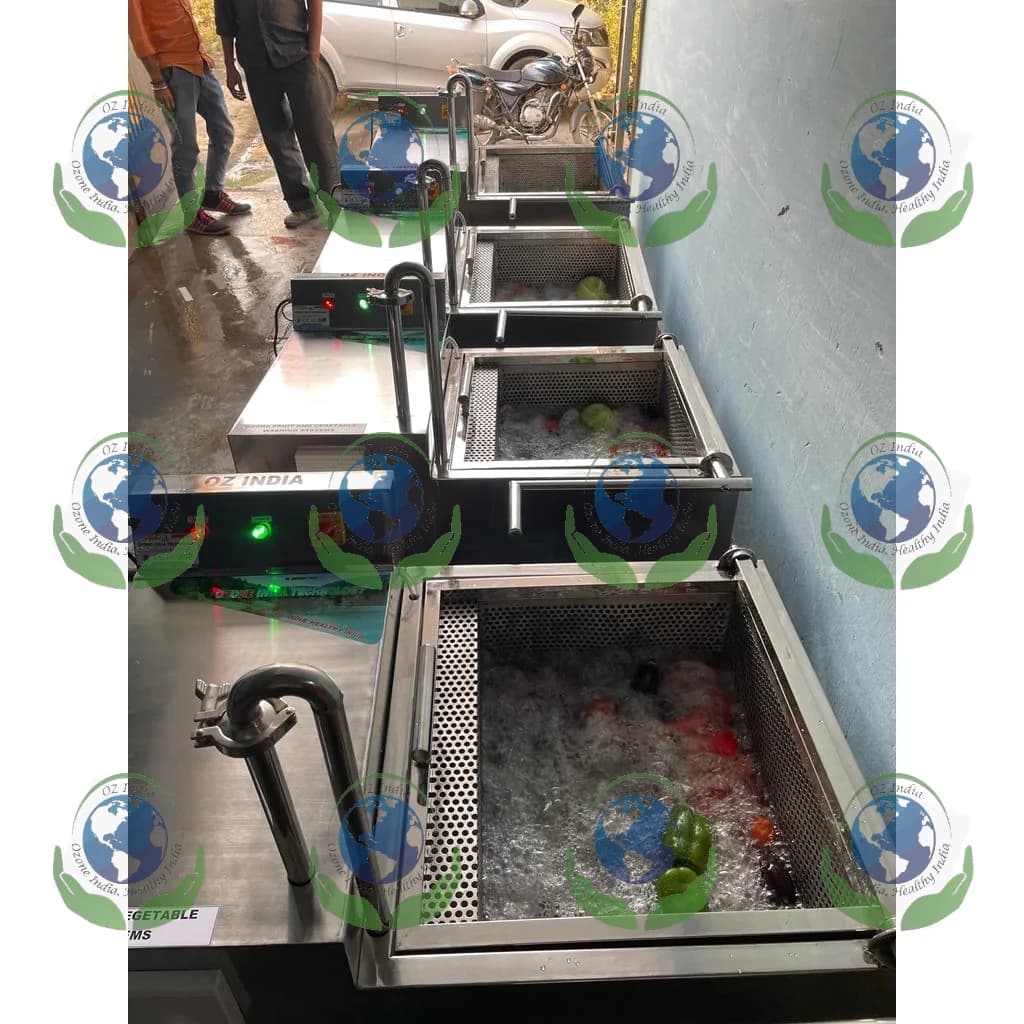
Ozone fresh produce wash systems at 1–3 mg/L achieving 3–5 log pathogen reduction with GRAS-compliant zero chemical residues
Ready to export to UAE
Deploy Ozone Technology in UAE
CE & ISO 9001:2015 certified. Full export documentation. Factory-direct from Greater Noida, India.