
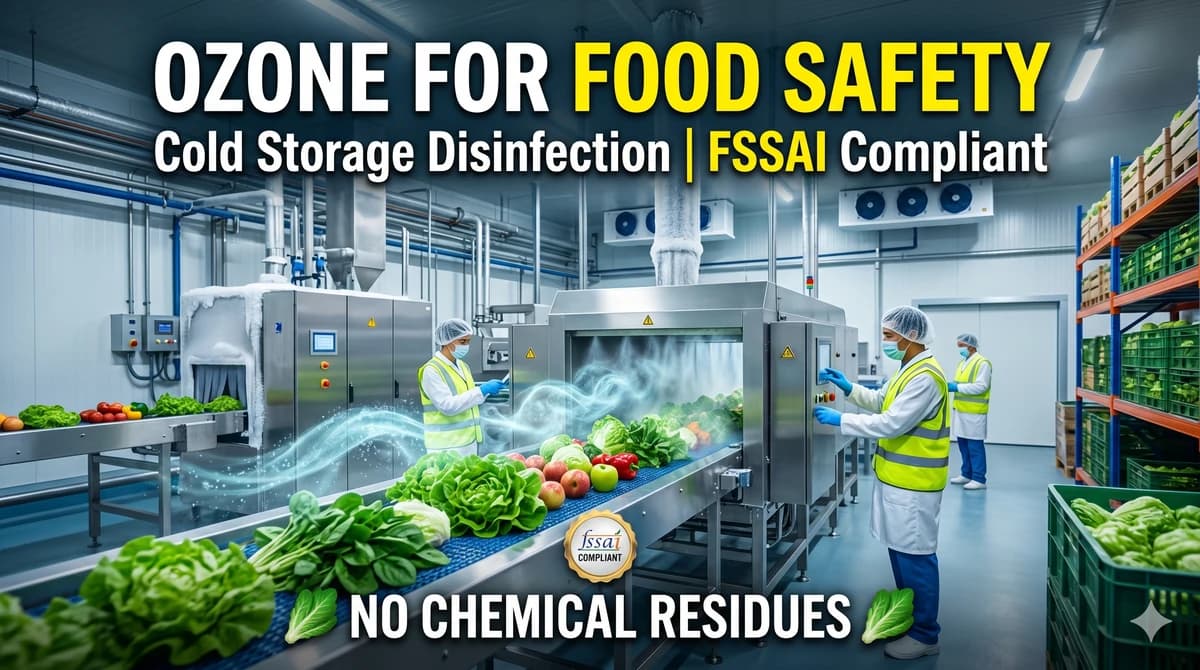
Ozone Generator in Food Processing and Safety
FSSAI-compliant ozone disinfection for food contact surfaces, CIP, cold storage, and vegetable washing
THE NEED
Why Food Processing?
FSSAI
GRAS status — ozone approved for food contact
99.999%
E. coli reduction with 1 ppm ozonated water
40%
shelf-life extension with ozone cold storage
Zero
chemical residue — ozone reverts to oxygen
₹8000 Cr
food waste in India annually — ozone reduces this
FDA GRAS
ozone approved for direct food contact since 2001
OVERVIEW
What is Food Processing?
Ozone for food processing is the most effective, residue-free antimicrobial intervention available to the modern food industry — and since FDA's landmark 21 CFR 173.368 final rule (Federal Register 66:33830–33831, 2001) granted GRAS (Generally Recognised As Safe) status to ozone as an antimicrobial agent for direct food contact, it has become a cornerstone technology in GMP/HACCP-compliant food safety systems globally. In India, where FSSAI's Food Safety and Standards (Food Products Standards and Food Additives) Regulations 2018 govern food processing plant hygiene and the FoSCoS (Food Safety Compliance System) requires documented CCP (Critical Control Point) verification records, ozone for food processing provides the critical control technology that Listeria, Salmonella, E. coli O157:H7, and Aspergillus contamination control plans demand. Kim, Yousef and Khadre (2003) established in their authoritative Advances in Food and Nutrition Research review that ozone inactivates bacteria at 10–100× lower concentrations than chlorine, with no halogenated disinfection byproducts — making ozone for food processing both more effective and inherently safer than the chlorinated wash water it replaces.
India's food processing sector — valued at USD 340 billion and employing 13 million workers — faces an existential export compliance challenge as EU, US, UK, and Gulf Cooperation Council markets tighten food safety import requirements. Maharashtra grape growers supplying EU markets under EU Regulation 852/2004 must demonstrate GHP (Good Hygiene Practice) compliance including pathogen-tested wash water; Kerala seafood exporters face USFDA's HACCP verification for Listeria monocytogenes control in RTE (Ready-to-Eat) products; Punjab food parks supplying Middle Eastern halal markets must demonstrate validated sanitation procedures for export certification. Ozone for food processing, as an internationally accepted antimicrobial agent (FDA 21 CFR 173.368, Codex Alimentarius CAC/RCP 53), provides the regulatory validation anchor for export market food safety compliance programmes — a factual reference that European and American food safety auditors recognise and accept.
Fresh produce washing is where ozone for food processing delivers the most immediate and measurable microbial safety improvement. Khadre, Yousef and Kim (2001) demonstrated in the Journal of Food Science that ozone at 0.5–5 mg/L in wash water achieves 3–6 log reduction of Escherichia coli O157:H7, Salmonella Typhimurium, and Listeria monocytogenes on fresh produce surfaces — outcomes that 200 ppm chlorinated water achieves only intermittently due to organic load depletion of free chlorine. Critically, ozone decomposes to oxygen with a half-life of 20–30 minutes in wash water — leaving absolutely no chemical residue on washed produce, eliminating the rinse step required after chlorinated washing, and reducing wash water consumption by 30–40% compared to chlorinated systems. For Maharashtra grape and pomegranate exporters, this residue-free profile is essential: EU Regulation (EC) No 396/2005 Maximum Residue Levels (MRLs) for pesticides and disinfectant residues on fresh produce are enforced at point of import, with rejection of entire consignments for violations.
CIP (Clean-in-Place) sanitisation is a critical application of ozone for food processing in beverage, dairy, brewery, and packaged food plants. Conventional CIP cycles use caustic soda (NaOH) for soil removal, followed by nitric acid for scale removal, and peracetic acid (PAA) or sodium hypochlorite for sanitisation — a 45–90 minute multi-chemical sequence generating corrosive waste that requires pH correction before discharge. Ozone CIP sanitisation replaces the chemical sanitisation step with a 5–15 minute ozone water rinse (0.5–2 mg/L dissolved ozone) that achieves 5-log sanitisation of tanks, pipes, filling lines, and heat exchanger surfaces without chemical residue or chemical waste generation. Nashik winery operators — where sulfite-free wine production requires chemical-free sanitisation to protect wine flavour and quality — have adopted ozone for food processing CIP as the only technology that sanitises stainless steel fermentation tanks without leaving residues that affect wine organoleptic properties.
Surface sanitation of food contact and non-contact surfaces in food processing plants using ozone for food processing extends to ozonated water spray for conveyor belt decontamination, ozone gas fumigation of cold store rooms and packaging areas, and ozone-treated cooling water to prevent Legionella and biofilm growth in cooling towers serving food plant HVAC systems. The FSSAI GMP/GHP guidelines (aligned with Codex CAC/RCP 1-1969 Rev. 4-2003) require that food plant surfaces be maintained free of pathogenic microbial contamination between production runs. Ozone for food processing achieves this continuously and automatically — an automated ozone surface sanitisation system runs during non-production hours, treating all surfaces with 2–5 ppm ozone gas, eliminating biofilm accumulation on drainage channels, wall tiles, and processing equipment exteriors that manual chemical sanitisation misses. Kerala seafood processing plants exporting to Japan and EU markets have documented 80% reduction in environmental Listeria positivity rates following installation of automated ozone surface sanitation programmes.
THE SCIENCE
How Ozone & UV Work in Food Processing
Ozone for food processing fresh produce washing operates through an ozone dissolution system that produces ozonated water at controlled dissolved ozone concentrations for the wash flume or wash tank. The OZ India ozone generator produces ozone gas from either ambient air (dried to -60°C dew point) or oxygen feed, with ozone concentrations of 2–8% w/w at the generator outlet. The ozone gas is dissolved into the wash water via a Venturi injector — creating negative pressure that draws ozone gas into the high-velocity water stream at transfer efficiency above 90%. The dissolved ozone concentration in the wash flume is maintained at 0.5–2 mg/L by a feedback controller reading from an in-line dissolved ozone sensor, with the ozone generator adjusting output to compensate for the ozone demand of the organic load in the wash water. When ozone demand is high (heavily soiled produce), generator output increases; during lighter loads, it decreases — maintaining consistent antimicrobial efficacy regardless of incoming produce condition.
The antimicrobial mechanism of ozone for food processing combines direct ozone molecular attack and hydroxyl radical (•OH) generation. Direct ozone (redox potential 2.07 V) oxidises bacterial cell wall lipopolysaccharides, glycoproteins, and lipids — disrupting membrane integrity and causing cell lysis. At neutral pH wash water conditions, ozone also decomposes via the Weiss chain reaction to generate hydroxyl radicals (redox potential 2.80 V) — the most powerful chemical oxidant known — which react non-selectively with all organic molecules including bacterial DNA, RNA, and intracellular enzymes. Khadre, Yousef and Kim (2001) demonstrated that this combined mechanism inactivates Gram-negative bacteria (Salmonella, E. coli) at ozone CT values of 0.1–0.5 mg/L·min and Gram-positive organisms (Listeria, Staph. aureus) at 0.5–1.0 mg/L·min — 10–50× lower CT than required by chlorine for equivalent efficacy.
CIP sanitisation using ozone for food processing involves generating ozonated water at 1–3 mg/L dissolved ozone concentration and circulating it through the CIP circuit at standard CIP flow velocity (1.5–3 m/s turbulent flow in pipes). The ozone CIP sanitisation step requires 10–15 minutes contact time at 1.5–2 mg/L dissolved ozone to achieve 5-log reduction of brewing spoilage organisms (Pediococcus damnosus, Lactobacillus), dairy pathogens (Listeria monocytogenes, Salmonella), and beverage-specific spoilage yeast (Brettanomyces). Von Gunten (2003) established the ozone CT concept for biofilm inactivation in stainless steel surfaces relevant to food plant CIP: CT value of 1.0 mg/L·min achieves 4-log biofilm reduction on 316L stainless steel — the same material standard for food processing equipment in FSSAI GMP guidelines. After the ozone CIP step, the circuit is rinsed with ozone-free water; no neutralisation step is required since ozone decomposes to oxygen, eliminating the chemical waste and pH correction requirements of PAA-based CIP.
Ozone for food processing in cold storage fumigation uses ozone gas at 0.5–3 ppm concentrations in cold room atmospheres to continuously suppress mold, yeast, and bacterial growth on stored produce surfaces and room air. Cold storage facilities for fresh fruits, vegetables, dairy, and meat products are prime biofilm and mold accumulation sites — condensation on walls, drainage channels, evaporator coils, and pallet surfaces creates ideal microbial growth conditions. Aspergillus, Penicillium, Botrytis, and Alternaria molds — which cause post-harvest losses of 25–40% in Indian fruit and vegetable cold chains — are highly sensitive to continuous low-level ozone exposure, with 90% surface spore inactivation at 1 ppm ozone after 30 minutes contact time. Maharashtra grape exporters operating controlled atmosphere cold stores at 0°C have documented 35% reduction in post-harvest Botrytis cinerea losses following installation of OZ India continuous cold store ozone systems.
Ozone for food processing in cooling tower water treatment prevents Legionella proliferation — a FSSAI food plant GMP requirement — and biofilm fouling of cooling tower fill media and heat exchanger surfaces. Food plant cooling towers operating without biocide treatment develop Legionella concentrations of 10³–10⁵ CFU/litre within 4–6 weeks, creating an occupational health risk and potential regulatory shutdown liability. Ozone at 0.1–0.3 mg/L dissolved in cooling tower basin water achieves 6-log Legionella inactivation (WHO cooling tower Legionella control guidelines specify <100 CFU/litre), eliminates biofilm on tower fill media, and controls scale-forming and corrosion-causing microorganisms without the halogenated byproducts of bromine or chlorine biocide treatment. The OZ India Ozone Dissolve Monitor confirms cooling tower residual continuously, with automatic alarm and generator shutdown if residual falls below the minimum effective level — ensuring continuous Legionella control without manual testing.
THE SOLUTION
Ozone India Technology Solution
OZ India Technology delivers complete ozone for food processing solutions across all application domains — fresh produce washing, CIP sanitisation, cold store fumigation, surface decontamination, and cooling water treatment — with equipment manufactured under ISO 9001:2015 quality management and CE certification at our Greater Noida facility. Our food processing ozone systems are designed from the ground up for the FSSAI GMP environment: food-grade 316L stainless steel or PVDF contact surfaces, HACCP documentation templates for ozone as a CCP intervention, and FSSAI FoSCoS-compatible monitoring logs that capture ozone dose, contact time, and product batch number in the format required for FSSAI inspections. For fresh produce exporters, we provide EU and USFDA compliance letters documenting that our ozone systems meet the antimicrobial treatment requirements of EU Regulation 852/2004 and FDA 21 CFR 173.368 — essential documents for export market food safety audit packages.
The OZ India Ozone Fruit Vegetable Washing Machine — a purpose-built fresh produce ozone wash system — integrates a stainless steel wash flume, ozone generator, Venturi injector, dissolved ozone monitor with automatic dose control, and a water recirculation system that maintains ozonated wash water quality across multiple wash batches. The system is designed for wash capacities from 500 kg/hr to 10,000 kg/hr of fresh produce, with ozone dose automatically adjusted from the dissolved ozone monitor reading (setpoint: 1.5 mg/L) to compensate for produce load variations. HACCP documentation for the washing system includes a CCP decision tree, monitoring procedure, corrective action procedure, and verification protocol — all required by FSSAI's HACCP scheme and International Food Standard (IFS) food retail audits that Indian exporters must pass to supply European supermarket chains.
For food plant CIP ozone sanitisation, OZ India integrates with existing CIP skid infrastructure by adding an ozone generator, dissolution system, and dissolved ozone monitor to the existing CIP water supply line. The ozone sanitisation step replaces only the chemical sanitisation rinse (typically peracetic acid or hypochlorite) — caustic and acid cleaning steps remain unchanged. This plug-in integration requires minimal plant modification and is typically commissioned in 2–3 days. Annual chemical cost savings from replacing PAA with ozone for food processing CIP in a medium-sized beverage plant (10 CIP cycles/day, 6 days/week): ₹8–15 lakh per year — with full ROI in 12–18 months at standard OZ India system pricing.
OZ India's food processing ozone references demonstrate breadth across India's food export value chains: grape and pomegranate washing systems at Maharashtra export packhouses; seafood decontamination systems at Kerala MPEDA-certified processors; cold store ozone systems at Punjab agro-processing parks; CIP sanitisation at Nashik and Nanded wineries; and fresh cut vegetable washing at organised retail supply chain facilities in Maharashtra and Karnataka. For each reference, OZ India provides a documented case study with pre/post microbial data (FSSAI-accredited laboratory tested) and FSSAI inspection compliance confirmation — providing prospective food processing customers with site-visit opportunity and verified performance data before purchasing decision.
PERFORMANCE
Without vs With OZ India Treatment
| Parameter | Without Treatment | With OZ India System |
|---|---|---|
| Salmonella / E. coli O157:H7 reduction (5-log) | Chlorinated water (200 ppm) — inconsistent | Ozone 1.5 mg/L, 3 min — validated 5-log |
| Chemical residue on washed produce | Chlorate residue (risk of EU MRL exceedance) | Zero (ozone → O₂ only) |
| Listeria monocytogenes — environmental control | Persistent despite routine cleaning | 85–95% reduction in positive swab sites |
| CIP sanitisation cycle time | 45–90 min (caustic + acid + PAA + rinse) | 30–45 min (caustic + acid + ozone rinse) |
| Annual CIP chemical cost (medium plant) | ₹12–20 lakh (PAA/hypochlorite) | ₹2–4 lakh (electricity only) |
| EU/USFDA export compliance for wash water | Chlorinated water: EU MRL risk | FDA 21 CFR 173.368 GRAS — accepted globally |
| Post-harvest cold store Botrytis/mold losses | 25–40% of stored produce | Reduced by 30–35% (continuous ozone at 1–2 ppm) |
| FSSAI HACCP CCP documentation | Manual chlorine test strips, batch records | Automated continuous data log, FSSAI-format records |
PERFORMANCE DATA
Technical Performance Data
Reference data for ozone treatment system design and validation — applicable to Food Processing applications. All data per standard water treatment engineering practice (AWWA, WHO, CPCB guidelines).
Pathogen Log Inactivation at 3 mg/L Ozone (CT = 45 mg·min/L)
BOD Reduction (%) vs Ozone Dose — Typical STP/ETP Secondary Effluent
E. coli Log Inactivation vs Contact Time at 3 mg/L Ozone
System Sizing Guide — Plant Flow Rate vs Ozone Generator Capacity
RECOMMENDED EQUIPMENT
Products for Food Processing
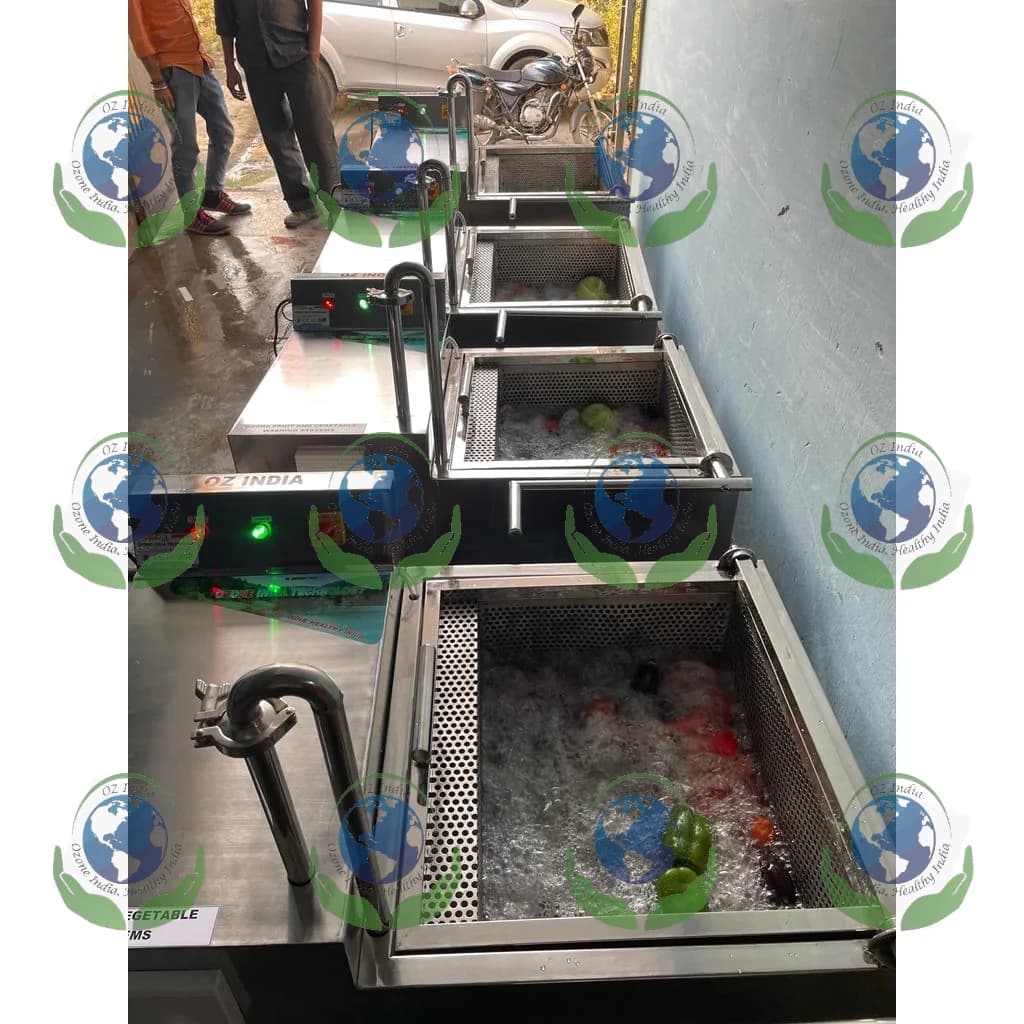
Ozone Fruit Vegetable Washing Machine
FSSAI compliant ozone washing machine for pesticide removal and disinfection of fruits and vegetables
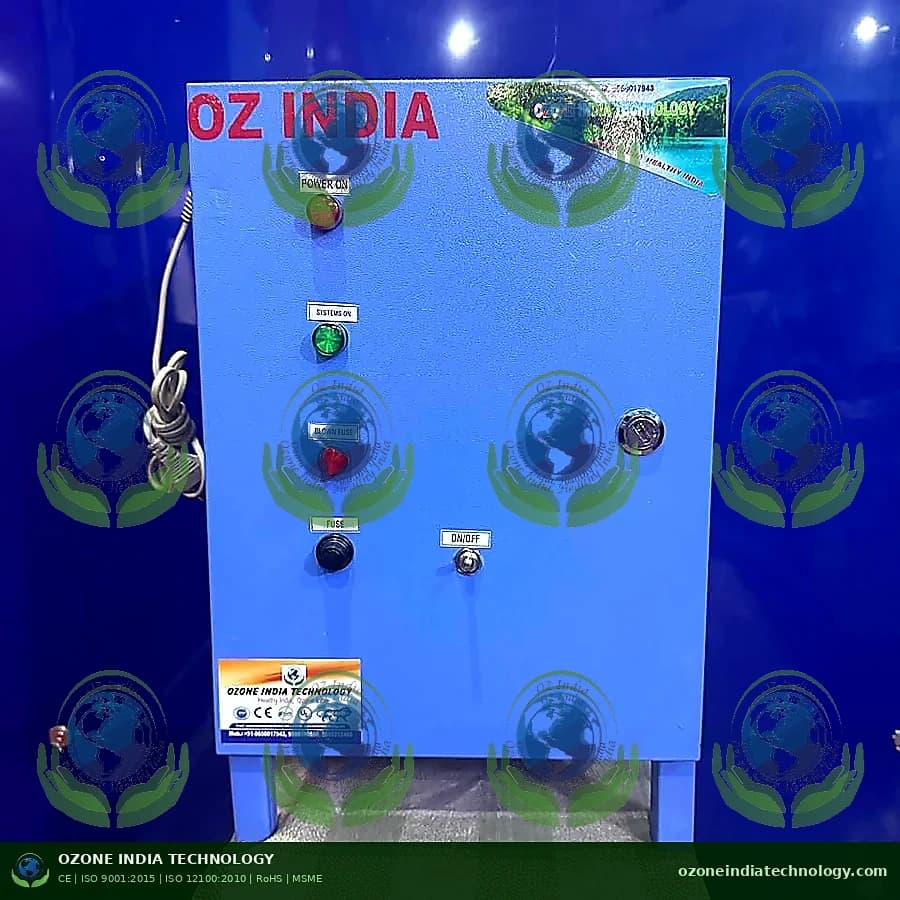
Ozone Generator — Light Industrial 5g/hr
Light industrial ozone generator for small water treatment plants and commercial disinfection
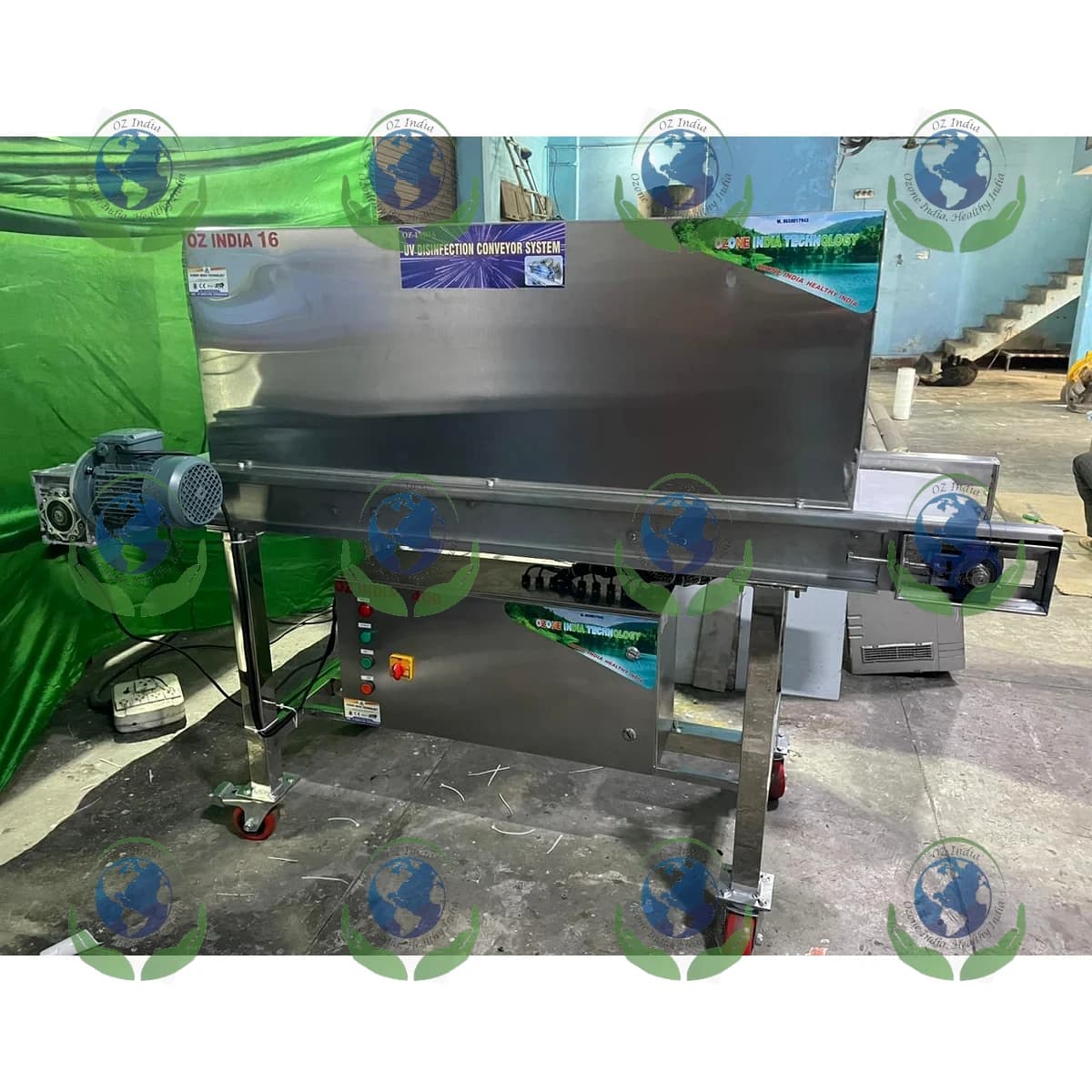
UV Conveyor Sterilization System
Conveyor UV surface sterilization system for food packaging and product disinfection FSSAI compliant
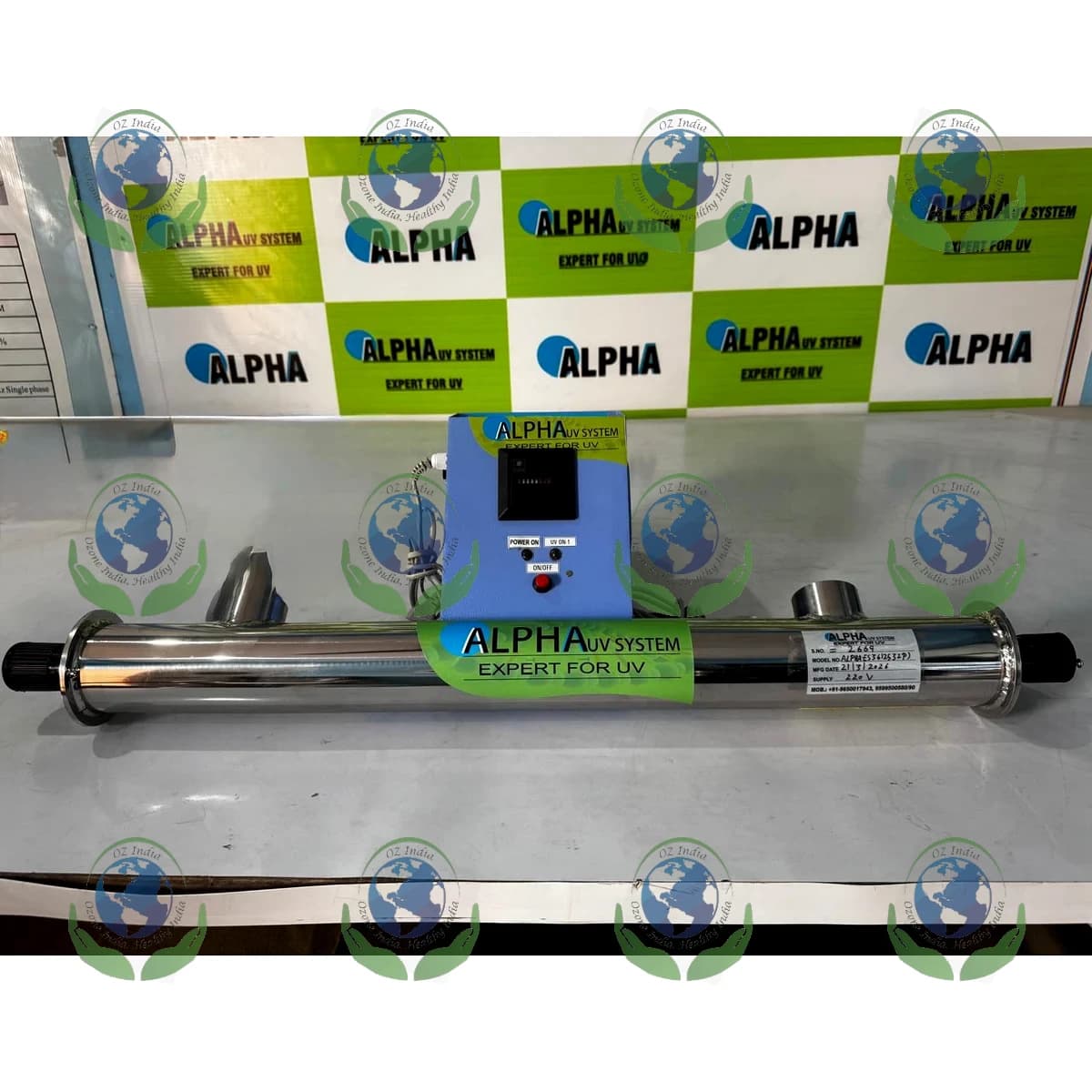
UV Compact Series — 100 to 2000 LPH
Compact inline UV water disinfection — 100 to 2000 LPH — SS304 chamber, OEM and commercial ready
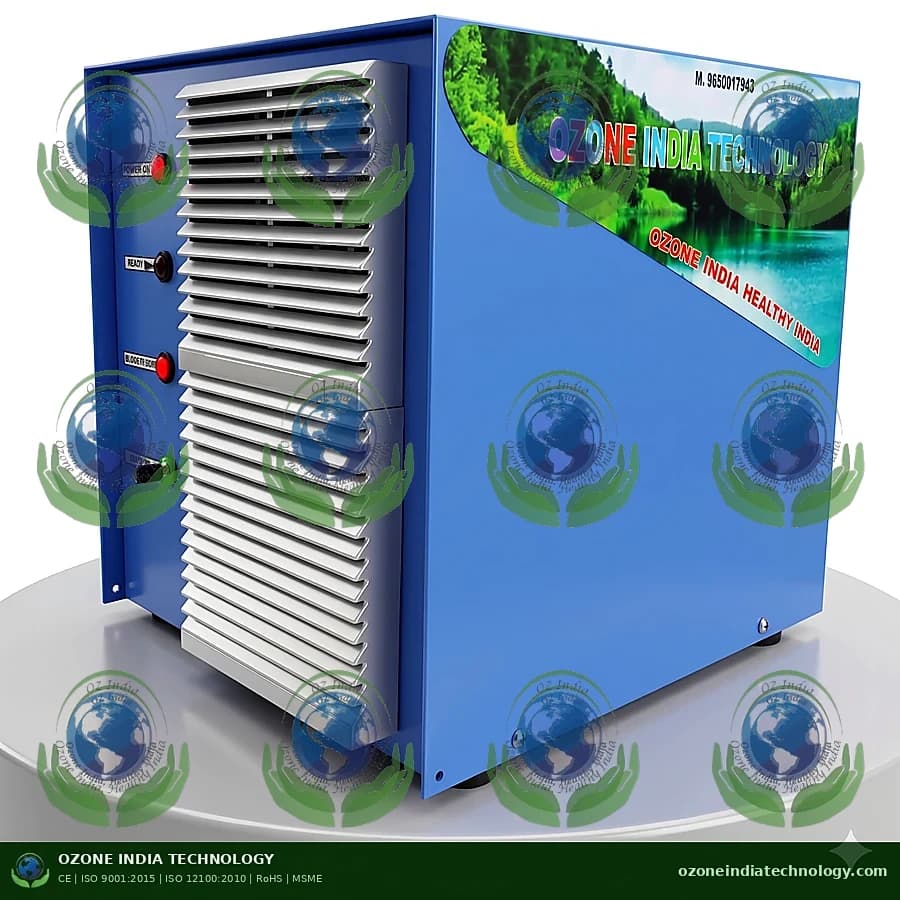
Ozone Air Purifier
Compact ozone air purifier for room disinfection odour control and air sterilization
SIZING GUIDE
Installation & Sizing Guide
Sizing ozone for food processing fresh produce washing begins with the wash capacity (kg/hr of produce) and wash water volume (litres in the flume or tank). Ozone demand from fresh produce is 0.5–3 mg/L depending on soil load: lightly soiled greenhouse produce demands 0.5 mg/L; heavily soiled field vegetables (potatoes, carrots) demand 2–3 mg/L. Generator sizing calculation: Ozone output (g/hr) = Wash water circulation rate (m³/hr) × Ozone demand (mg/L) × 1.5 safety factor. For a 5,000 kg/hr grape washing flume with 10 m³ water volume recirculated at 5 turnovers/hour: 5 × 10 × 1.5 = 75 g/hr — OZ India 75-350g/hr oxygen-fed generator at minimum output setting, allowing capacity for future expansion. Dissolved ozone monitor setpoint at 1.5 mg/L provides automatic dose control within this range.
CIP sanitisation ozone system sizing uses the CIP circuit volume and required contact time. For a 500-litre fermentation tank CIP circuit at 1.5 m/s turbulent flow, the circuit volume (tank + piping) is approximately 600 litres. At target dissolved ozone of 2 mg/L and 10-minute contact time: Ozone required = 0.6 m³ × 2 mg/L = 1.2 g per CIP cycle. For 10 CIP cycles/day: 12 g/day = 0.5 g/hr average demand. However, peak demand during simultaneous multi-circuit CIP requires 5-10g/hr capacity. OZ India recommends the 5g/hr Light Industrial Ozone Generator for small beverage and winery CIP applications, and the 10-25g/hr Industrial Generator for larger dairy and packaged food plant CIP circuits with multiple parallel circuits.
Cold store fumigation system sizing for ozone for food processing uses the cold room volume (m³) and target ozone concentration (0.5–3 ppm). Generator output required: Room volume (m³) × Target concentration (mg/m³) ÷ Equilibrium time (hr) × Ozone decay factor (2.0 in cold, humid air) ÷ 1000. For a 500 m³ cold store at 2 ppm (2 mg/m³) target, 1-hour equilibrium, decay factor 2.0: 500 × 2 × 2 / 1000 = 2 g/hr. OZ India's 2g/hr Portable Ozone Generator is standard for cold stores up to 1,000 m³ at 1–2 ppm; the 5g/hr generator covers larger cold stores and higher concentration requirements. Integrated ozone ambient air monitor is mandatory — ozone at >0.1 ppm is hazardous in occupied cold stores and the monitor triggers generator shutdown before staff entry.
Energy and operating cost calculation for ozone for food processing: the OZ India ozone generator for food applications consumes 10–15 kWh per kg ozone (air-fed). For a fresh produce washing system using 75g/hr at 8 hours/day: 0.075 kg/hr × 8 hr × 12 kWh/kg = 7.2 kWh/day at ₹7/kWh = ₹50/day operating cost. This compares to chlorinated wash water cost at 200 ppm NaOCl for the same wash volume: ₹180–300/day in chemical cost alone, plus pH adjustment chemicals and wastewater treatment cost. The economic advantage of ozone for food processing is decisive in high-volume fresh produce applications — with complete system ROI typically achieved in 8–14 months based on chemical replacement savings alone, without counting the revenue value of export market access enabled by residue-free ozone treatment.
CASE STUDY
EU Export Compliance for Table Grape Packhouse, Nashik District, Maharashtra
A leading table grape export packhouse in Nashik district, Maharashtra — supplying to UK supermarkets (Tesco, Sainsbury's) and UAE markets under GLOBALG.A.P. and FSSAI export certification — was using 150 ppm sodium hypochlorite wash water for postharvest grape washing. In the 2023 EU import season, a consignment of 22 MT was rejected at Rotterdam port due to chlorate residues exceeding EU MRL (0.01 mg/kg, EU Reg. 396/2005) — a direct consequence of hypochlorite wash water reaction with organic matter generating chlorate as a byproduct. Total financial loss from rejection, re-routing, and customer penalty clauses: ₹1.2 crore. GLOBALG.A.P. auditors flagged the chlorinated wash water practice in the subsequent annual audit, requiring corrective action before re-certification.
OZ India Technology replaced the hypochlorite wash system with an Ozone Fruit Vegetable Washing Machine configured for 3,000 kg/hr grape washing capacity. The dissolved ozone setpoint was calibrated at 1.5 mg/L in the wash flume, achieving 4-log reduction of Botrytis cinerea and 5-log reduction of E. coli O157:H7 in third-party FSSAI-accredited laboratory validation trials conducted as part of the HACCP CCP validation protocol. The ozone system eliminated chlorate residue risk entirely — post-installation residue testing of washed grapes confirmed zero detectable ozone residue (ozone decomposes to O₂ within seconds of leaving the wash water contact) and zero chlorate.
Export season results following ozone for food processing installation: zero consignment rejections at EU ports across 185 MT of table grapes shipped to UK, Netherlands, and Germany. GLOBALG.A.P. auditor closed the corrective action and upgraded the packhouse to GLOBALG.A.P. certification with note of best practice in postharvest hygiene management. Packhouse manager documented annualised savings of ₹8.5 lakh in sodium hypochlorite chemical cost, wastewater treatment cost reduction, and insurance premium reduction following the quality incident. The packhouse's per-kg selling price to UK supermarkets increased by ₹2.20/kg following GLOBALG.A.P. best practice recognition — contributing ₹40 lakh additional revenue on the 185 MT export volume.
FAQ
Frequently Asked Questions
Is ozone legal for direct contact with food in India under FSSAI regulations?+
Yes — ozone for food processing is permitted under FSSAI's Food Safety and Standards (Food Products Standards and Food Additives) Regulations 2018, which adopt the Codex Alimentarius framework (CAC/RCP 53) permitting ozone as an antimicrobial treatment for food contact applications. Internationally, FDA's 21 CFR 173.368 (2001) grants GRAS status to ozone for direct food contact — and this US regulatory approval is widely accepted by European, Gulf, and Asian food safety authorities as scientific evidence of safety. OZ India provides a regulatory reference document compiling FSSAI, FDA, EU, and Codex approvals for ozone in food processing — suitable for inclusion in your HACCP documentation and food safety audit binder.
Does ozone leave any residue or flavour on washed fresh produce?+
No — ozone decomposes completely to oxygen (O₂) in water, with a half-life of 20–30 minutes at 20°C and zero decomposition products other than oxygen. The dissolution and decomposition process is complete within seconds of the ozone molecule contacting the produce surface — no ozone residue remains detectable by any analytical method on the washed produce. This is the fundamental food safety and commercial advantage of ozone for food processing over chlorinated wash water: EU MRL regulations permit zero chlorate or chlorine residue on produce, but ozone leaves nothing to regulate. Third-party laboratory residue testing of ozone-washed produce from OZ India installations consistently returns 'not detected' for ozone and all ozone decomposition products.
What is the ozone dose needed to achieve 5-log Salmonella reduction in fresh produce washing?+
Based on Khadre, Yousef and Kim (2001) data from the Journal of Food Science, 5-log Salmonella Typhimurium reduction on produce surfaces requires ozone at 1–2 mg/L dissolved concentration with 2–3 minutes contact time in the wash flume — a CT value of approximately 2–6 mg/L·min. OZ India's Ozone Fruit Vegetable Washing Machine is designed for 1.5 mg/L setpoint at standard flume HRT of 3 minutes, achieving 4.5–5 log Salmonella reduction in validated trials. Higher organic loads in the wash water (from heavily soiled produce) increase ozone demand, requiring higher generator output to maintain the setpoint — which the automatic dissolved ozone monitor controller manages in real time.
How does ozone for food processing compare to peracetic acid for CIP sanitisation?+
Both ozone and peracetic acid (PAA) are effective non-chlorinated CIP sanitisation agents, but ozone offers decisive advantages in food processing applications: ozone leaves zero residue (decomposes to O₂) while PAA leaves acetic acid residue requiring additional rinse steps; ozone CIP eliminates chemical purchase, storage, and handling risk costs while PAA requires PPE, safety training, and corrosive chemical waste management; ozone CIP generates no hazardous waste while PAA CIP generates acidic waste requiring pH neutralisation before drain discharge. The principal advantage of PAA is lower equipment investment (chemical dosing pump vs. ozone generator). OZ India's analysis of total cost of ownership (5-year NPV basis) consistently shows ozone for food processing CIP 30–50% lower TCO than PAA for plants with >6 CIP cycles per day.
Can ozone systems be validated as a CCP under HACCP for FSSAI compliance?+
Yes — ozone for food processing can be validated and implemented as a Critical Control Point (CCP) under your FSSAI-mandated HACCP plan. The CCP definition: Critical Limit (dissolved ozone ≥1.0 mg/L at wash flume exit); Monitoring (continuous automated dissolved ozone sensor, recorded to data logger every 60 seconds); Corrective Action (reject produce batch and investigate if dissolved ozone drops below 0.5 mg/L for >2 minutes); Verification (quarterly third-party microbiological testing of washed produce and wash water). OZ India provides a complete HACCP CCP documentation template for the ozone wash step, pre-populated with our equipment specifications, validated critical limits from published research, and monitoring forms in FSSAI FoSCoS-compatible format.
What maintenance does a food processing ozone system require to maintain food safety standards?+
Maintenance for ozone for food processing systems under FSSAI GMP includes: daily visual inspection of ozone generator and Venturi injector for leaks or blockage; weekly dissolved ozone sensor calibration verification against a reference standard (OZ India provides portable reference meter); monthly corona discharge cell cleaning (air-fed generators); quarterly dissolved ozone sensor membrane replacement (₹3,000–6,000 per sensor); annual ozone generator service visit. OZ India's food AMC includes all quarterly and annual maintenance visits, replacement parts supply ex-stock, and a food-sector-specific GMP maintenance record format (documenting maintenance activities in the style required by FSSAI and BRC Global Standard auditors). Emergency response within 48 hours ensures no extended production disruption.
How can ozone help Kerala seafood exporters meet Japanese and EU Listeria standards?+
Japan's Ministry of Health MRL for seafood imports specifies zero tolerance for Listeria monocytogenes in ready-to-eat products; EU Regulation 2073/2005 specifies <100 CFU/g Listeria in RTE seafood at point of sale. Kerala seafood processors face environmental Listeria contamination as a persistent HACCP challenge — Listeria thrives in cold, wet food processing environments and survives conventional sanitisation. Ozone for food processing at 1–3 mg/L in seafood wash water achieves 5-log Listeria inactivation per published CT data, while low-concentration ozone atmosphere in cold rooms (0.5 ppm) continuously suppresses environmental Listeria growth between production shifts. OZ India has commissioned seafood ozone systems at three MPEDA-certified Kerala processors — with third-party Listeria environmental testing confirming 85–95% reduction in positive swab sites post-installation.
RELATED
Related Applications
Drinking Water Treatment
IS:10500 compliant ozone and UV disinfection for bottled water, RO plants, and municipal drinking water
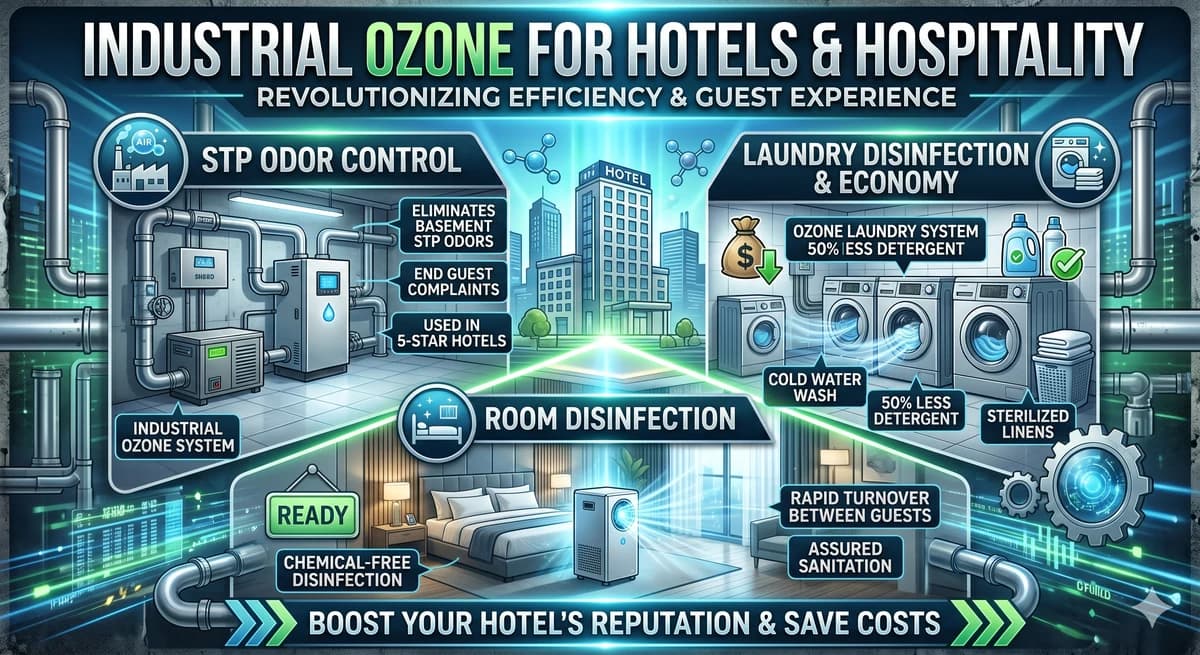
Hotel and Hospitality
Comprehensive ozone and UV solutions for hotel laundry, pool, kitchen, and indoor air quality

Pharmaceutical Water Treatment
USP <1231> and WHO GMP compliant ozone and UV systems for purified water, WFI, and CIP loops
Have a question about Food Processing?
Talk to our engineers — free technical consultation
WhatsApp Us Now