
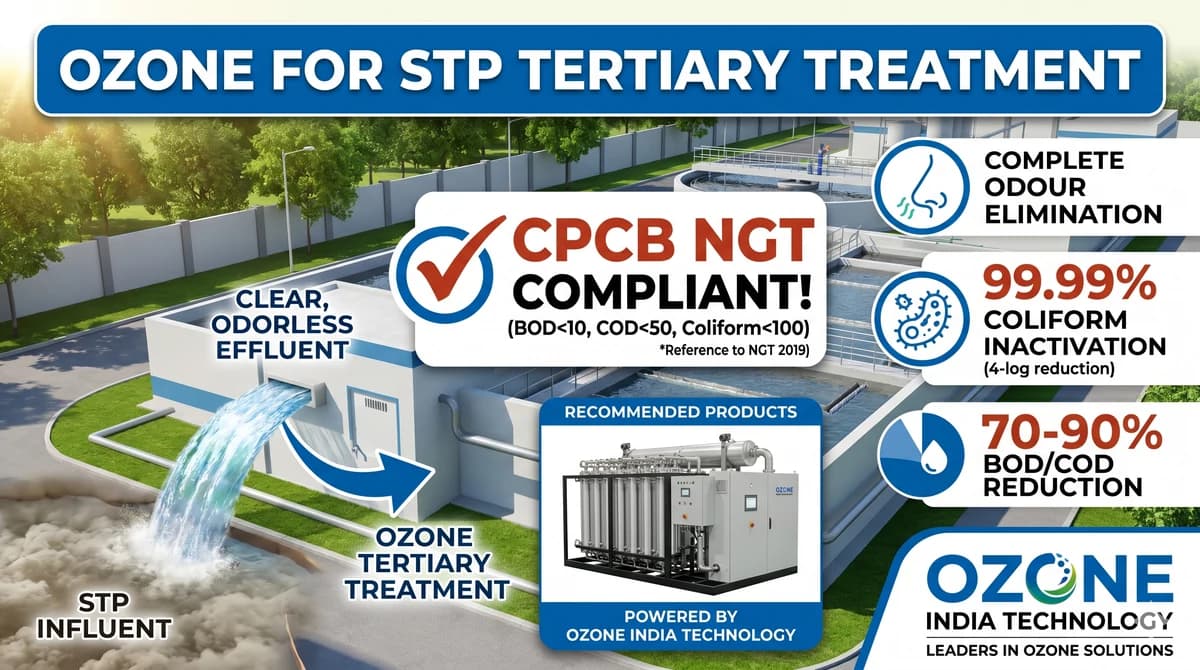
Ozone Generator in Sewage Treatment Plant (STP)
CPCB-compliant tertiary ozone disinfection — eliminating pathogens, BOD, and odour from STP effluent
THE NEED
Why STP?
72%
of India's sewage is untreated (CPCB 2021)
1000+
STPs mandated under NGT orders
99.99%
coliform kill by ozone at ≥2 mg/L dose
<100
MPN/100ml — CPCB standard for reuse
60-80%
BOD reduction with ozone pre-treatment
Zero
disinfection by-products vs chlorination
OVERVIEW
What is STP?
India's sewage crisis is documented precisely in CPCB's 2021 Status Report on Sewage Treatment Plants: the country generates 72,368 MLD of sewage daily but treats only 19,639 MLD — a gap of over 52,000 MLD that pours untreated into rivers, lakes, and groundwater aquifers each day. The National Green Tribunal's landmark order of April 2019 directed all Class-I cities (population above 1 lakh) and Class-II cities (50,000–1 lakh) to upgrade their STPs to tertiary treatment level within two years, creating an immediate compliance obligation for over 1,200 STP facilities across India. This regulatory pressure has made the ozone generator in STP tertiary treatment applications the fastest-growing segment in India's water treatment market, as municipalities and private STP operators rush to meet CPCB Class A effluent standards required for safe reuse.
Primary and secondary STP stages — screening, grit removal, primary sedimentation, and activated sludge biological treatment — reduce BOD from 200–400 mg/L in raw sewage to 20–40 mg/L in secondary effluent, and total suspended solids from 300–500 mg/L to 20–40 mg/L. However, secondary biological treatment leaves fecal coliform counts at 10⁶–10⁸ MPN/100mL, resistant protozoan cysts of Cryptosporidium parvum and Giardia lamblia, residual COD of 60–120 mg/L, and a growing catalogue of emerging micro-pollutants — endocrine disruptors, antibiotics, and personal care products — that pass through biological treatment unchanged. The ozone generator in STP tertiary stage is specifically designed to address these residual contaminants, which CPCB Class A standards (coliform <100 MPN/100mL, BOD <10 mg/L, COD <50 mg/L) require be eliminated before effluent is reused.
Chlorination has been the traditional tertiary disinfection technology at Indian STPs, but it carries critical limitations that have driven regulatory and technical opinion toward ozone. Chlorine reacts with the dissolved organic matter abundant in STP secondary effluent to form trihalomethanes (THMs) — chloroform, bromodichloromethane, dibromochloromethane — and haloacetic acids (HAAs), classified as probable human carcinogens by USEPA. Rice and Netzer (1982) in their foundational Handbook of Ozone Technology and Applications documented that STP effluent chlorination at doses of 10–20 mg/L produces THM concentrations of 100–400 μg/L — far above CPCB drinking water limits. Chlorinated STP effluent cannot be reused for horticulture or landscape irrigation due to phytotoxicity and accumulation of organochlorine compounds in soil. These limitations have made the ozone generator in STP the preferred tertiary technology choice for plants seeking reuse of treated effluent.
Von Gunten (2003), in a comprehensive review published in Water Research, established the scientific basis for ozone as a universal STP tertiary treatment technology. Ozone (O₃) at a dose of 2–5 mg/L with 15–20 minutes contact time achieves: 4-log (99.99%) fecal coliform inactivation; 3-log Giardia cyst inactivation; 2-log Cryptosporidium oocyst inactivation; 50–80% COD reduction; complete colour and turbidity removal; and elimination of micropollutants including pharmaceuticals, hormones, and personal care products. At this performance level, the ozone generator in STP tertiary stage produces effluent meeting or exceeding CPCB Class A standards for landscape reuse — transforming STP effluent from an environmental liability into a recoverable resource with measurable economic value in water-stressed Indian cities.
The economics of ozone tertiary treatment at Indian STPs are increasingly compelling. CPCB non-compliance penalties under NGT's enforcement regime reach ₹5 lakh per day for Class A standard violations, making the capital cost of an ozone generator in STP — typically ₹8–25 lakh for systems treating 0.5–10 MLD — recoverable in 30–90 days of avoided penalties. Beyond compliance, treated effluent reuse generates direct revenue: landscape reuse in residential townships commands ₹15–30 per kilolitre, cooling tower makeup water is worth ₹20–35 per kilolitre, and dust suppression contract rates range from ₹8–15 per kilolitre. A 5 MLD STP with ozone tertiary treatment producing 5,000 m³/day of CPCB Class A effluent for landscape reuse generates ₹27–55 lakh per year in revenue — transforming the STP from a compliance cost centre to a revenue-generating asset.
THE SCIENCE
How Ozone & UV Work in STP
The ozone generator in STP operates on the corona discharge principle: high-voltage alternating current (6–10 kV, 500–2000 Hz) passes through a dielectric barrier discharge cell — a precision engineered gap between two electrodes separated by a dielectric material (borosilicate glass or ceramic). The electrical discharge creates micro-plasma channels (micro-discharges) in the gas gap, each generating local temperatures of 40,000–50,000 K that dissociate O₂ molecules into reactive oxygen atoms. These atoms recombine preferentially to form ozone (O₃) rather than re-forming O₂. Feed gas quality critically determines ozone yield: air-fed generators require drying to -60°C dew point (removing moisture that reduces ozone yield and causes nitric acid formation), while oxygen-fed systems achieve 50% higher ozone concentration and 40% lower specific energy consumption. OZ India Technology ozone generators for STP applications range from 10 g/hr to 350 g/hr, scaling from a 0.5 MLD hotel STP to a 30 MLD municipal STP.
Generated ozone is transferred into the secondary STP effluent through one of two contacting systems: the Venturi injector or the fine-bubble diffuser system. The OZ India Venturi injector creates a high-velocity water jet that entrains ozone gas through Bernoulli's principle — the negative pressure at the Venturi throat draws ozone into the water stream under turbulent mixing conditions, achieving ozone transfer efficiency of 85–92% at typical STP operating pressures. Fine-bubble diffusers in counter-current contact columns achieve slightly higher transfer efficiency (90–95%) and are preferred for larger STP flows above 5 MLD. The dissolved ozone monitor at the contact chamber outlet confirms that the target dissolved ozone concentration of 0.2–0.5 mg/L residual is consistently achieved — the key metric for verifying that the required CT (concentration × time) value for pathogen inactivation has been delivered.
The CT concept governs ozone disinfection efficacy and is the regulatory basis for validating ozone generator in STP systems. CT (mg/L·min) = dissolved ozone concentration (C, mg/L) × contact time (T, minutes). EPA (1999) Alternative Disinfectants Guidance Manual specifies CT requirements at different temperatures and pH values: for 3-log Giardia inactivation at 20°C, pH 7, CT = 0.5 mg/L·min; for 2-log Cryptosporidium at 20°C, CT = 2.9 mg/L·min. Langlais, Reckhow and Brink (1991) in Ozone in Water Treatment systematically compiled CT data for different pathogens — this data forms the basis for STP ozone system design. The OZ India contact chamber is hydraulically designed to achieve plug-flow conditions (baffled chamber, length-to-width ratio >4:1), ensuring the theoretical HRT equals the actual hydraulic retention time and the design CT is reliably delivered at all flow conditions.
Beyond pathogen inactivation, the ozone generator in STP simultaneously executes advanced oxidation of recalcitrant organic pollutants through two parallel reaction pathways: direct molecular ozone oxidation (E° = 2.07V) and the hydroxyl radical (•OH) pathway (E° = 2.80V). Kuo et al. (1977) documented the kinetics of ozone decomposition in water: at neutral to alkaline pH (7–8, typical of STP effluent), ozone decomposes to generate •OH radicals at rates that increase with pH. The •OH radical, one of the most powerful oxidants known in aqueous chemistry, attacks molecular bonds in pharmaceuticals, endocrine disruptors, aromatic compounds, and chlorinated organics with second-order rate constants of 10⁶–10¹⁰ M⁻¹s⁻¹ — essentially diffusion-controlled reactions. This mechanism destroys emerging micro-pollutants that no regulatory standard yet requires, but which progressive STP operators and environmental engineers recognise as the pollution frontier of the next decade.
Odour control is an integral function of the ozone generator in STP installations, addressing what is often the most urgent complaint driving STP compliance action. Hydrogen sulphide (H₂S) — produced by anaerobic bacteria in sludge processing and aeration zones — is detectable by the human nose at 0.008 ppm, and causes complaints from residential areas up to 500 metres from uncontrolled STPs. The OZ India Ozone Odour Control System injects ozone gas into the headspace above aeration tanks, sludge thickeners, and dewatering areas, oxidising H₂S to sulphate, mercaptans (R-SH) to sulphonic acids, and ammonia to nitrate — all odour-free end products. At ozone doses of 0.5–2 ppm in the off-gas stream, 95% H₂S removal is achieved within the gas contact zone, eliminating boundary odour complaints. The OZ India ambient air monitor in the operator room maintains continuous monitoring at 4–20 mA output, alarming at 0.05 ppm and triggering automatic shutdown at 0.1 ppm per OSHA PEL.
Process automation ensures reliable performance of the ozone generator in STP without requiring constant operator attention — a critical design criterion for STPs that often operate with minimal technical staffing. The dissolved ozone monitor at the contact chamber outlet provides a 4–20 mA feedback signal to the ozone generator control panel, which adjusts ozone production (by varying high-voltage frequency or gas flow) to maintain the target residual of 0.2–0.5 mg/L. During low-flow periods (typically 2:00–5:00 AM), ozone production automatically reduces — saving 30–40% of daily electricity consumption compared to fixed-output systems. Ozone production data, dissolved residual, system alarms, and CPCB compliance parameters are logged to onboard memory (30-day capacity) and downloadable as CSV for inclusion in CPCB monthly compliance reports. GSM remote monitoring allows STP managers to receive real-time SMS alerts on system status from any location.
THE SOLUTION
Ozone India Technology Solution
OZ India Technology has designed, supplied, and commissioned ozone generator in STP systems at more than 50 installations across India since 2014, covering hotel STPs (0.1–2 MLD), industrial campus STPs (0.5–5 MLD), municipal STPs (1–30 MLD), and research facility STPs. Our standard STP ozone package is a complete, skid-mounted system CE-certified under the Machinery Directive and Low Voltage Directive, including: corona discharge ozone generator with integral air preparation (compressor, filter, dryer to -60°C), PVDF Venturi injector assembly, PVDF non-return valve, PVDF ozone piping (resistant to ozone at all operating concentrations), dissolved ozone monitor with automatic control panel, ozone ambient air safety monitor, and catalytic off-gas destructor. Factory testing at full load is conducted at our ISO 9001:2015 Greater Noida facility before dispatch, with test certificates provided to each customer.
System selection for STP ozone tertiary treatment follows plant flow: for STPs up to 2 MLD, the OZ India 10–25 g/hr Industrial Ozone Generator (air-fed) provides complete tertiary treatment meeting CPCB Class A — typical capital cost ₹8–15 lakh. For 2–10 MLD STPs, the 30–50 g/hr Heavy Industrial system with OZ India PSA Oxygen Generator is the standard configuration, achieving 8–10 kWh/kg ozone specific energy (vs 15 kWh/kg for air-fed) — the oxygen feed halves operating cost at this scale. For STPs above 10 MLD, the 75–350 g/hr Large Scale system in oxygen-fed configuration with N+1 redundancy ensures no single-point failure. Each STP project is preceded by a site assessment and effluent quality characterisation to determine the precise ozone dose and contact chamber sizing.
OZ India's dissolved ozone monitor is the performance-critical instrument in every ozone generator in STP installation. The in-line amperometric dissolved ozone sensor (range 0–2 mg/L, ±2% accuracy, with PTFE membrane) measures dissolved ozone continuously at the contact chamber outlet — the regulatory compliance point. The sensor output drives automatic dose control and generates the compliance data required by CPCB's online monitoring regulations (OCEMS). Calibration with standard ozone solutions is required every 3 months; OZ India stocks replacement membranes and electrolyte ex-Greater Noida for next-day delivery. Annual maintenance contracts include sensor calibration as a standard service item.
Turnkey project delivery is OZ India's standard engagement model for STP ozone tertiary treatment: site assessment (1 day), detailed engineering including P&ID, equipment layout, electrical load list and civil drawings (1 week), equipment supply (4–6 weeks lead time), installation supervision by OZ India certified engineers, commissioning with CPCB compliance testing (BOD, COD, coliform, dissolved ozone), 2-day operator training programme (maintenance procedures, safety protocols, data download, alarm response), and 1-year comprehensive warranty with 48-hour response SLA. Post-warranty Annual Maintenance Contracts (4 preventive visits/year, emergency response, consumables) are available and taken up by 85% of OZ India STP customers — reflecting confidence in the long-term performance of OZ India ozone systems.
PERFORMANCE
Without vs With OZ India Treatment
| Parameter | Without Treatment | With OZ India System |
|---|---|---|
| Fecal Coliform (MPN/100mL) | 10⁶–10⁸ (secondary effluent) | <100 — CPCB Class A met |
| BOD (mg/L) | 20–40 (post-biological) | <10 — reuse standard achieved |
| COD (mg/L) | 60–120 | <50 — CPCB compliant |
| Pharmaceuticals/hormones | Present — not removed biologically | Oxidised and mineralised by ozone |
| Disinfection byproducts | THMs 100–400 μg/L (chlorination) | Zero — no halogenated compounds |
| Cryptosporidium inactivation | Ineffective with Cl₂ at normal doses | 2-log achieved at 3 mg/L O₃ |
| STP boundary odour (H₂S) | 0.05–0.15 ppm — nuisance complaints | <0.005 ppm — odour-free perimeter |
| Effluent reuse eligibility | Restricted (chlorine residue, THMs) | CPCB Class A — horticulture, cooling |
PERFORMANCE DATA
Technical Performance Data
Reference data for ozone treatment system design and validation — applicable to STP applications. All data per standard water treatment engineering practice (AWWA, WHO, CPCB guidelines).
Pathogen Log Inactivation at 3 mg/L Ozone (CT = 45 mg·min/L)
BOD Reduction (%) vs Ozone Dose — Typical STP/ETP Secondary Effluent
E. coli Log Inactivation vs Contact Time at 3 mg/L Ozone
System Sizing Guide — Plant Flow Rate vs Ozone Generator Capacity
RECOMMENDED EQUIPMENT
Products for STP
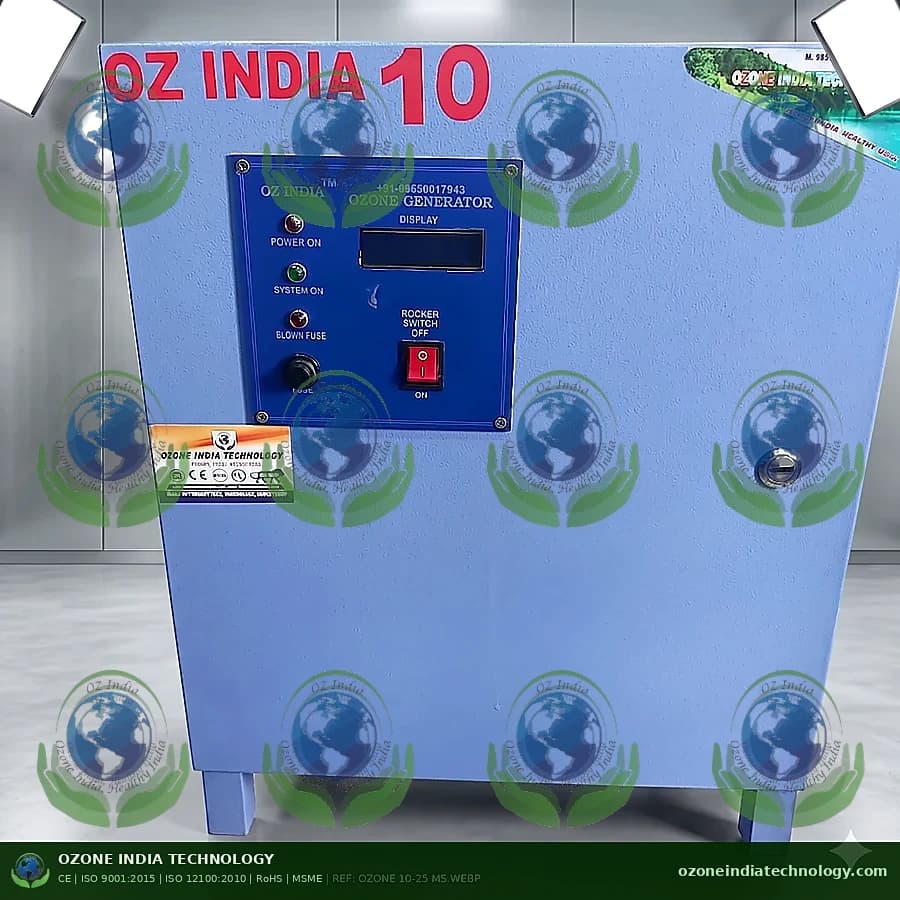
Ozone Generator — 25g/hr Industrial
Industrial 25g/hr ozone generator for medium STP ETP and water treatment plants up to 5 MLD
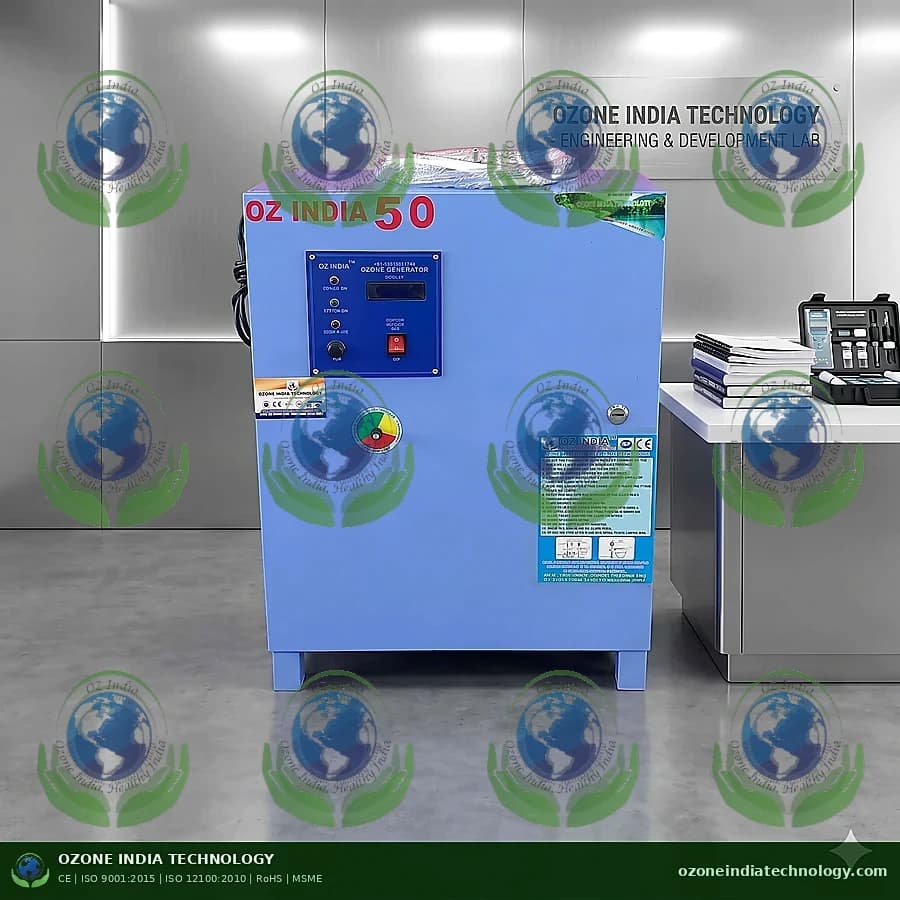
Ozone Generator — 50g/hr Heavy Industrial
Heavy industrial 50g/hr ozone generator for large STP ETP textile and municipal water treatment
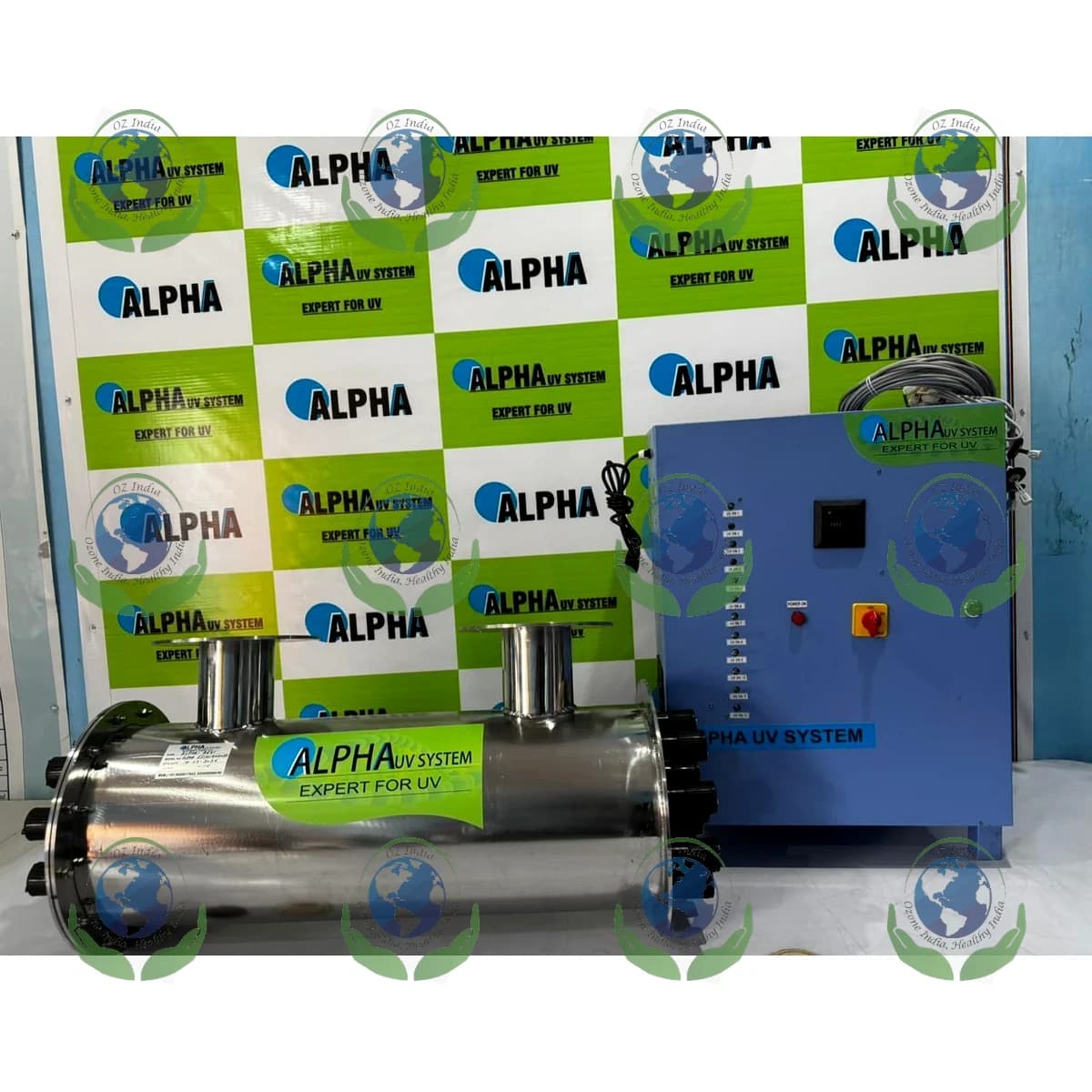
UV Wastewater Reuse Series — STP & ETP
UV disinfection for STP and ETP treated effluent reuse — CPCB tertiary discharge norms compliant
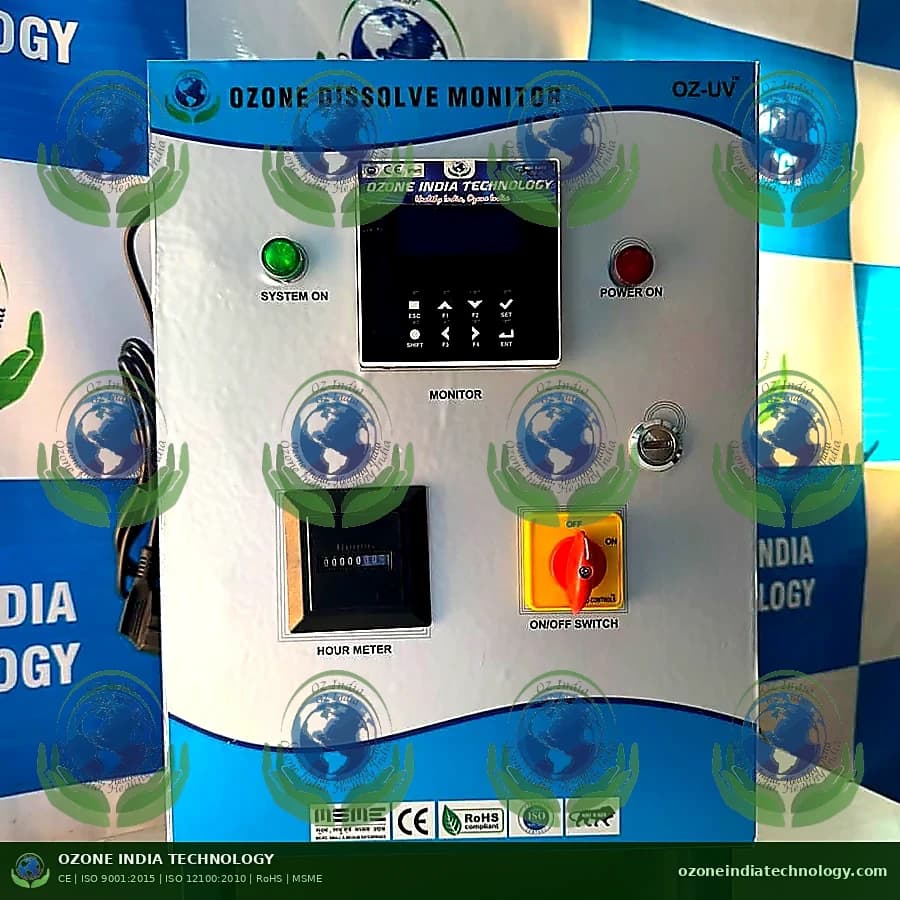
Ozone Dissolve Monitor with Contactor Support
In-line dissolved ozone monitor for water treatment process control with contactor support
SIZING GUIDE
Installation & Sizing Guide
Sizing an ozone generator in STP begins with three primary inputs from the client's STP design or operating records: (1) design flow in MLD (use peak day flow, not average), (2) secondary effluent quality — minimum BOD, COD, TSS, and fecal coliform count from the most recent laboratory analysis, and (3) the target discharge standard — CPCB Class A (coliform <100 MPN/100mL, BOD <10 mg/L) for effluent reuse, or CPCB Class B for river discharge. From these inputs, the ozone dose in mg/L is determined: 2–3 mg/L for clean secondary effluent (BOD 20–30 mg/L, coliform 10⁵ MPN/100mL), 3–5 mg/L for heavily loaded effluent (BOD 35–50 mg/L, coliform 10⁷ MPN/100mL). The ozone generator in STP must be sized to the peak flow rate to ensure compliance is maintained during high-demand periods. Ozone generator capacity (g/hr) = Peak flow (m³/hr) × Dose (mg/L) × 1.3 (safety factor). For a 5 MLD STP at 3 mg/L dose: 208 m³/hr × 3 × 1.3 ÷ 1000 = 0.81 kg/hr = 810 g/hr — requiring the OZ India 75–350 g/hr system.
Contact chamber sizing determines civil cost and retrofit feasibility. The chamber volume required is: Volume (m³) = Peak flow (m³/hr) × HRT (hr), with HRT = 15–20 minutes for standard ozone doses, 20–30 minutes for higher doses or Cryptosporidium-targeted CT. For a 5 MLD STP at 20 min HRT: 208 × (20/60) = 69 m³. Most STPs have an existing chlorination contact tank of 50–100 m³ that can be directly repurposed as the ozone contact chamber after conversion from chlorinator to Venturi injector — eliminating civil construction cost entirely. OZ India's hydraulic engineers review the existing chlorine tank dimensions and assess baffle configuration, short-circuit potential, and flow distribution to confirm suitability or design modifications. For new STPs, OZ India provides complete contact chamber drawings sized for plug-flow conditions.
Oxygen source selection has a major impact on ozone generator in STP lifecycle cost and must be evaluated at the sizing stage. Air-fed systems (ambient air dried to -60°C) are economical for ozone generators below 25 g/hr — the air preparation equipment (compressor + dryer) adds ₹1.5–3 lakh to capital cost but avoids the ongoing oxygen cost. Above 25 g/hr, oxygen-fed systems using OZ India's PSA Oxygen Generator (producing 90–93% O₂ from ambient air) reduce specific energy from 15 kWh/kg to 8 kWh/kg ozone and halve the ozone generator size for the same capacity. At large STPs (above 350 g/hr requirement), bulk liquid oxygen (LOX) from Inox Air or Linde provides the lowest per-kg oxygen cost. OZ India prepares a techno-economic analysis comparing these three options — including capital cost, operating cost, and NPV over 10 years — as part of every ozone generator in STP project proposal.
A practical sizing example for municipal STP planners: a 10 MLD urban STP in Greater Noida serving a mixed residential-commercial catchment has secondary effluent quality of BOD 32 mg/L, COD 95 mg/L, TSS 28 mg/L, fecal coliform 5 × 10⁶ MPN/100mL, and pH 7.2. Target: CPCB Class A for landscape reuse at the municipality's parks. Recommended ozone dose: 3.5 mg/L. Peak flow (1.4× average): 14 MLD = 583 m³/hr. Ozone generator capacity required: 583 × 3.5 × 1.3 ÷ 1000 = 2.65 kg/hr = 2,650 g/hr — two OZ India 75–350 g/hr units in parallel (N+1 configuration). Oxygen source: PSA Oxygen Generator producing 300 Nm³/hr at 93% O₂. Contact chamber: 195 m³ (20 min HRT). Estimated capital cost: ₹85–110 lakh. Estimated operating cost: ₹2,800/day electricity at ₹7/kWh. Revenue from 10,000 m³/day reuse water at ₹20/kL: ₹2 lakh/day. Payback: 12–18 months from revenue alone.
CASE STUDY
Tertiary Ozone Upgrade at 4 MLD Municipal STP, Greater Noida
A municipal STP in Sector 16C, Greater Noida, operated by the Greater Noida Industrial Development Authority (GNIDA) was treating 4 MLD of domestic sewage from surrounding residential sectors. Secondary treatment met BOD targets, but the plant was consistently failing CPCB Class A fecal coliform standards (discharge values 3–8 × 10⁵ MPN/100mL against the 100 MPN/100mL target) and generating odour complaints from a residential tower 200 metres away. NGT's regional bench had issued a show-cause notice threatening daily penalties. The authority evaluated chlorination, UV, and ozone — and selected ozone generator in STP configuration for its superior compliance performance and reuse-enabling effluent quality.
OZ India Technology was contracted in March 2024 for supply, installation, and commissioning of a 30 g/hr ozone generator in STP tertiary treatment role, with Venturi injector, 60 m³ retrofitted contact chamber (the existing chlorine contact tank, decommissioned and baffled), dissolved ozone monitor with automatic control panel, and an Ozone Odour Control System dosing 5 g/hr ozone gas above the aeration zone. Installation was completed in 28 days without interrupting STP operations; commissioning and performance testing required 5 days.
Post-commissioning compliance testing by an NABL-accredited laboratory recorded: fecal coliform 38 MPN/100mL (target: <100), BOD 7.2 mg/L (target: <10), COD 44 mg/L (target: <50), and zero detectable H₂S at the residential building perimeter — down from 0.08 ppm measured pre-installation. The NGT show-cause was resolved with the test report. GNIDA began selling 3,500 m³/day of CPCB Class A treated effluent to a horticulture contractor at ₹18/kL, generating ₹63,000/day revenue. The ozone generator in STP paid back its capital cost within 11 months entirely from treated water revenue. GNIDA subsequently ordered two additional ozone generator in STP units for sister plants in the same zone.
FAQ
Frequently Asked Questions
What ozone dose achieves CPCB Class A standards in STP tertiary treatment?+
For CPCB Class A compliance (fecal coliform <100 MPN/100mL, BOD <10 mg/L, COD <50 mg/L), an ozone dose of 3–4 mg/L with 15–20 minutes contact time is the standard design. Higher doses of 4–6 mg/L are used when secondary effluent has BOD above 35 mg/L or when pharmaceutical micropollutant removal is targeted. OZ India calculates the precise dose from the client's secondary effluent quality report — contact us with your STP flow and laboratory analysis for a free sizing calculation with expected compliance data.
Can ozone generator in STP replace chlorination completely?+
Yes — ozone at 3–4 mg/L provides superior disinfection to chlorine without generating THMs, HAAs, or other carcinogenic disinfection byproducts. For STP effluent intended for landscape reuse, complete replacement of chlorination is strongly recommended: chlorinated effluent is phytotoxic and accumulates organochlorine compounds in irrigated soil. For effluent discharged to rivers (not reused), a small chlorine residual post-ozone is sometimes retained for distribution system protection — though many modern STP designs forgo this entirely when ozone achieves the required CT.
How much electricity does an ozone generator in STP consume?+
OZ India ozone generators consume 10–15 kWh per kg of ozone generated (air-fed) and 8–10 kWh/kg (oxygen-fed). A 5 MLD STP requiring 3 mg/L ozone uses approximately 15 kg ozone/day — electricity cost at ₹7/kWh is ₹1,050–1,575/day for air-fed, or ₹840–1,050/day with oxygen feed. Against CPCB non-compliance penalties of ₹5 lakh/day (NGT enforcement), and reuse water revenue of ₹50,000–1,50,000/day, operating electricity cost is a minor item. OZ India automatic dose control reduces electricity consumption by 25–30% versus fixed-output systems.
Can ozone be retrofitted into an operating STP without shutdown?+
Yes — OZ India has retrofitted ozone into 20+ operating STPs without interrupting treatment. The ozone generator skid is positioned beside the existing chlorine contact tank, which is repurposed as the ozone contact chamber (typically requiring only installation of baffles and Venturi injector connections). Civil modification of the existing tank takes 3–5 days during which chlorination continues. The ozone system is then commissioned in parallel before chlorination is finally discontinued. OZ India engineers conduct a site assessment and provide a detailed retrofit plan before supply.
Is ozone generator in STP safe for plant operators?+
Yes, when combined with OZ India's ozone ambient air monitor. Ozone is toxic above 0.1 ppm TWA (OSHA PEL) but dissipates rapidly in open air. The dissolved ozone in STP effluent at 0.2–0.5 mg/L is far below any skin contact hazard level. OZ India's ambient air monitor in the operator room and control panel area continuously measures airborne ozone with audible alarm at 0.05 ppm and automatic ozone generator shutdown at 0.1 ppm. The catalytic off-gas destructor reduces contact chamber vent gas ozone below 0.1 ppm before atmospheric discharge. In 10+ years of STP installations, OZ India has recorded zero operator safety incidents.
What maintenance schedule is required for an STP ozone system?+
Standard OZ India STP ozone system maintenance: monthly — air dryer dew-point check (confirm -60°C or better), Venturi injector inspection, control panel alarm test; quarterly — dissolved ozone sensor membrane replacement and calibration with standard solution, heat exchanger cleaning on the ozone generator cooling circuit; annually — corona discharge electrode inspection and replacement if degraded (typical electrode life 2–3 years), off-gas destructor catalyst activity check. OZ India's Annual Maintenance Contract covers all 4 preventive visits, emergency response within 48 hours, and all consumables — ensuring consistent CPCB compliance documentation.
Which STP sizes are best suited to ozone generator in STP systems?+
OZ India ozone generator in STP systems are economically viable from 0.1 MLD (hotel STP, 2 g/hr generator) to 100 MLD+ (large municipal STP, multiple 350 g/hr units). The minimum economically viable STP size is approximately 0.5 MLD — below which simple UV disinfection may be more cost-effective. Peak economic returns occur at 5–50 MLD, where the combination of CPCB Class A effluent reuse revenue and avoided penalties generates payback in 12–24 months. Above 100 MLD, LOX-fed large ozone plants offer the lowest cost per unit ozone produced.
RELATED
Related Applications
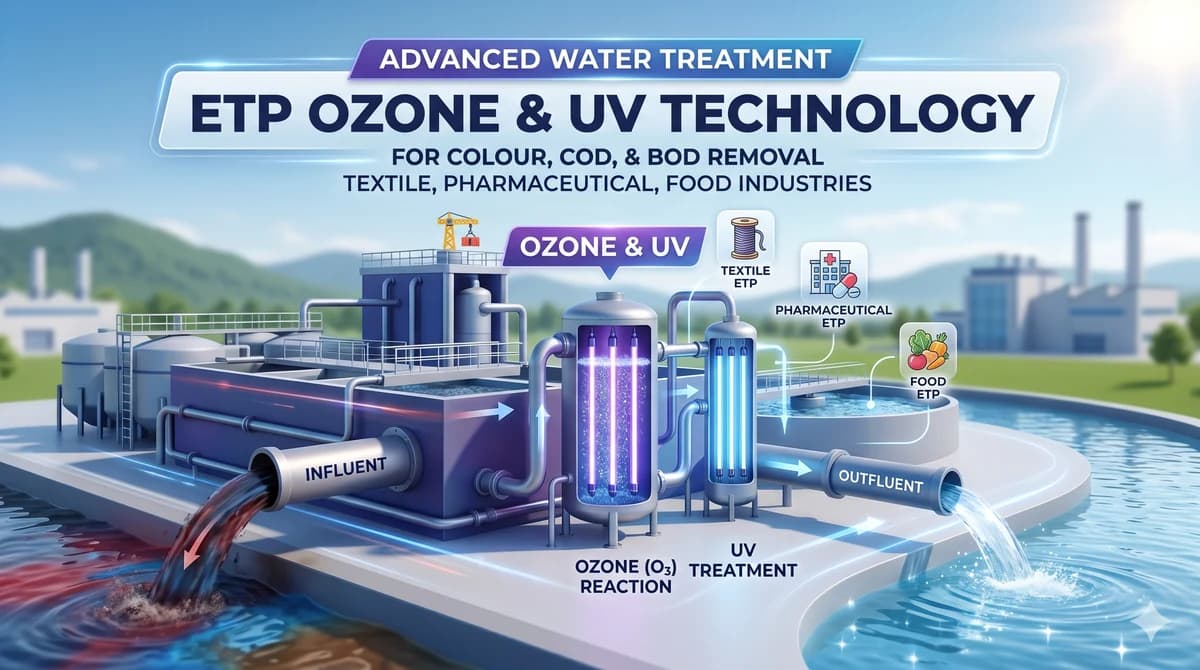
Effluent Treatment Plant (ETP)
Advanced ozone oxidation for colour removal, COD reduction, and CETP compliance in industrial ETPs
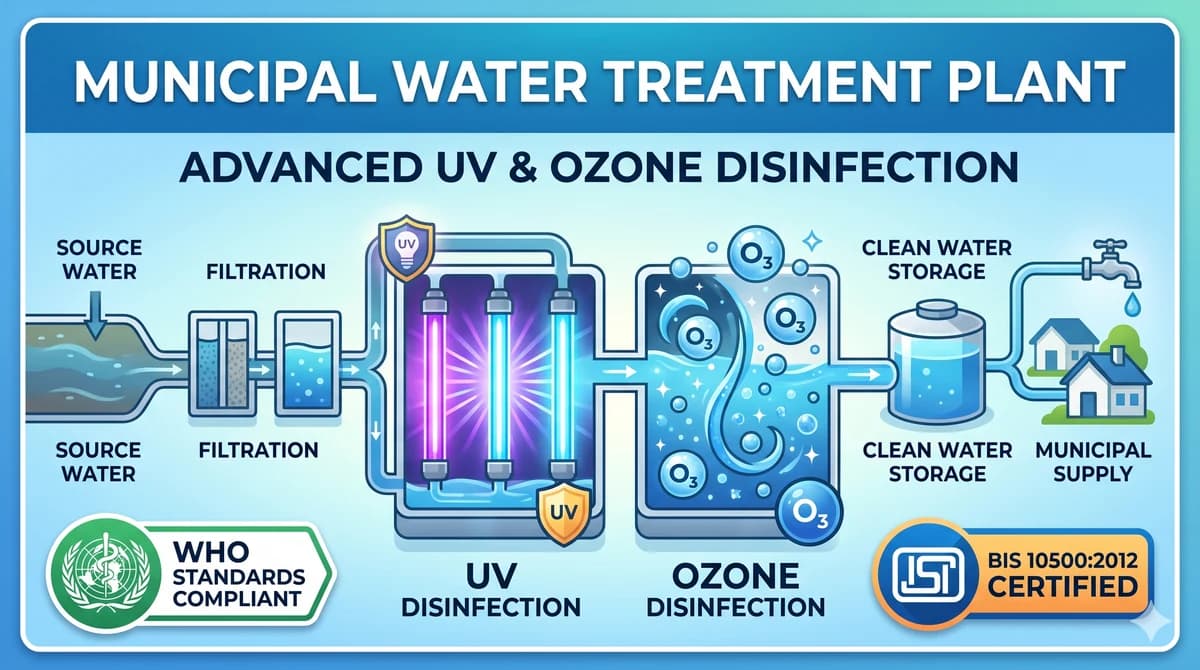
Water Treatment Plant (WTP)
Ozone and UV for superior raw water treatment — iron, manganese, taste, odour, and Cryptosporidium control
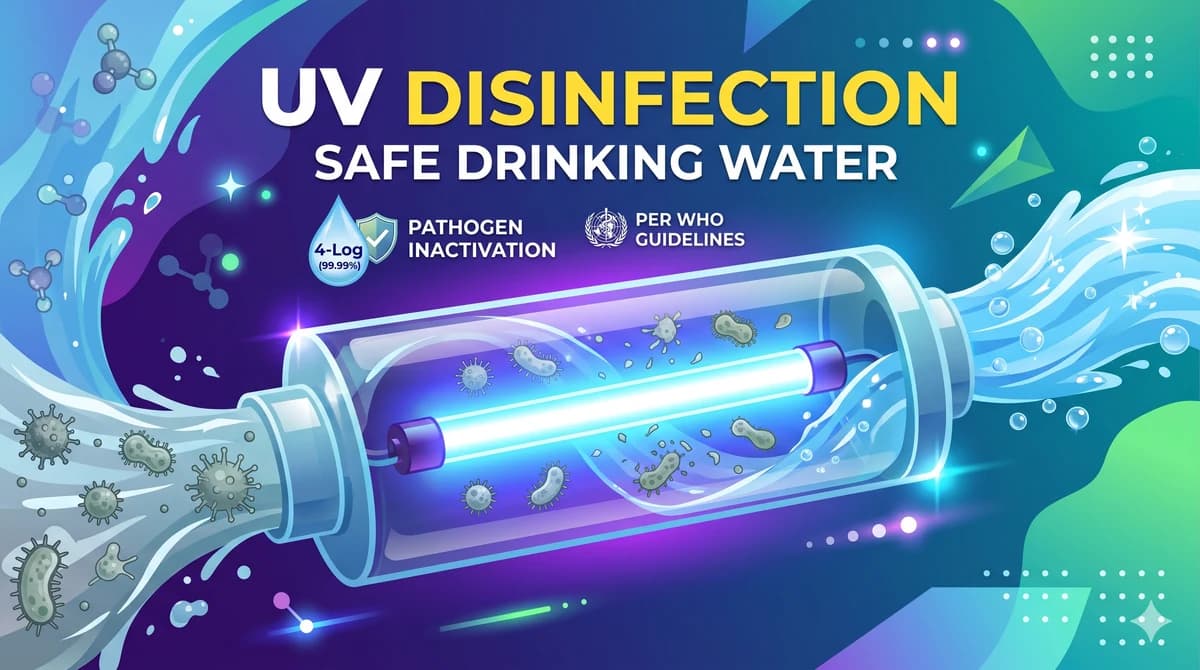
Drinking Water Treatment
IS:10500 compliant ozone and UV disinfection for bottled water, RO plants, and municipal drinking water