Middle East · SASO
تقنية الأوزون للمملكة العربية السعودية — الحلول الصناعية الكبرى
تتطلب رؤية 2030 في المملكة العربية السعودية تطوير البنية التحتية لمعالجة المياه وتقنيات الصرف الصناعي. يُعدّ الأوزون خياراً مثالياً لتعقيم مياه محطات التحلية لتجنب نواتج الكلورة الثانوية. تستوفي أجهزتنا معيار SASO 409 للمياه الصالحة للشرب وتأتي مع وثائق CE للتخليص الجمركي عبر جدة وميناء الدمام.
- CE Marking
- ISO 9001:2015
- ISO 12100
- RoHS
~70%
Drinking Water from Desalination
Saline Water Conversion Corporation (SWCC) Annual Report · 2022
2+ million Hajj; up to 10M Umrah/year
Annual Hajj & Umrah Pilgrims
Saudi Ministry of Hajj and Umrah · 2023
>36 million
Total Population
General Authority for Statistics — Kingdom of Saudi Arabia · 2022
Challenges and Solutions for Saudi Arabia
Key Challenges in Saudi Arabia
Post-desalination water from SWCC plants requires polishing to meet SASO 409 drinking water quality standards
SFDA food safety certification demands validated sanitation documentation for all food and beverage manufacturers
Vision 2030 industrial mega-projects require modern ETP systems meeting Ministry of Environment discharge standards
Large facilities, Hajj venues, and hospitals require robust infection control and water disinfection systems at scale
How We Solve It
Ozone post-desalination treatment achieving SASO 409 water quality in municipal and industrial plants
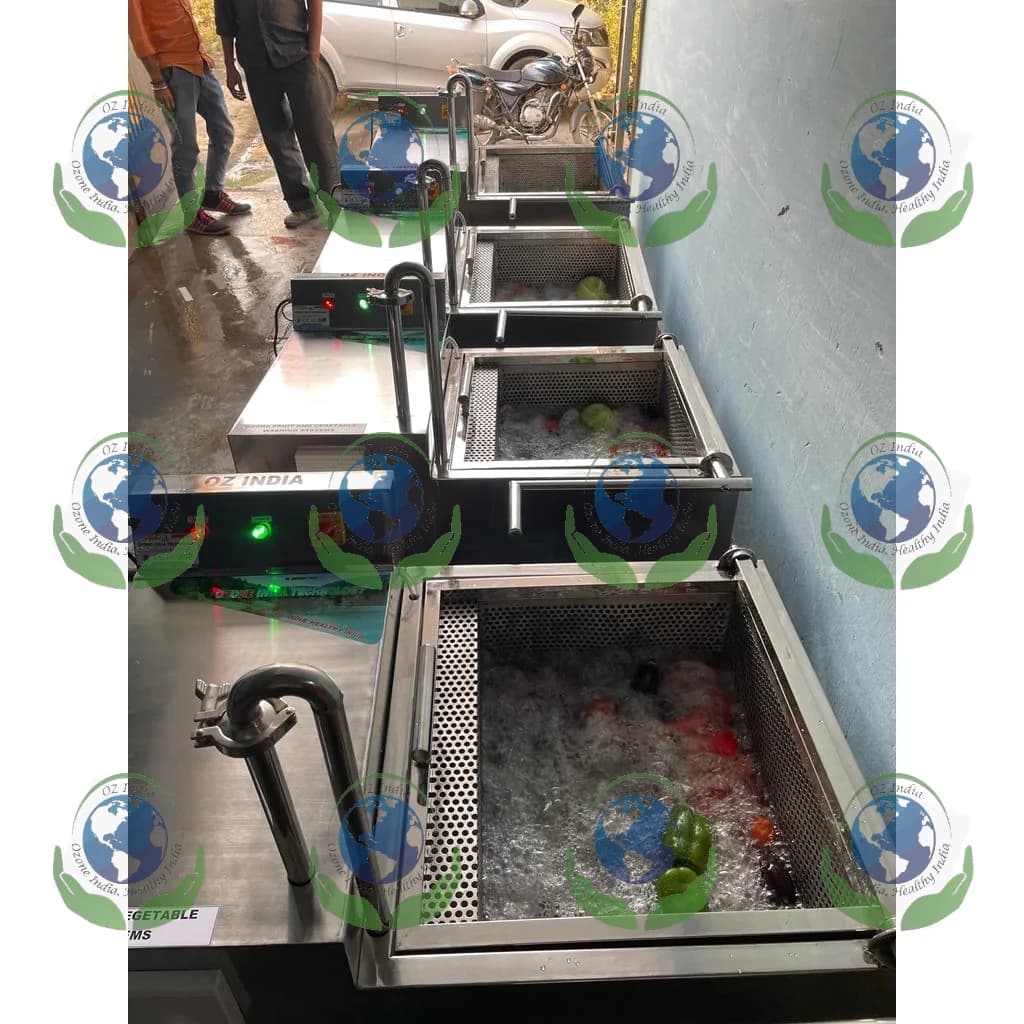
CE-certified food safety equipment with SFDA-compatible documentation for registered food manufacturers
Industrial ozone ETPs for Vision 2030 factories meeting Ministry of Environment effluent discharge standards
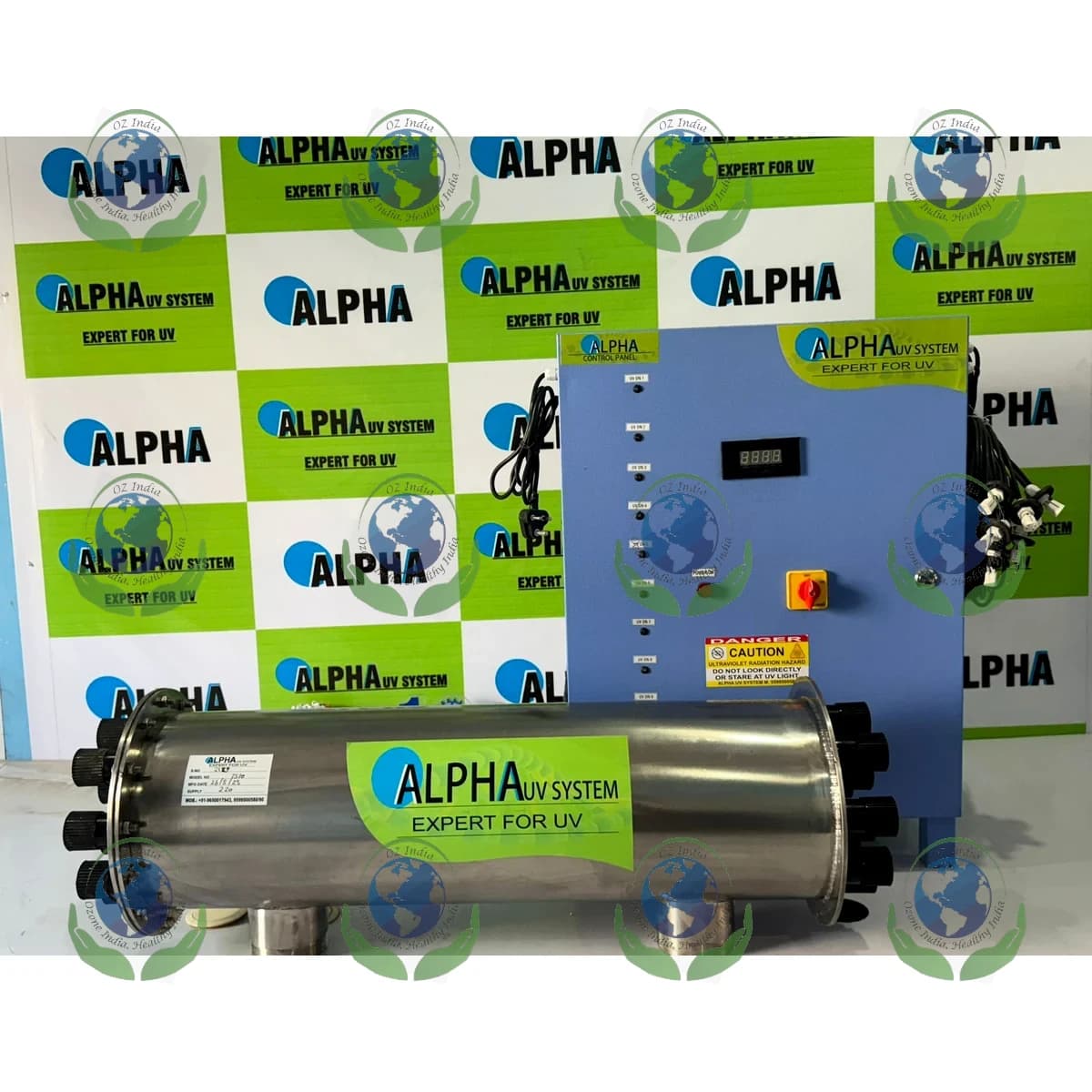
UV disinfection systems for mass-gathering venues, hospitals, and pharmaceutical water facilities
Recommended
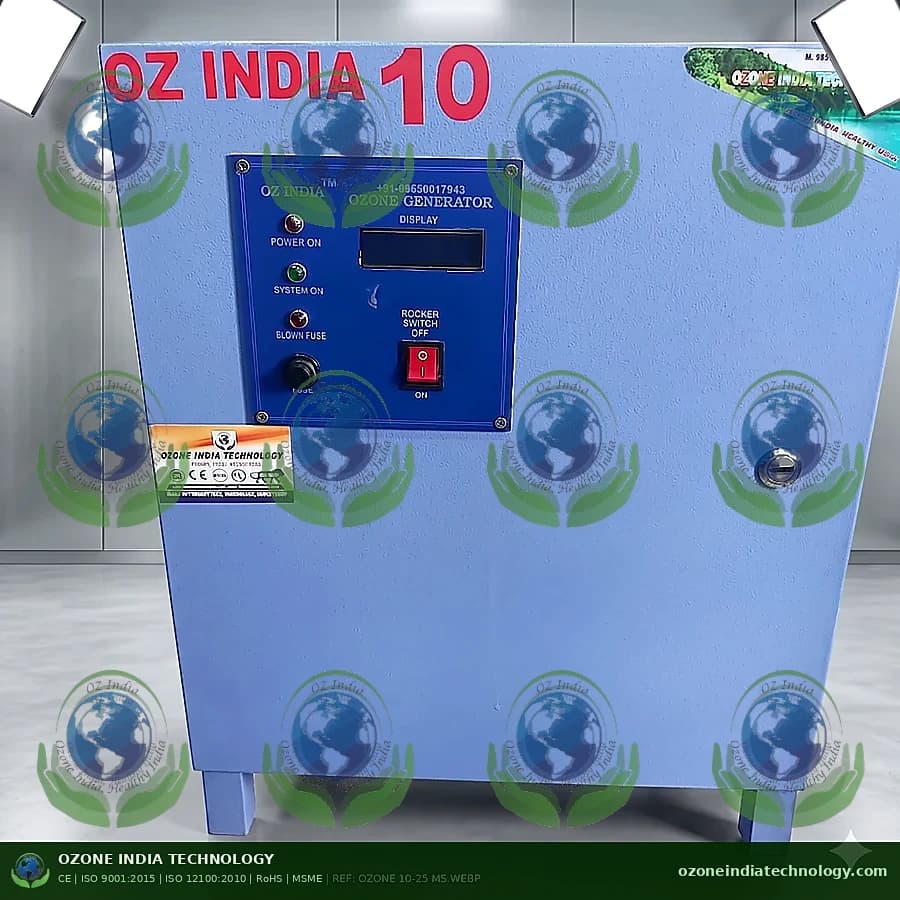
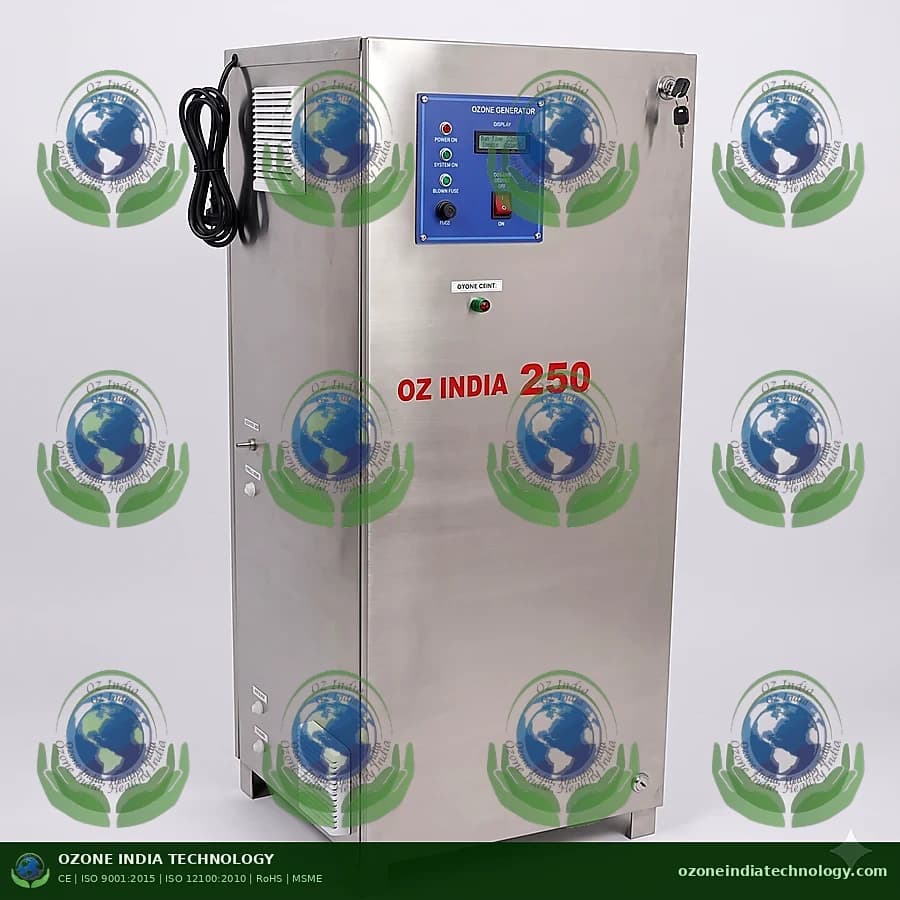
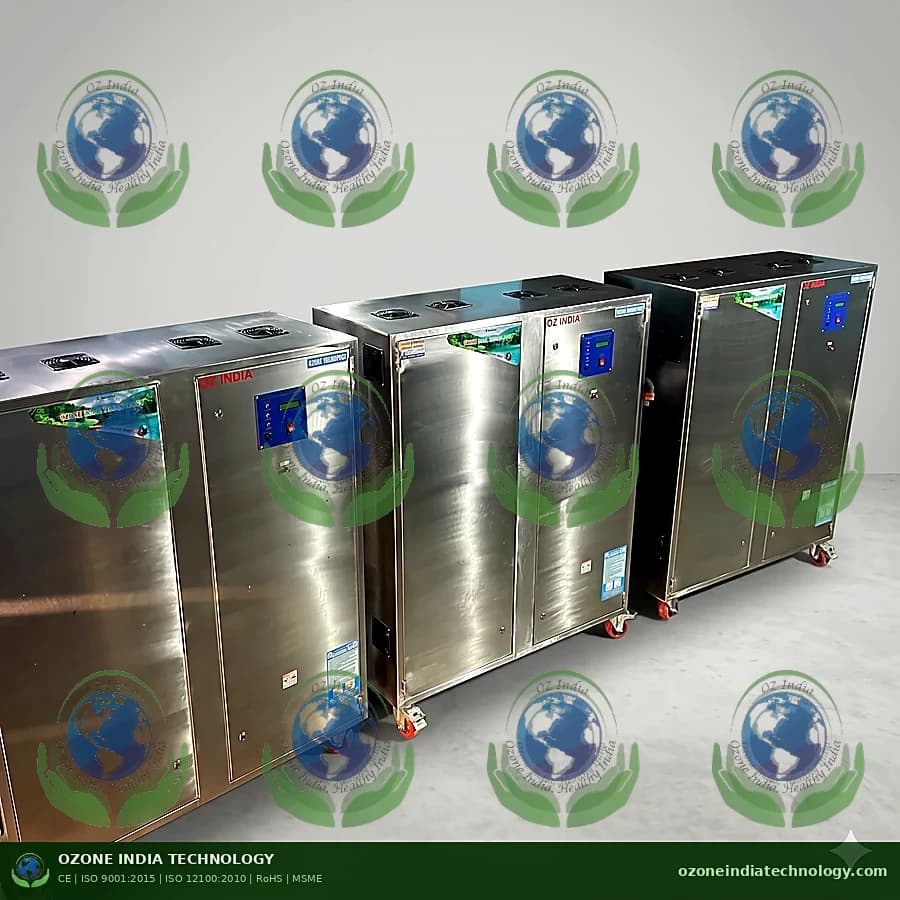
Products for Saudi Arabia
Regulatory Compliance & Why Us
SASO — Saudi Standards, Metrology and Quality Organization
CE & ISO 9001:2015 certified — full documentation for:
- SASO 409
- SFDA food safety
- GSO 2231
CE Marking
CE-2621A
ISO 9001:2015
UQ-270426AD1
ISO 12100
UQ-27426AD89
RoHS
QA-2704A2
Why Ozone India Technology for Saudi Arabia?
CE + ISO 9001 certification — accepted for SASO and SFDA facility registration documentation
Jeddah and Dammam port logistics support for smooth Saudi customs clearance
Factory-direct pricing — competitive with European suppliers at no minimum order commitment
Arabic documentation support and dedicated Middle East export team based in India
Systems scale from small plant (2g/hr) to mega industrial (10 kg/hr+) for Vision 2030 projects
Industry Applications in Saudi Arabia
Industry
Overview
Saudi Arabia · Middle East
Saudi Arabia is one of the most water-stressed nations on earth by natural endowment: it has no permanent rivers or lakes and an average annual rainfall below 100 mm over most of its territory. Approximately 70% of the country's drinking water supply is produced by the Saline Water Conversion Corporation (SWCC) through seawater desalination plants on the Red Sea and Arabian Gulf coasts, with the remainder drawn from rapidly depleting fossil aquifers in the Saq, Minjur, and Wajid formations. Saudi Arabia's per-capita water consumption at approximately 263 litres/day is among the highest globally, creating immense pressure on desalination infrastructure. The Saudi Water Authority (SWA), successor to the National Water Company, manages distribution across 13 administrative regions. Vision 2030's National Water Strategy targets advanced treatment upgrades — including ozone and membrane filtration — at major urban water works in Riyadh, Jeddah, Makkah, and Madinah to reduce water losses and improve microbiological safety.
Saudi Arabia's food sector is undergoing a structural transformation aligned with Vision 2030's food security diversification agenda, which targets domestic production covering 85% of the Kingdom's strategic food basket by 2030. The Saudi Food and Drug Authority (SFDA) enforces food safety under the General Food Safety Law and Codex Alimentarius-based standards. Saudi Arabia imports over 80% of its food by value, but government-backed agri-investment programmes — including Red Sea Farms, NADEC, and Al Marai — are scaling domestic protein production. Seafood exports from coastal aquaculture (shrimp, grouper) must meet SFDA microbiological criteria and EU/US import standards. The Hajj and Umrah pilgrimage industry — hosting 2+ million pilgrims annually at peak, with up to 10 million during Umrah season — generates extraordinary food safety and water quality demands on Makkah and Madinah hospitality infrastructure that require industrial-scale ozone water treatment deployment.
Saudi Arabia's water quality regulatory framework is governed by Saudi Standard SASO 409 for drinking water, which aligns with WHO GDWQ 4th edition parameters and is enforced by the Saudi Standards, Metrology and Quality Organization (SASO). The SFDA under its Food Safety Department issues facility approvals for food establishments and food manufacturing plants, requiring documented water treatment systems meeting SASO 409 at minimum. Industrial effluent standards are set by the Presidency of Meteorology and Environment (PME) under Royal Decree M/34, mandating BOD ≤ 20 mg/L and COD ≤ 150 mg/L for discharge to the sea and ≤ 30 mg/L BOD for discharge to municipal sewers. The National Industrial Development Corporation (NIDC) at Jubail — one of the world's largest industrial cities — requires all process water at petrochemical, chemical, and industrial facilities to comply with Royal Commission Environmental Regulations, which recognise ozone as a preferred treatment for zero-liquid-discharge and cooling water systems.
The scale and nature of Saudi Arabia's industrial and institutional water needs make it one of the highest-potential markets for ozone technology in the Middle East. The $100B+ Jubail Industrial City complex — hosting SABIC affiliates, SADAF, Sahara Petrochemicals, and over 100 secondary industries — requires vast volumes of process water with low scaling potential and zero biofilm formation in heat exchangers and cooling circuits. Ozone treatment in Jubail's industrial cooling water systems at 0.1–0.3 mg/L suppresses Legionella and reduces biocide chemical consumption by over 60%. In Makkah and Madinah, Al Bayt stadium, Masjid al-Haram expansion facilities, and the 150,000+ hotel rooms of the two holy cities require failsafe water disinfection infrastructure where ozone provides the redundancy that chlorine alone cannot assure during peak pilgrimage loading. Additionally, Saudi Vision 2030 NEOM megaproject specifications for its The Line and Sindalah components include green infrastructure requirements that prioritise ozone over chemical disinfection for water treatment.
CE-certified ozone systems from Indian manufacturers are strategically positioned for the Saudi market through multiple convergent factors. The Saudi-Indian bilateral trade relationship has deepened significantly since the 2019 India-Saudi Arabia Strategic Partnership Council, and Indian industrial equipment — particularly from ISO 9001:2015 certified manufacturers with CE marking — qualifies under SASO MRA frameworks for streamlined SASO product registration. Saudi Vision 2030's Industrial Development Program actively encourages procurement from competitively priced, high-quality manufacturing nations as an alternative to European sole-source suppliers in order to reduce industrial input costs and improve local economic value-add. Indian CE-certified ozone equipment costs 30–45% less than European equivalents while offering the same stainless-steel construction, PLC controls, and PVDF contact-material specifications that SWCC, SFDA-registered food plants, and Royal Commission Jubail require. Extended warranty, regional technical support through Indian engineering firms established in Riyadh and Dammam, and spare parts supply chains routed through existing Indian trade infrastructure provide the after-sales security that Saudi institutional buyers demand.
Sourced Data
Saudi Arabia — Market Statistics
All figures sourced from WHO, FAO, World Bank, and national agencies.
- Drinking Water from Desalination
- ~70%
- Annual Hajj & Umrah Pilgrims
- 2+ million Hajj; up to 10M Umrah/year
- Total Population
- >36 million
- Vision 2030 Industrial GDP Target
- >$100 billion
- Per-Capita Daily Water Consumption
- ~263 litres/day
- Jubail Industrial City Annual Output
- >$50 billion (industrial products)
Saline Water Conversion Corporation (SWCC) Annual Report · 2022
Saudi Ministry of Hajj and Umrah · 2023
General Authority for Statistics — Kingdom of Saudi Arabia · 2022
Saudi Vision 2030 — National Industrial Development Program · 2021
Saudi Water Authority (SWA) · 2022
Royal Commission for Jubail and Yanbu · 2022
Peer-Reviewed Evidence
Research & Scientific Basis
Published studies supporting ozone treatment in Saudi Arabia's industrial context.
Ozonation of Drinking Water: Part I. Oxidation Kinetics and Product Formation
Von Gunten U · Water Research · 2003
Von Gunten demonstrated that ozone at CT values of 1.5 mg·min/L in desalinated water with bromide concentrations typical of post-RO SWCC product water (50–150 μg/L) can maintain bromate formation below the WHO and SASO 409 guideline of 10 μg/L while achieving complete Giardia and Cryptosporidium inactivation. This CT-management protocol is the design basis for all ozone systems in Saudi desalinated water applications, from SWCC trunk mains to hotel point-of-entry treatment at Makkah pilgrimage facilities.
Wastewater Technology Fact Sheet: Ozone Disinfection
US EPA Office of Water · EPA 832-F-99-063 · 1999
The EPA fact sheet established dose-response data confirming that ozone at 6–10 mg/L with 10-minute contact time achieves 6-log virus inactivation and 4-log Cryptosporidium inactivation in municipal wastewater — performance metrics directly applicable to Saudi Arabia's expanding wastewater reuse programme under the National Water Strategy, which targets 70% treated wastewater reuse by 2030 for agricultural irrigation and industrial process water at Jubail and Yanbu industrial cities.
Ozonation of Water and Waste Water: A Practical Guide to Understanding Ozone and its Applications
Gottschalk C, Libra JA, Saupe A · Wiley-VCH (2nd Ed.) · 2010
Gottschalk et al. documented that ozone injection at 0.1–0.3 mg/L into industrial cooling water systems reduces Legionella concentrations below detectable limits within 24 hours and reduces biofilm mass by 80–95%, allowing biocide chemical consumption to be cut by 60% or more. For Jubail Industrial City's extensive cooling water infrastructure across petrochemical and chemical manufacturing complexes, where Legionella control is both a Royal Commission regulatory requirement and a worker health obligation, ozone-based cooling tower treatment represents the most cost-effective and chemically minimal compliance pathway.
Parameter Compliance
SASO Regulatory Parameters
How our certified systems perform against Saudi Arabia's official limits.
| Parameter | SASO Limit | Our System Output | Standard |
|---|---|---|---|
| Total Coliforms (Drinking Water) | 0 CFU/100 mL | Non-detectable | SASO 409 / WHO GDWQ 4th Ed. |
| Bromate (Ozonated Desalinated Water) | ≤ 10 μg/L | < 5 μg/L (CT-controlled at 1.5 mg·min/L) | SASO 409 |
| Turbidity | ≤ 1 NTU | < 0.2 NTU | SASO 409 |
| BOD (Industrial Effluent to Sea) | ≤ 20 mg/L | < 10 mg/L | PME Royal Decree M/34 |
| COD (Industrial Effluent to Sea) | ≤ 150 mg/L | < 50 mg/L (ozone + bio-treatment) | PME Royal Decree M/34 |
| Legionella pneumophila (Cooling Water) | < 100 CFU/L (Royal Commission Jubail) | Non-detectable (0.2 mg/L continuous ozone) | Royal Commission Environmental Regulations |
Sector Breakdown
Industry Applications in Saudi Arabia
Key sectors, production scale, and how ozone technology addresses each challenge.
| Sector | Scale / Value | Challenge | Our Solution |
|---|---|---|---|
| SWCC Desalinated Water Distribution | Public utility — 36M+ population served | Post-desalination Legionella and biofilm in distribution networks; chlorine decay in long-distance trunk mains; bromate control | Booster ozone stations 10–350 g/hr at re-injection points with continuous CT monitoring and automatic dose control |
| Hajj & Umrah Pilgrimage Hospitality (Makkah, Madinah) | Makkah hospitality sector >$12B annually | Peak water demand 2–10x baseline; zero tolerance for waterborne illness events; SFDA food establishment compliance | Point-of-entry ozone systems 25–75 g/hr for hotel water supply; ozone CIP for mass-catering food preparation lines |
| Jubail Industrial City (Cooling & Process Water) | >$50B industrial output | Legionella control; biofilm in heat exchangers; Royal Commission Environmental Regulations compliance; chemical biocide cost | Continuous ozone injection 0.1–0.3 mg/L in cooling circuits; 60%+ reduction in biocide chemical use; 4-log Legionella elimination |
| Bottled & Packaged Water | Saudi bottled water market ~$1B+ | SASO 409 zero-coliform compliance; bromate control in desalinated source water; Hajj-season production surge capacity | Scalable ozone generators 2–100 g/hr with PLC-controlled dose and inline bromate monitoring for surge-capacity bottling operations |
| SFDA-Registered Food Manufacturing | Vision 2030 domestic food production target | SFDA facility approval requires documented water treatment; Codex CAC/RCP 1-1969 HACCP compliance; Salmonella and E. coli control | Ozone water treatment integrated into food manufacturing CIP and produce-wash systems; full SFDA audit documentation provided |
| Wastewater Reuse (National Water Strategy 2030) | 70% treated wastewater reuse target by 2030 | 6-log virus inactivation required for agricultural reuse; drug-resistant pathogens in treated effluent; Cryptosporidium in reclaimed water | Ozone disinfection at 6–10 mg/L (EPA 832-F-99-063 design basis) achieving 6-log virus and 4-log Cryptosporidium inactivation for reuse-grade effluent |
SWCC Desalinated Water Distribution
Public utility — 36M+ population served
Post-desalination Legionella and biofilm in distribution networks; chlorine decay in long-distance trunk mains; bromate control
Booster ozone stations 10–350 g/hr at re-injection points with continuous CT monitoring and automatic dose control
Hajj & Umrah Pilgrimage Hospitality (Makkah, Madinah)
Makkah hospitality sector >$12B annually
Peak water demand 2–10x baseline; zero tolerance for waterborne illness events; SFDA food establishment compliance
Point-of-entry ozone systems 25–75 g/hr for hotel water supply; ozone CIP for mass-catering food preparation lines
Jubail Industrial City (Cooling & Process Water)
>$50B industrial output
Legionella control; biofilm in heat exchangers; Royal Commission Environmental Regulations compliance; chemical biocide cost
Continuous ozone injection 0.1–0.3 mg/L in cooling circuits; 60%+ reduction in biocide chemical use; 4-log Legionella elimination
Bottled & Packaged Water
Saudi bottled water market ~$1B+
SASO 409 zero-coliform compliance; bromate control in desalinated source water; Hajj-season production surge capacity
Scalable ozone generators 2–100 g/hr with PLC-controlled dose and inline bromate monitoring for surge-capacity bottling operations
SFDA-Registered Food Manufacturing
Vision 2030 domestic food production target
SFDA facility approval requires documented water treatment; Codex CAC/RCP 1-1969 HACCP compliance; Salmonella and E. coli control
Ozone water treatment integrated into food manufacturing CIP and produce-wash systems; full SFDA audit documentation provided
Wastewater Reuse (National Water Strategy 2030)
70% treated wastewater reuse target by 2030
6-log virus inactivation required for agricultural reuse; drug-resistant pathogens in treated effluent; Cryptosporidium in reclaimed water
Ozone disinfection at 6–10 mg/L (EPA 832-F-99-063 design basis) achieving 6-log virus and 4-log Cryptosporidium inactivation for reuse-grade effluent
Ready to export to Saudi Arabia
Deploy Ozone Technology in Saudi Arabia
CE & ISO 9001:2015 certified. Full export documentation. Factory-direct from Greater Noida, India.