Africa · NAFDAC
Ozone Generator for Nigeria — Water Purification & Industrial Effluent Treatment
Nigeria's rapid industrial growth requires reliable effluent treatment solutions that meet DPR and state environmental agency discharge limits. NAFDAC-regulated food and beverage producers use ozone as a chemical-free sanitiser approved by WHO and FDA. Our CE-certified systems come with full technical documentation supporting NAFDAC facility registration and SON product certification.
- CE Marking
- ISO 9001:2015
- ISO 12100
- RoHS
~60 million people
Nigerians lacking access to safe drinking water
WaterAid Nigeria · 2022
4,000+
NAFDAC-registered food and beverage companies
National Agency for Food and Drug Administration and Control (NAFDAC) · 2022
2.1 million barrels/day
Nigeria crude oil production
Nigerian National Petroleum Corporation (NNPC) · 2022
Challenges and Solutions for Nigeria
Key Challenges in Nigeria
Borehole water heavily contaminated with iron, bacteria, and volatile organics across Lagos, Abuja, and Port Harcourt industrial zones
DPR and state environmental agencies enforce strict effluent discharge limits for oil, gas, and manufacturing facilities
NAFDAC registration requires documented sanitation processes for all food, beverage, and pharmaceutical facilities
Municipal water infrastructure gaps force industries to rely entirely on untreated borehole water
How We Solve It
Ozone borehole treatment systems eliminate iron, bacteria, and odour — achieving NAFDAC-grade water quality
Industrial effluent treatment plants (ETPs) using ozone reduce COD and BOD to meet DPR discharge limits
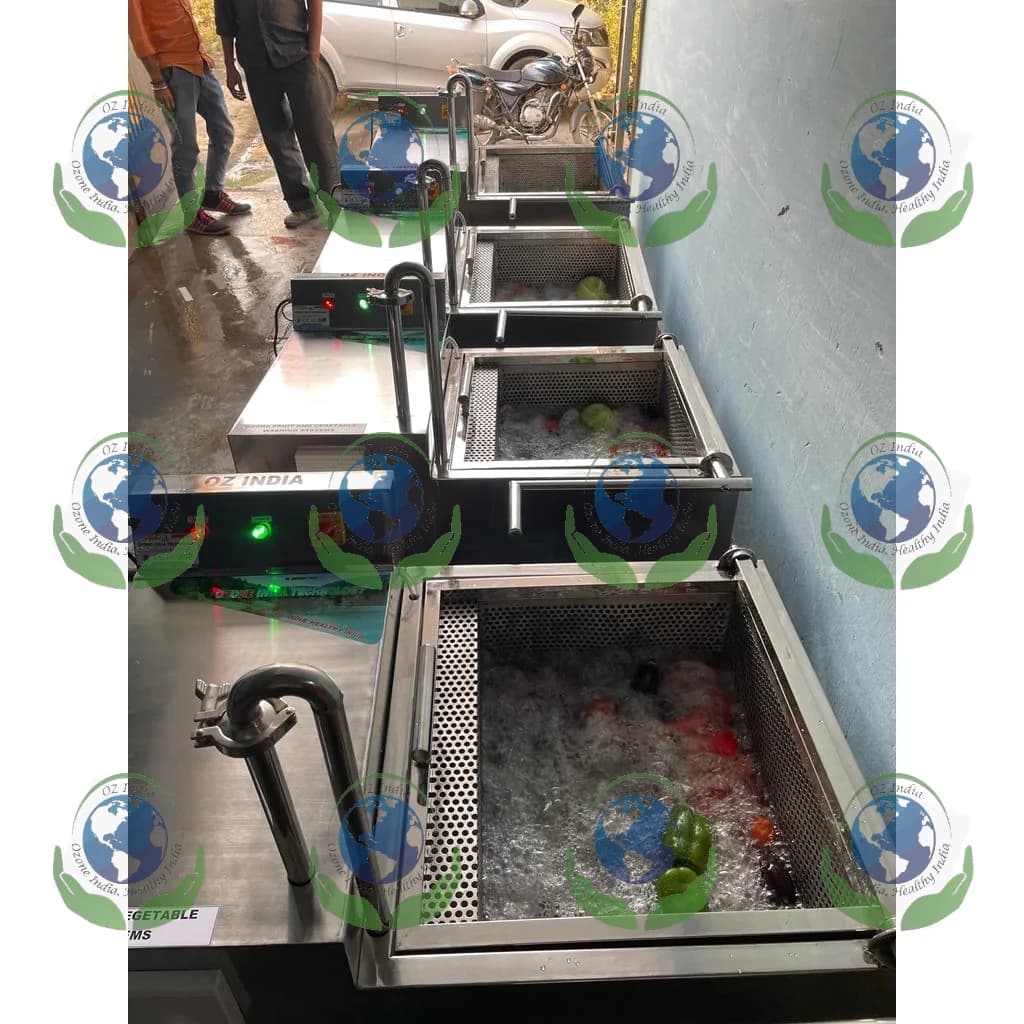
CE-certified vegetable and seafood washers support NAFDAC-compliant food production hygiene requirements
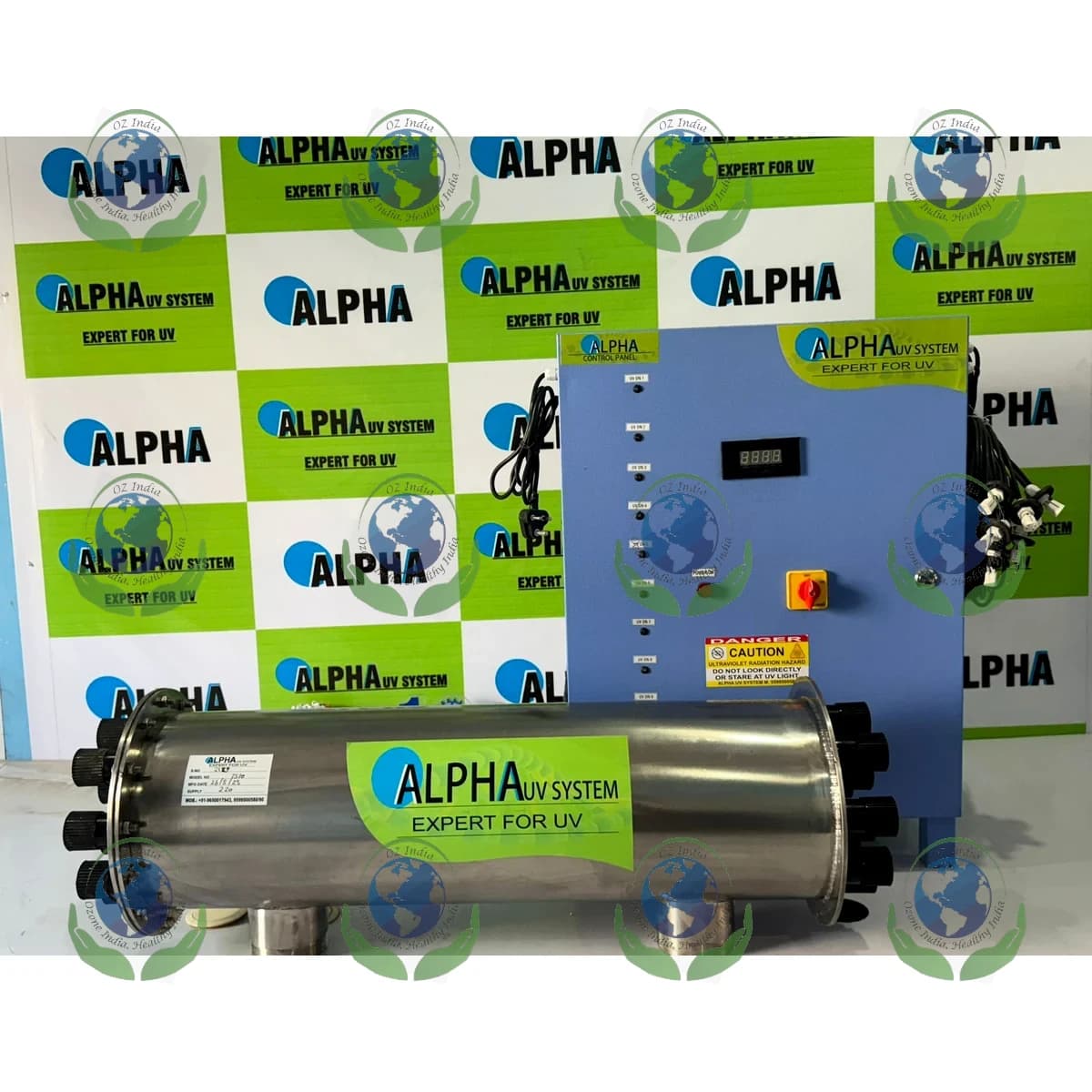
UV water systems provide chemical-free disinfection for bottling plants and pharmaceutical water production
Recommended
Products for Nigeria
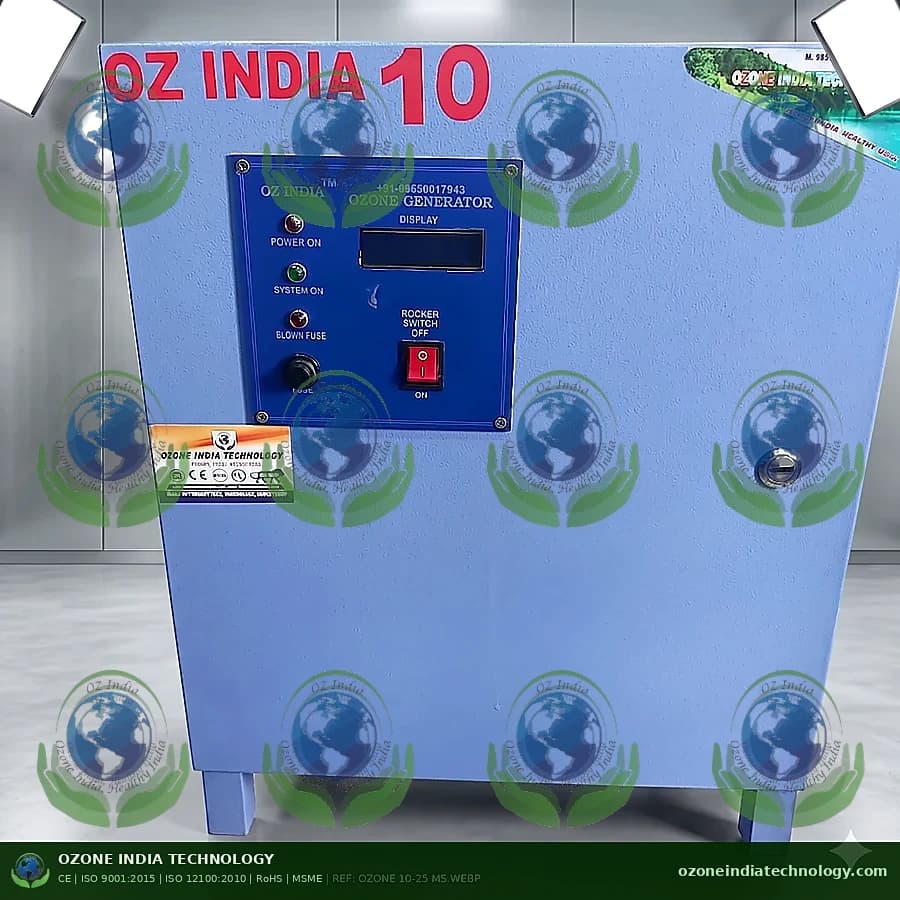
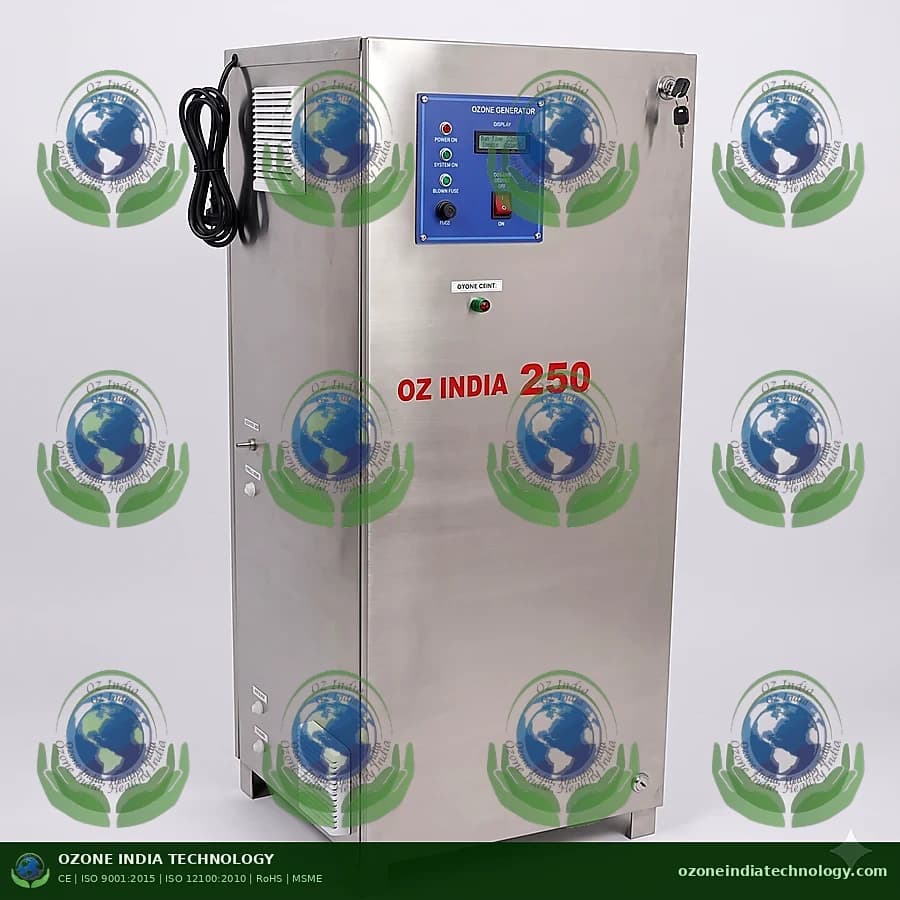
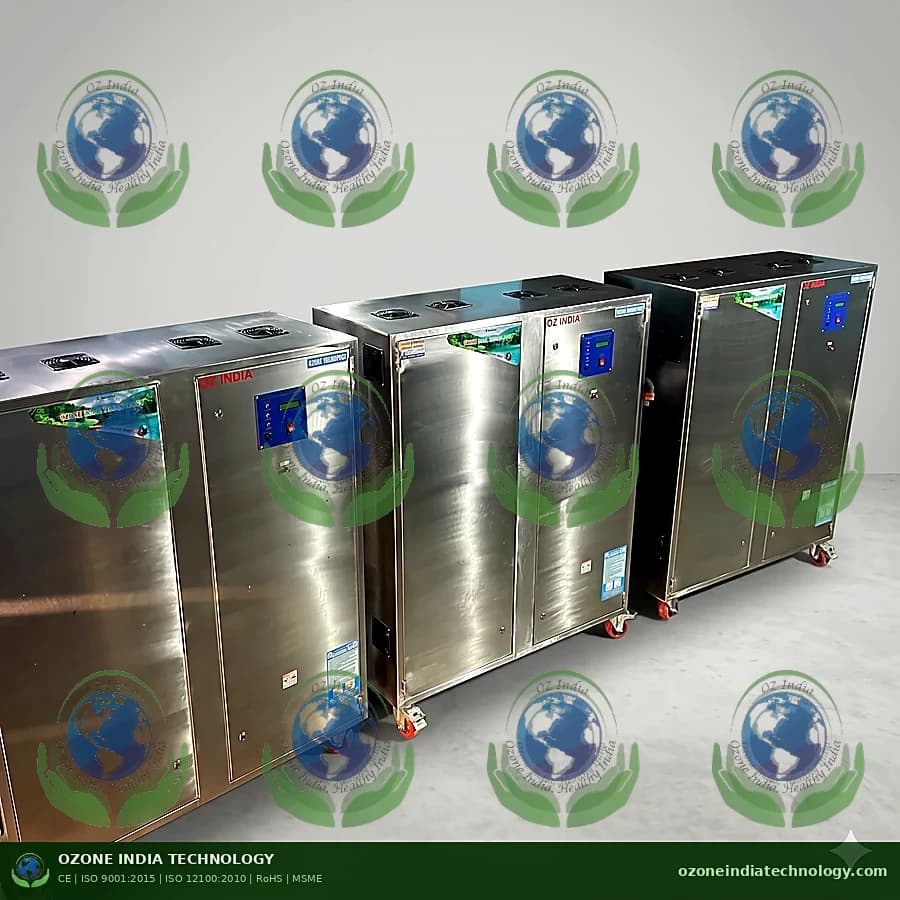
Regulatory Compliance & Why Us
NAFDAC — National Agency for Food and Drug Administration and Control
CE & ISO 9001:2015 certified — full documentation for:
- NAFDAC regulations
- SON standards
- NIS ISO 9001
CE Marking
CE-2621A
ISO 9001:2015
UQ-270426AD1
ISO 12100
UQ-27426AD89
RoHS
QA-2704A2
Why Ozone India Technology for Nigeria?
CE + ISO 9001 certification recognised by SON and NAFDAC for facility registration documentation
Full NAFDAC facility documentation package supplied with every product purchase
India-Nigeria established trade route — competitive freight with reliable delivery timelines
No minimum order — single-unit exports with export invoice, packing list, and CE declaration
Post-sale technical support via WhatsApp and remote troubleshooting in English
Industry Applications in Nigeria
Industry
Overview
Nigeria · Africa
Nigeria is home to Sub-Saharan Africa's largest population — approximately 220 million people — yet an estimated 60 million Nigerians lack access to safe drinking water, placing enormous pressure on municipal utilities across Lagos, Kano, Port Harcourt, Ibadan, and Abuja. Surface water sources such as the Niger and Benue rivers are increasingly contaminated by industrial discharge, agricultural runoff, and artisanal gold and tin mining activities in Zamfara and Plateau States. Groundwater boreholes, which supply the majority of urban and peri-urban households, frequently exhibit elevated iron, manganese, nitrate, and coliform contamination. The Federal Ministry of Water Resources enforces the Nigerian Standard for Drinking Water Quality (NIS 554:2015), which aligns broadly with WHO 2011 guidelines but enforcement at state and local government levels remains inconsistent due to funding constraints and limited laboratory infrastructure. Advanced oxidation via ozone represents a chemically robust disinfection pathway that sidesteps the chlorine supply chain vulnerabilities common across Nigerian utility operations.
Nigeria's food processing and manufacturing sector is anchored by the NAFDAC-registered universe of over 4,000 food and beverage companies, spanning palm oil refining, tomato paste manufacturing, fish processing, poultry processing, and the country's significant brewery and beverage industry. Lagos State alone hosts over 1,200 food establishments. Nigeria is also the world's largest producer of cassava (~60 million tonnes/year) and a major producer of yam, sorghum, and millet — crops that feed large-scale starch and alcohol processing industries in Ogun and Oyo States. The Nigerian Export Promotion Council (NEPC) has identified processed food as a priority non-oil export sector, targeting USD 10 billion in non-oil export revenue. For these industries to penetrate EU, UK, and US markets, they must demonstrate conformity with international food safety standards including HACCP, ISO 22000, and SQF, all of which require validated pathogen-reduction steps in process water.
Nigeria's regulatory framework for water quality and environmental compliance centres on three principal bodies: the National Agency for Food and Drug Administration and Control (NAFDAC) for food and beverage process water, the Department of Petroleum Resources (DPR) for effluent from oil and gas operations, and the Federal Ministry of Environment's National Environmental Standards and Regulations Enforcement Agency (NESREA) for industrial effluent. The DPR's Effluent Limitation Regulations set a BOD limit of 30 mg/L and COD of 250 mg/L for process water discharge to water bodies — among the most cited industrial compliance requirements in the Niger Delta. NAFDAC's Good Manufacturing Practice guidelines for food factories mandate potable process water meeting NIS 554 coliform standards. The complexity of this multi-agency environment means equipment suppliers must provide documentation satisfying NAFDAC, NESREA, and DPR simultaneously, creating strong demand for internationally certified systems.
Ozone technology addresses Nigeria's specific industrial water challenges with particular effectiveness in three areas. First, in the oil and gas-adjacent industrial zones of Port Harcourt and Warri, ozone's ability to oxidise phenols, BTEX compounds (benzene, toluene, ethylbenzene, xylene), and total petroleum hydrocarbons in produced water and industrial effluent makes it a credible pre-treatment technology ahead of biological polishing, allowing operators to meet DPR BOD and COD limits. Second, Nigeria's brewery and soft-drink sector — which includes major players in Lagos and Onitsha — requires high-purity, chlorine-free water for consistent product quality; ozone disinfection of raw water ahead of reverse osmosis and activated carbon filtration is now the international industry standard for premium beverage production. Third, the expanding cold-storage and fish-processing sector in Lagos, Warri, and Kano requires ozone-treated chilling water to meet NAFDAC's microbial specifications for processed fish.
Indian-manufactured CE-certified ozone equipment holds important advantages in the Nigerian procurement context. Nigeria's import regime for capital equipment includes a 5% import duty under the ECOWAS Common External Tariff (CET) for most water treatment machinery, but CE marking triggers preferential consideration in NAFDAC and NESREA regulatory submissions as evidence of conformity with recognised international standards. India's historically strong bilateral trade relationship with Nigeria — Nigeria is India's largest trading partner in Africa — means that established shipping routes from Nhava Sheva to Apapa (Lagos) port operate with 18–24 day transit times and well-understood customs procedures. Ozone India Technology's systems operate on Nigeria's 415V/50Hz three-phase supply (matching UK-derived Nigerian standards) and are built for ambient temperatures up to 50°C, matching Lagos and Kano's extreme seasonal heat. Post-installation support via WhatsApp — Nigeria's dominant business communication channel — and pricing in USD with 30/70 payment terms compatible with Nigerian LC practices further reduce procurement friction.
Sourced Data
Nigeria — Market Statistics
All figures sourced from WHO, FAO, World Bank, and national agencies.
- Nigerians lacking access to safe drinking water
- ~60 million people
- NAFDAC-registered food and beverage companies
- 4,000+
- Nigeria crude oil production
- 2.1 million barrels/day
- Nigeria cassava production (world's largest producer)
- ~60 million tonnes/year
- DPR effluent BOD discharge limit
- 30 mg/L
- Non-oil export revenue target (processed food priority)
- USD 10 billion
WaterAid Nigeria · 2022
National Agency for Food and Drug Administration and Control (NAFDAC) · 2022
Nigerian National Petroleum Corporation (NNPC) · 2022
Food and Agriculture Organization (FAO) · 2021
Department of Petroleum Resources Effluent Limitation Regulations · 2002
Nigerian Export Promotion Council (NEPC) · 2021
Peer-Reviewed Evidence
Research & Scientific Basis
Published studies supporting ozone treatment in Nigeria's industrial context.
Ozonation of Drinking Water: Part I. Oxidation Kinetics and Product Formation
Von Gunten, U. · Water Research · 2003
Demonstrated that ozone achieves superior disinfection efficacy compared to chlorine for Cryptosporidium and Giardia while avoiding the trihalomethane (THM) and haloacetic acid (HAA) by-products that form when chlorine reacts with the high natural organic matter loads typical of Niger and Benue river water used by Nigerian utilities. The paper's kinetic models underpin treatment plant design for Nigerian municipal systems.
Application of Ozone for Enhancement of the Microbiological Safety and Quality of Fresh Fruits and Vegetables
Kim, J.G., Yousef, A.E., Dave, S. · Journal of Food Protection · 1999
Demonstrated 3–5 log reduction of E. coli O157:H7 and Salmonella on fresh produce using aqueous ozone at 1–2 ppm, with no adverse sensory effects. Directly relevant to Nigeria's large tomato processing industry in Kano and the expanding packaged food sector regulated by NAFDAC, where process water quality is a mandatory GMP audit parameter.
Uses of Ozone in Drinking Water Treatment
Rice, R.G. · Ozone: Science & Engineering · 1996
Comprehensive review establishing ozone's role in oxidising iron, manganese, and recalcitrant organic compounds in municipal water treatment. Critically relevant to Nigerian utility operators in Lagos and Abuja dealing with high turbidity surface water and iron-rich borehole sources that overwhelm conventional chlorination, and for DPR compliance in industrial effluent treatment in the Niger Delta.
Parameter Compliance
NAFDAC Regulatory Parameters
How our certified systems perform against Nigeria's official limits.
| Parameter | NAFDAC Limit | Our System Output | Standard |
|---|---|---|---|
| Total Coliforms | 0 CFU/100 mL (NIS 554:2015) | Non-detectable (<1 CFU/100 mL) | Nigerian Industrial Standard NIS 554:2015 |
| Effluent BOD (DPR industrial discharge) | 30 mg/L (DPR Effluent Regulations) | <10 mg/L | DPR Effluent Limitation Regulations |
| Effluent COD (DPR industrial discharge) | 250 mg/L (DPR Effluent Regulations) | <60 mg/L | DPR Effluent Limitation Regulations |
| Total Dissolved Solids (TDS) | 500 mg/L (NIS 554:2015) | <200 mg/L (ozone + filtration system) | Nigerian Industrial Standard NIS 554:2015 |
| Turbidity | 5 NTU (NIS 554:2015) | <1 NTU | Nigerian Industrial Standard NIS 554:2015 |
| Total Petroleum Hydrocarbons (effluent) | 10 mg/L (NESREA National Environmental Standards) | <1 mg/L (ozone advanced oxidation) | NESREA Industrial Effluent Standards |
Sector Breakdown
Industry Applications in Nigeria
Key sectors, production scale, and how ozone technology addresses each challenge.
| Sector | Scale / Value | Challenge | Our Solution |
|---|---|---|---|
| Brewery & Beverage Manufacturing | USD 4.5B (Nigerian Breweries / Euromonitor 2022) | Chlorine taste carry-over affects product quality; high organic load in raw water exceeds brewery inlet specifications | Ozone primary disinfection upstream of activated carbon filtration; removes chlorine demand, THM precursors, and coliform bacteria; standard practice in SABMiller and Heineken global facilities |
| Palm Oil Processing | USD 1.2B (NIFOR / FAO 2021) | Palm oil mill effluent (POME) BOD 20,000–50,000 mg/L; NESREA discharge limits at 30 mg/L BOD require aggressive pre-treatment | Ozone pre-treatment oxidises phenolic compounds and reduces COD by 40–60% ahead of anaerobic digesters; enables mills in Edo and Delta States to meet NESREA limits without expensive activated sludge systems |
| Petroleum Refining & Petrochemical | USD 23B crude oil export (NNPC 2022) | BTEX and phenol contamination in produced water and refinery effluent; DPR COD limit 250 mg/L routinely exceeded | Ozone advanced oxidation as tertiary treatment degrades BTEX and phenols to CO₂ and H₂O; Port Harcourt and Warri refinery effluent streams brought to DPR compliance |
| Fish Processing & Cold Storage (Lagos, Warri) | USD 950M (FAO Nigeria Fisheries 2021) | NAFDAC microbial audits require potable process water; ice made from unfiltered water fails coliform tests | Ozone systems for ice plant water and chilling tank disinfection; eliminates Listeria and Salmonella; NAFDAC GMP documentation provided with every installation |
| Bottled Water (sachet water industry) | NGN 450B (NAFDAC / NESREA 2022) | Over 900 licensed sachet water producers in Lagos alone; chlorine taste, THM formation, and NAFDAC compliance failures | Compact ozone generators for small and mid-scale bottling lines; NIS 554 coliform compliance; eliminates chlorine aftertaste that drives consumer complaints filed with NAFDAC |
| Textile Dyeing & Finishing (Kano, Lagos) | USD 320M (Nigeria Textile Manufacturers Association 2021) | Colour and COD in dyehouse effluent exceed NESREA limits; reactive dye wastewater at COD 1,500–3,000 mg/L | Ozone decolourisation reduces reactive azo dye COD by 60–80% in 15–20 minutes contact time; Kano textile clusters achieve NESREA effluent compliance without costly biological lagoons |
Brewery & Beverage Manufacturing
USD 4.5B (Nigerian Breweries / Euromonitor 2022)
Chlorine taste carry-over affects product quality; high organic load in raw water exceeds brewery inlet specifications
Ozone primary disinfection upstream of activated carbon filtration; removes chlorine demand, THM precursors, and coliform bacteria; standard practice in SABMiller and Heineken global facilities
Palm Oil Processing
USD 1.2B (NIFOR / FAO 2021)
Palm oil mill effluent (POME) BOD 20,000–50,000 mg/L; NESREA discharge limits at 30 mg/L BOD require aggressive pre-treatment
Ozone pre-treatment oxidises phenolic compounds and reduces COD by 40–60% ahead of anaerobic digesters; enables mills in Edo and Delta States to meet NESREA limits without expensive activated sludge systems
Petroleum Refining & Petrochemical
USD 23B crude oil export (NNPC 2022)
BTEX and phenol contamination in produced water and refinery effluent; DPR COD limit 250 mg/L routinely exceeded
Ozone advanced oxidation as tertiary treatment degrades BTEX and phenols to CO₂ and H₂O; Port Harcourt and Warri refinery effluent streams brought to DPR compliance
Fish Processing & Cold Storage (Lagos, Warri)
USD 950M (FAO Nigeria Fisheries 2021)
NAFDAC microbial audits require potable process water; ice made from unfiltered water fails coliform tests
Ozone systems for ice plant water and chilling tank disinfection; eliminates Listeria and Salmonella; NAFDAC GMP documentation provided with every installation
Bottled Water (sachet water industry)
NGN 450B (NAFDAC / NESREA 2022)
Over 900 licensed sachet water producers in Lagos alone; chlorine taste, THM formation, and NAFDAC compliance failures
Compact ozone generators for small and mid-scale bottling lines; NIS 554 coliform compliance; eliminates chlorine aftertaste that drives consumer complaints filed with NAFDAC
Textile Dyeing & Finishing (Kano, Lagos)
USD 320M (Nigeria Textile Manufacturers Association 2021)
Colour and COD in dyehouse effluent exceed NESREA limits; reactive dye wastewater at COD 1,500–3,000 mg/L
Ozone decolourisation reduces reactive azo dye COD by 60–80% in 15–20 minutes contact time; Kano textile clusters achieve NESREA effluent compliance without costly biological lagoons
Ready to export to Nigeria
Deploy Ozone Technology in Nigeria
CE & ISO 9001:2015 certified. Full export documentation. Factory-direct from Greater Noida, India.