Asia · BSTI
Ozone Generator for Bangladesh — Garment ETP, Water Treatment & ZDHC Compliance
Bangladesh's garment and textile industry — supplying H&M, Inditex, PVH, and other global brands — must operate ZDHC-compliant effluent treatment plants (ETPs). Ozone-based ETPs reduce COD, colour, and potassium permanganate residues in textile wastewater, meeting DOE Bangladesh discharge limits at lower operating cost than chemical chlorination. For denim finishing, the ozone denim machine eliminates pumice stone and KMnO₄, enabling GOTS and ZDHC certification. BSTI standard BDS 1520 drinking water compliance is achieved with our CE-certified ozone purifiers deployed across Dhaka, Gazipur, and Chittagong industrial zones.
- CE Marking
- ISO 9001:2015
- ISO 12100
- RoHS
$42.6 Billion
RMG Export Earnings (FY2021–22)
Bangladesh Garment Manufacturers and Exporters Association (BGMEA) · 2022
81%
Share of Total Export Revenue from RMG
BGMEA Annual Report · 2022
20 Million+
People Affected by Arsenic Contamination Above WHO Guideline (10 µg/L)
Bangladesh Arsenic Mitigation Water Supply Project (BAMWSP) / World Bank · 2019
Challenges and Solutions for Bangladesh
Key Challenges in Bangladesh
Garment ETPs must achieve ZDHC MRSL compliance for H&M, Inditex, PVH, and other EU/US brands' strict discharge limits
Denim finishing with KMnO4 and pumice stone prevents GOTS and ZDHC certification — a growing buyer requirement
Arsenic contamination in groundwater affects 61 of 64 districts, posing severe public health risk
Pharmaceutical manufacturers require WHO GMP-grade water meeting BSTI BDS 1520 for export registration
How We Solve It
Ozone ETP systems reduce textile wastewater COD, colour, and BOD to DOE Bangladesh and ZDHC discharge limits
Ozone denim machines replace KMnO4 and pumice stone — enabling GOTS, ZDHC, and organic denim certification
CE-certified ozone water purifiers reduce arsenic-associated organics and achieve BSTI BDS 1520 compliance
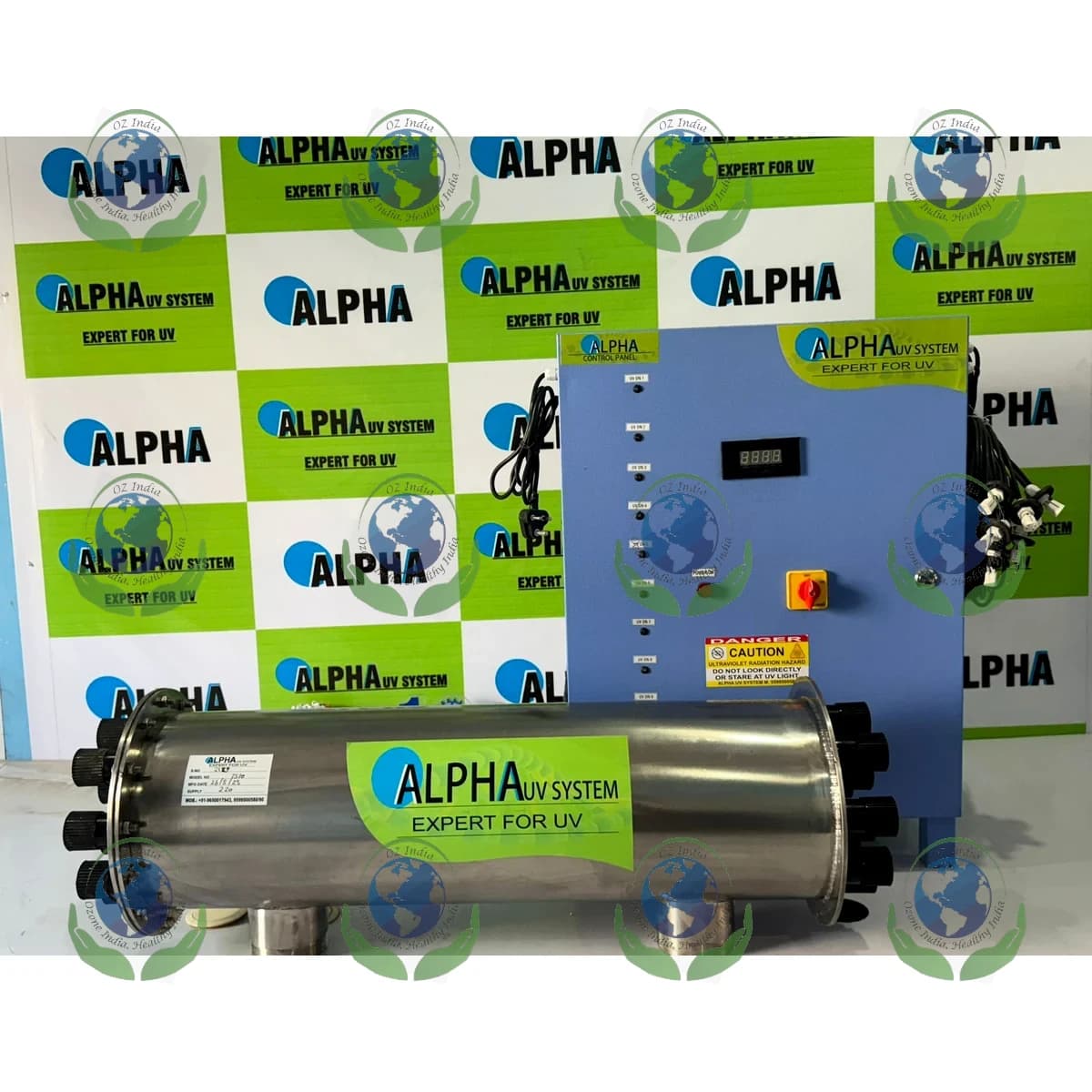
UV pharmaceutical water systems providing WHO GMP-grade water for Dhaka and Gazipur pharma manufacturers
Recommended
Products for Bangladesh
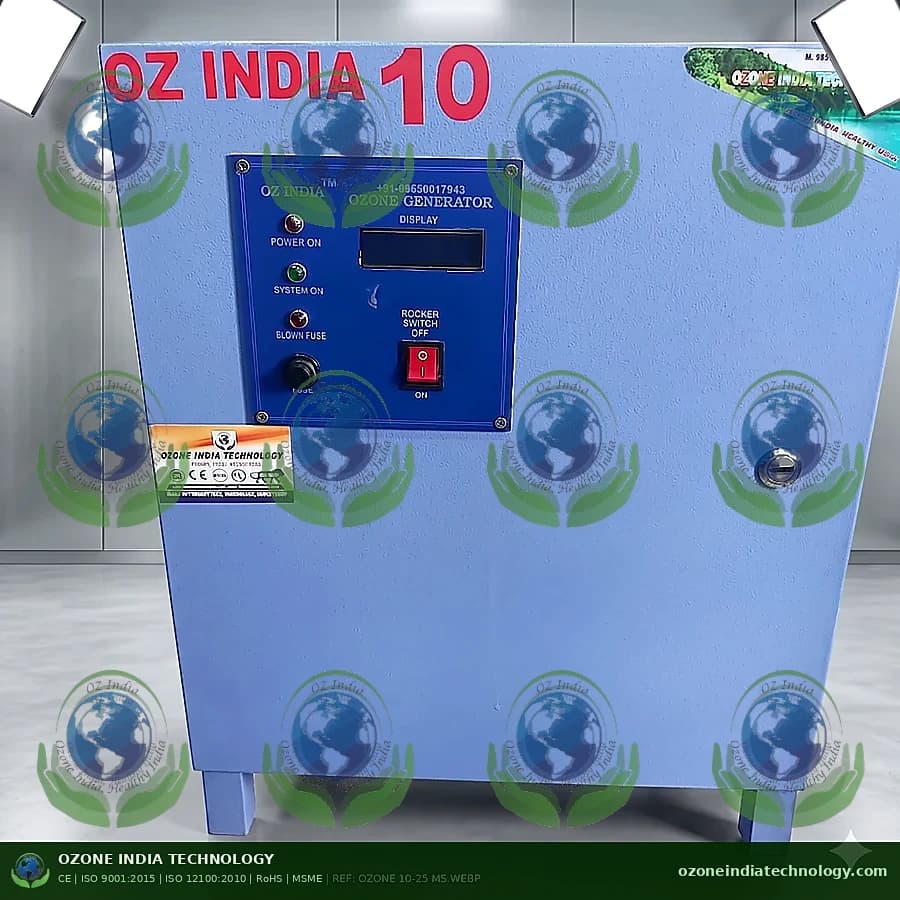
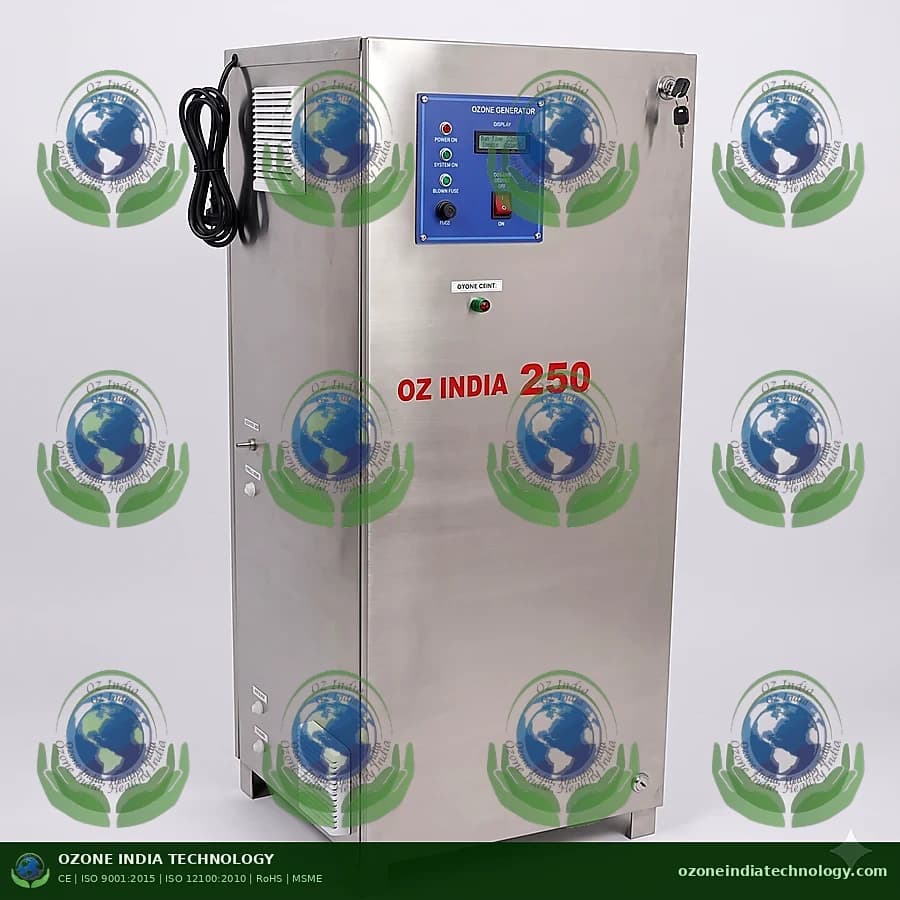
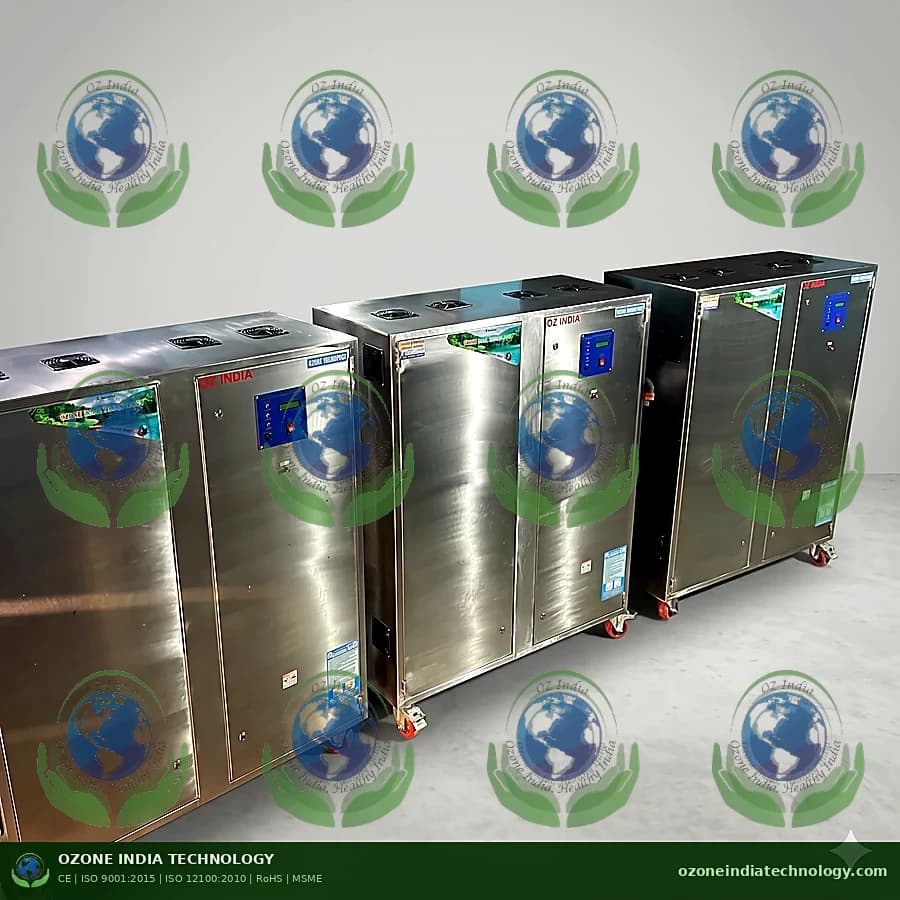
Regulatory Compliance & Why Us
BSTI — Bangladesh Standards and Testing Institution
CE & ISO 9001:2015 certified — full documentation for:
- BDS 1520
- BSTI drinking water standard
- DoE Bangladesh
CE Marking
CE-2621A
ISO 9001:2015
UQ-270426AD1
ISO 12100
UQ-27426AD89
RoHS
QA-2704A2
Why Ozone India Technology for Bangladesh?
Only Indian manufacturer offering a purpose-built ozone denim machine for the Bangladesh garment industry
CE + ISO 9001 accepted by DOE Bangladesh for ETP facility compliance documentation
Proximity to Bangladesh — competitive sea freight from Nhava Sheva/Kolkata to Chittagong port
BSTI import documentation and customs clearance support provided
No minimum order — single machine exports to small garment factories through large industrial ETPs
Industry Applications in Bangladesh
Industry
Overview
Bangladesh · Asia
Bangladesh has positioned itself as one of the world's foremost industrial manufacturing economies, with the ready-made garment (RMG) sector contributing over 81% of total export earnings — approximately $42.6 billion in FY2021–22 according to BGMEA. The country's 4,500+ member factories of BGMEA alone discharge billions of litres of textile effluent annually into rivers including the Buriganga, Turag, and Shitalakshya. The Department of Environment (DOE Bangladesh) enforces effluent limits under the Environment Conservation Rules 1997, yet sustained compliance remains a challenge for mid-sized dyeing and finishing units operating conventional biological treatment systems that struggle to reliably achieve the mandated BOD of 50 mg/L and COD of 200 mg/L. The industrial water sector in Bangladesh is simultaneously growing and under pressure to modernise.
Bangladesh's export-facing garment manufacturers face mounting scrutiny from global fashion brands that have adopted the ZDHC Manufacturing Restricted Substances List (MRSL v2.0) — a requirement enforced by H&M, Zara, PVH, and Nike since 2020. Traditional denim stone-washing processes rely on potassium permanganate (KMnO4), with the Bangladesh denim sector consuming an estimated 100+ tonnes of KMnO4 annually. KMnO4 is both costly and a direct ZDHC MRSL-restricted substance at processing concentrations. Simultaneously, food processing exporters — particularly frozen fish and shrimp processors serving EU, US, and Japanese markets — face strict microbiological limits requiring effective, residue-free sanitation of processing surfaces, chilled water circuits, and packaging environments. These twin pressures from textile and food export sectors define the industrial water treatment challenge in Bangladesh.
The regulatory environment for water quality in Bangladesh operates on multiple tracks. The DOE Bangladesh effluent standards specify BOD 50 mg/L, COD 200 mg/L, pH 6.0–9.0, and Total Suspended Solids (TSS) 100 mg/L for discharge into inland surface water. Drinking water quality is governed by BSTI BDS 1520, which aligns broadly with WHO Guidelines for Drinking-water Quality. Bangladesh faces one of the world's most acute arsenic contamination crises: groundwater arsenic affects an estimated 20 million people at concentrations above the WHO guideline of 10 µg/L, according to the Bangladesh Arsenic Mitigation Water Supply Project (BAMWSP) and World Bank assessments. BSTI BDS 1520 sets an arsenic maximum of 50 µg/L in drinking water, though this is widely regarded as transitional. The Bangladesh Food Safety Authority (BFSA), established under the Food Safety Act 2013, governs food processing establishments.
Ozone technology offers targeted, cost-effective solutions for Bangladesh's specific industrial water challenges. In textile effluent treatment, ozone at concentrations of 10–50 mg/L achieves rapid colour removal (>90% decolourisation of reactive dyes) through oxidation of chromophoric bonds, reducing COD substantially and enabling textile units to consistently meet DOE effluent limits. Critically, ozone-based denim processing — where ozone gas is applied directly to wet denim fabric — can fully replace KMnO4 in stone-washing, eliminating ZDHC MRSL-restricted chemical use and reducing water consumption by up to 50%. For drinking water and food processing applications, ozone inactivates bacteria, viruses, and protozoa without forming halogenated disinfection by-products, making it ideal for BFSA-compliant food-grade water systems. Ozone's half-life of 20–30 minutes in treated water ensures no active residue reaches product surfaces, a critical requirement for export-grade seafood and food processing.
Indian-manufactured CE-certified ozone systems from Ozone India Technology offer Bangladesh's industrial buyers a strategically superior value proposition compared to European alternatives. Geographic proximity — Ozone India Technology operates from Greater Noida, just hours from the Bangladesh border via Petrapole — translates to freight costs that are a fraction of European or East Asian alternatives, with lead times of 7–14 days versus 8–12 weeks for imported European equipment. Indian systems are engineered for sub-continental operating conditions: ambient temperatures of 35–45°C, voltage fluctuations of ±15%, and high-humidity environments common in Dhaka's industrial zones. CE and ISO 9001:2015 certification ensures the same compliance credentials as European equipment. After-sales support, spare parts, and technical service are accessible in Bengali and Hindi without time-zone barriers. For Bangladesh's cost-sensitive but quality-demanding RMG and food export sectors, this combination of certified quality and regional economics is unmatched.
Sourced Data
Bangladesh — Market Statistics
All figures sourced from WHO, FAO, World Bank, and national agencies.
- RMG Export Earnings (FY2021–22)
- $42.6 Billion
- Share of Total Export Revenue from RMG
- 81%
- People Affected by Arsenic Contamination Above WHO Guideline (10 µg/L)
- 20 Million+
- BGMEA Member Garment Factories
- 4,500+
- Estimated Annual KMnO4 Use in Bangladesh Denim Stone-Washing
- 100+ Tonnes/Year
- DOE Bangladesh Effluent Standard — COD Limit (Inland Surface Water)
- 200 mg/L
Bangladesh Garment Manufacturers and Exporters Association (BGMEA) · 2022
BGMEA Annual Report · 2022
Bangladesh Arsenic Mitigation Water Supply Project (BAMWSP) / World Bank · 2019
Bangladesh Garment Manufacturers and Exporters Association (BGMEA) · 2022
ZDHC Foundation Industry Assessment; Denim Expert Ltd. Industry Data · 2021
Environment Conservation Rules 1997, Schedule 10, Bangladesh DOE · 1997
Peer-Reviewed Evidence
Research & Scientific Basis
Published studies supporting ozone treatment in Bangladesh's industrial context.
Use of Ozone to Inactivate Microbial Contaminants on Vegetables
Kim JG, Yousef AE, Dave S · Journal of Food Protection · 1999
Demonstrated that ozone at 1.0–5.0 ppm effectively inactivated Listeria monocytogenes, Salmonella, and E. coli O157:H7 on vegetable surfaces by 3–5 log CFU/g reductions. This finding is directly relevant to Bangladesh's export-grade frozen vegetable and seafood processing operations, where BFSA and EU buyer specifications mandate near-zero pathogen counts on product contact surfaces and chilled water circuits — achievable with ozone-based CIP (clean-in-place) systems without chemical residues.
Microbiological Aspects of Ozone Applications in Food: A Review
Khadre MA, Yousef AE, Kim JG · Journal of Food Science · 2001
Comprehensive review establishing that ozone is broadly effective against bacteria, fungi, viruses, and spores in food processing environments at concentrations of 0.1–10 ppm, with efficacy superior to chlorine for biofilm disruption. For Bangladesh's frozen shrimp and fish processing units, which export to EU markets under strict microbiological limits, this review supports ozone as the preferred residue-free alternative to chlorine-based sanitation, avoiding chlorine by-products (trihalomethanes) that are scrutinised under EU food import regulations.
Ozonation of Drinking Water: Part I. Oxidation Kinetics and Product Formation
Von Gunten U · Water Research · 2003
Established the fundamental kinetics of ozone reactions with organic micropollutants and disinfection by-product formation pathways in drinking water treatment. Found that ozone at 0.4 mg/L·min CT effectively inactivates Giardia cysts and Cryptosporidium oocysts while avoiding halogenated DBP formation. For Bangladesh's rural and peri-urban arsenic-affected water supply interventions, this kinetics framework supports ozone as an upstream oxidant that converts arsenite (As III) to arsenate (As V), enhancing arsenic removal efficiency in subsequent coagulation-filtration steps — a critical application for BSTI BDS 1520 compliance.
Parameter Compliance
BSTI Regulatory Parameters
How our certified systems perform against Bangladesh's official limits.
| Parameter | BSTI Limit | Our System Output | Standard |
|---|---|---|---|
| Biochemical Oxygen Demand (BOD) | 50 mg/L | <30 mg/L | DOE Bangladesh ECR 1997, Schedule 10 — Effluent Standards |
| Chemical Oxygen Demand (COD) | 200 mg/L | <120 mg/L | DOE Bangladesh ECR 1997, Schedule 10 — Effluent Standards |
| Total Suspended Solids (TSS) | 100 mg/L | <50 mg/L | DOE Bangladesh ECR 1997, Schedule 10 — Effluent Standards |
| pH | 6.0 – 9.0 | 6.5 – 8.5 | DOE Bangladesh ECR 1997, Schedule 10 — Effluent Standards |
| Arsenic (Drinking Water) | 50 µg/L (transitional); WHO guideline 10 µg/L | <10 µg/L (with coagulation post-ozonation) | BSTI BDS 1520; WHO Guidelines for Drinking-water Quality 4th Ed. |
| Colour (Textile Effluent) | Colour should be absent (ECR 1997) | >90% decolourisation (reactive dyes) | DOE Bangladesh ECR 1997; ZDHC Wastewater Quality Guidelines v1.1 |
Sector Breakdown
Industry Applications in Bangladesh
Key sectors, production scale, and how ozone technology addresses each challenge.
| Sector | Scale / Value | Challenge | Our Solution |
|---|---|---|---|
| Ready-Made Garment (RMG) & Denim Manufacturing | $42.6 Billion Exports (FY2021–22) | KMnO4 use in stone-washing (ZDHC MRSL-restricted); reactive dye effluent exceeding DOE COD/BOD limits; ZDHC compliance demanded by H&M, PVH, Nike | Ozone-based denim stone-washing systems replacing KMnO4; ozone tertiary treatment achieving COD <120 mg/L; ZDHC MRSL-compliant zero-chemical denim finishing |
| Frozen Seafood & Fish Processing (Export) | $650 Million+ (FY2022, EPB Bangladesh) | EU/US microbiological import limits; biofilm on processing surfaces; chlorine residue concerns in export markets; BFSA compliance | Ozone CIP systems at 1–3 ppm for surface sanitation; ozone-treated chilled water circuits; residue-free pathogen reduction meeting EU Regulation (EC) 854/2004 |
| Leather & Tannery Industry (Hazaribagh/Savar) | $1.2 Billion Exports (2022, LFMEAB) | Chromium and sulphide-laden effluent; DOE BOD/COD limits routinely exceeded; odour complaints around tannery clusters | Ozone pre-treatment oxidising sulphides and reducing chromium toxicity; odour control ozone systems for H2S and mercaptan elimination; sludge volume reduction |
| Drinking Water & Municipal Treatment | DPHE annual budget ~$300 Million | Arsenic contamination (20M+ people above 10 µg/L WHO limit); bacteriological contamination; BSTI BDS 1520 compliance for urban/peri-urban supply | Ozone oxidation converting As(III) to As(V) prior to coagulation-filtration; ozone disinfection achieving 4-log virus inactivation; CT-based design per WHO guidelines |
| Pharmaceutical Manufacturing | $400 Million+ (BAPI 2022) | USP/BP purified water and water-for-injection standards; biofilm control in water loops; WHO GMP and Bangladesh DGDA compliance | Ozone-sanitised purified water distribution loops (continuous 0.05–0.1 ppm); UV-ozone combination systems; validated CIP cycles for GMP compliance |
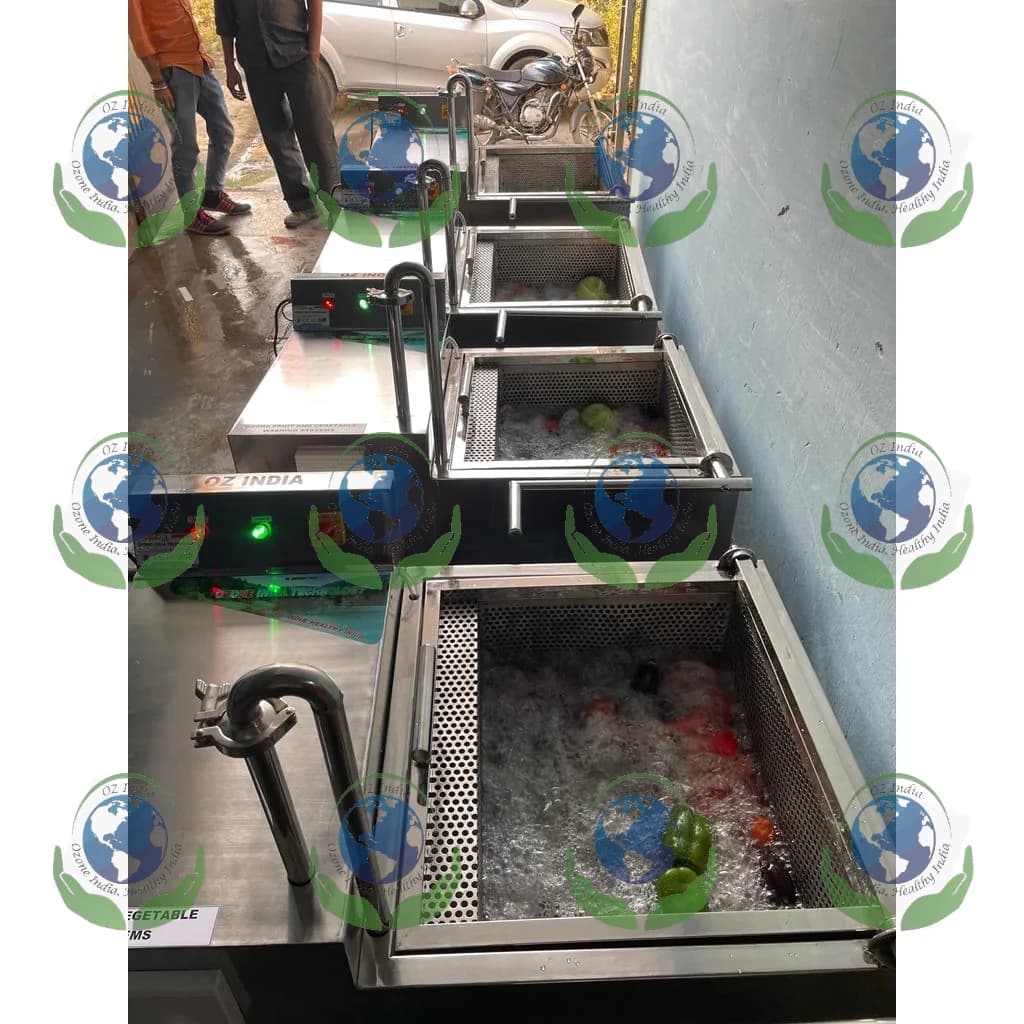
| Food & Beverage Processing | $3 Billion+ Domestic Market (BBS 2022) | BFSA Food Safety Act 2013 compliance; microbial contamination of process water; mold and spoilage in packaging environments; fruit/vegetable export hygiene | Ozone fruit and vegetable washing systems (0.5–2 ppm); ozone cold storage sanitation; food-grade process water treatment; BFSA-compliant residue-free sanitation |
Ready-Made Garment (RMG) & Denim Manufacturing
$42.6 Billion Exports (FY2021–22)
KMnO4 use in stone-washing (ZDHC MRSL-restricted); reactive dye effluent exceeding DOE COD/BOD limits; ZDHC compliance demanded by H&M, PVH, Nike
Ozone-based denim stone-washing systems replacing KMnO4; ozone tertiary treatment achieving COD <120 mg/L; ZDHC MRSL-compliant zero-chemical denim finishing
Frozen Seafood & Fish Processing (Export)
$650 Million+ (FY2022, EPB Bangladesh)
EU/US microbiological import limits; biofilm on processing surfaces; chlorine residue concerns in export markets; BFSA compliance
Ozone CIP systems at 1–3 ppm for surface sanitation; ozone-treated chilled water circuits; residue-free pathogen reduction meeting EU Regulation (EC) 854/2004
Leather & Tannery Industry (Hazaribagh/Savar)
$1.2 Billion Exports (2022, LFMEAB)
Chromium and sulphide-laden effluent; DOE BOD/COD limits routinely exceeded; odour complaints around tannery clusters
Ozone pre-treatment oxidising sulphides and reducing chromium toxicity; odour control ozone systems for H2S and mercaptan elimination; sludge volume reduction
Drinking Water & Municipal Treatment
DPHE annual budget ~$300 Million
Arsenic contamination (20M+ people above 10 µg/L WHO limit); bacteriological contamination; BSTI BDS 1520 compliance for urban/peri-urban supply
Ozone oxidation converting As(III) to As(V) prior to coagulation-filtration; ozone disinfection achieving 4-log virus inactivation; CT-based design per WHO guidelines
Pharmaceutical Manufacturing
$400 Million+ (BAPI 2022)
USP/BP purified water and water-for-injection standards; biofilm control in water loops; WHO GMP and Bangladesh DGDA compliance
Ozone-sanitised purified water distribution loops (continuous 0.05–0.1 ppm); UV-ozone combination systems; validated CIP cycles for GMP compliance
Food & Beverage Processing
$3 Billion+ Domestic Market (BBS 2022)
BFSA Food Safety Act 2013 compliance; microbial contamination of process water; mold and spoilage in packaging environments; fruit/vegetable export hygiene
Ozone fruit and vegetable washing systems (0.5–2 ppm); ozone cold storage sanitation; food-grade process water treatment; BFSA-compliant residue-free sanitation
Ready to export to Bangladesh
Deploy Ozone Technology in Bangladesh
CE & ISO 9001:2015 certified. Full export documentation. Factory-direct from Greater Noida, India.