
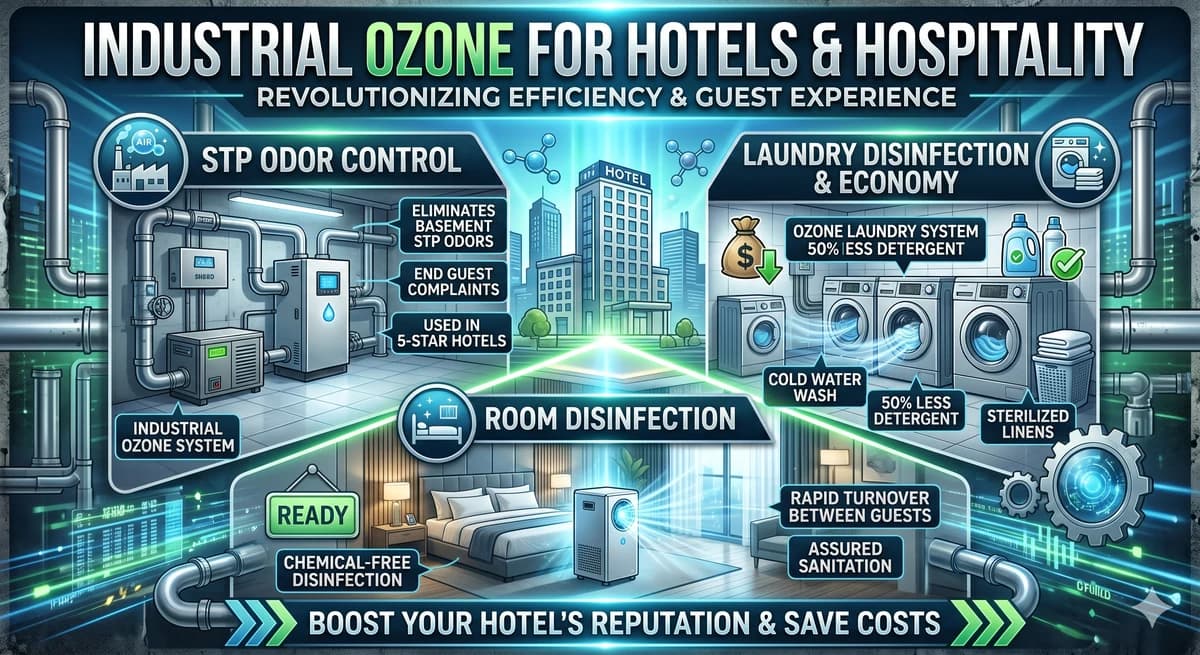
Ozone Generator in Hotel and Hospitality
Comprehensive ozone and UV solutions for hotel laundry, pool, kitchen, and indoor air quality
THE NEED
Why Hotel?
60%
water saving with ozone laundry vs hot wash
40%
energy saving — cold wash with ozone
Legionella
risk in hotel cooling towers — ozone eliminates it
FSSAI
hotel kitchens must meet food safety standards
LEED
ozone systems contribute to LEED green credits
5-Star
guest experience — no chemical odour, pure air and water
OVERVIEW
What is Hotel?
India's hospitality sector — spanning 5-star luxury chains like Taj, Oberoi, and ITC to mid-segment business hotels and resort properties in Goa, Kerala, and Rajasthan — faces mounting pressure on water quality, energy efficiency, hygiene compliance, and green certification. An ozone generator for hotels addresses all four simultaneously. Hotels are among the largest institutional consumers of water in India: a 200-room 5-star property consumes 400–600 litres per room per day, including laundry (150–200 L/room), kitchen (80–120 L/room), guest room flushing and housekeeping (100–150 L/room), and swimming pool makeup (10–20 m³/day). Ozone technology — when integrated across the hotel's water and air circuits — reduces freshwater consumption, chemical use, energy bills, and CPCB/NGT compliance risk in a single investment. An ozone generator for hotels is no longer a luxury addition; it is an operational necessity for any hotel seeking 4-star or 5-star classification renewal, FSSAI food safety compliance in the kitchen, LEED or GRIHA green building certification, and Smart City STP compliance mandates.
Hotel Sewage Treatment Plants (STPs) represent the most urgent regulatory compliance use case for an ozone generator for hotels. Under the National Green Tribunal (NGT) Order 2019, all hotels with more than 100 rooms operating their own STPs must achieve CPCB Class A tertiary treatment standards — BOD below 10 mg/L, fecal coliform below 100 MPN/100mL — before discharging or reusing treated water. Chlorination cannot reliably achieve Class A coliform standards in high-organic hotel wastewater containing food waste, detergents, and personal care products. Ozone at 3–5 mg/L dose with 15–20 minutes contact time achieves 4-log coliform kill (99.99%), BOD polishing to below 5 mg/L, and complete elimination of odour from the STP — making treated water suitable for landscape irrigation and toilet flushing within the hotel premises, saving ₹15–30/kL on freshwater charges. An ozone generator for hotels with STP capacity 50–500 m³/day is typically sized at 10–30g/hr.
Hotel laundry operations consume 150–200 litres of hot water per kilogram of linen, with water heated to 70–90°C for disinfection. Ozone laundry cold wash technology — in which dissolved ozone at 0.5–1.0 mg/L replaces hot water disinfection — reduces wash temperature from 90°C to 30°C, delivering a 70% reduction in water heating energy and cutting laundry cycle time by 30%. A 200-room hotel processing 500–700 kg of linen daily saves ₹25–40 lakh per year in LPG or electricity costs for water heating when using an ozone generator for hotels in the laundry circuit. Ozone also bleaches fabric naturally, reducing the detergent quantity required by 40–60%, extending linen life, and reducing chemical discharge to the hotel STP. ITC Hotels' "WOW" (Well-being of World) sustainability programme has documented these savings from ozone laundry systems across their portfolio. An ozone generator for hotels sized at 5–10g/hr with a dissolution tank and recirculation pump serves a 200-room hotel laundry.
Kitchen wastewater from hotel restaurants, banquet kitchens, and commissaries contains high grease, BOD (500–2000 mg/L), and food pathogens that overwhelm the hotel STP's biological stage if untreated. Pre-treating kitchen wastewater with ozone at 2–4 mg/L before the grease trap reduces BOD loading on the STP by 30–50%, preventing foaming, odour, and CPCB compliance failures. FSSAI's Food Safety and Standards (Licensing and Registration of Food Businesses) Regulations 2011 require hotels to maintain kitchen hygiene standards that include wastewater management — making the kitchen ozone sub-system part of FSSAI regulatory compliance. An ozone generator for hotels with integrated kitchen and STP ozone systems achieves FSSAI, NGT, and CPCB compliance through a single, unified technology platform. Guest room air quality is a growing differentiator for hotel brands — an ozone generator for hotels deployed in HVAC duct systems eliminates mould, bacteria, and VOCs that accumulate in air handling units over months of operation.
Cooling towers in large hotels — serving centralized HVAC systems in 5-star properties with 300+ rooms — pose a significant Legionella risk that no Indian hospitality operator can afford to ignore. The WHO International Health Regulations and ASHRAE Standard 188-2018 on Legionella Water Management Programs identify cooling tower water as the primary vector for Legionella pneumophila outbreaks — the bacterium responsible for Legionnaires' disease. Biocide-based cooling tower treatment (chlorine or bromine) is effective initially but leads to biofilm formation, corrosion, and chemical discharge challenges over time. An ozone generator for hotels deployed in cooling tower water treatment maintains a dissolved ozone residual of 0.1–0.2 mg/L in the basin — eliminating Legionella and aerobic bacteria, reducing biofouling on heat exchanger surfaces (improving HVAC efficiency by 5–10%), and cutting chemical spend by 80%. LEED v4.1 Water Efficiency credits specifically reward ozone-based cooling tower treatment for its elimination of blowdown chemical discharge — supporting hotels pursuing LEED certification. An ozone generator for hotels covering all five applications — STP, laundry, kitchen, guest room HVAC, and cooling tower — represents a comprehensive hospitality ozone solution with a typical payback period of 18–30 months.
THE SCIENCE
How Ozone & UV Work in Hotel
An ozone generator for hotels operates on the corona discharge principle: dry air or oxygen passes through a high-voltage (6–10 kV) alternating current field between two electrodes separated by a dielectric material. The electric discharge splits O₂ molecules into oxygen atoms (O), which immediately combine with intact O₂ molecules to form ozone (O₃). OZ India Technology ozone generators for hotels are available in air-fed configurations (10g/hr to 25g/hr) suitable for guest room, kitchen, and small STP applications, and oxygen-fed configurations (25g/hr to 75g/hr) for large STPs, laundry, and cooling tower systems. Dew point of the feed air is maintained at -60°C through a heatless regenerative air dryer — critical for ozone generator efficiency and electrode longevity in hotel operating environments where ambient humidity can reach 80%+ (coastal resorts, monsoon season).
In the hotel STP application, ozone from the generator is dissolved into secondary-treated effluent using a Venturi injector — a passive device that uses water pressure to create suction, drawing ozone gas into the flowing water stream and achieving 90–95% gas transfer efficiency without mechanical pumps. The ozone-enriched water flows into a contact tank sized for 15–20 minutes of hydraulic retention time, where O₃ and the hydroxyl radicals (•OH) it generates destroy pathogens and oxidise organic compounds. OZ India supplies PVDF (polyvinylidene fluoride) Venturi injectors, non-return valves, and ozone piping — materials specifically selected for their resistance to ozone degradation at the 1–5% concentrations produced by the generator. The dissolved ozone monitor at the contact tank exit provides real-time feedback to the generator control panel, automatically adjusting ozone output to maintain the target residual concentration regardless of variations in STP influent load.
For ozone laundry cold wash technology — one of the highest-ROI uses of an ozone generator for hotels — ozone is dissolved in cold water at the laundry's water inlet using a side-stream pressurised dissolution tank. Cold water at 30°C dissolves ozone more effectively than hot water (ozone solubility decreases with temperature), achieving 0.5–1.0 mg/L dissolved ozone in the wash water. This dissolved ozone provides the disinfection efficacy equivalent to 70–80°C wash temperatures: 3-log inactivation of E. coli, Staphylococcus aureus, and Candida albicans — the primary linen pathogens in hotel laundry. The OZ India laundry ozone system includes a dissolution tank, recirculation pump, dissolved ozone sensor, and automatic control panel — installed inline with the existing commercial washing machines without machine modification.
Cooling tower ozone treatment involves continuous injection of ozone-enriched water into the cooling tower basin at a rate maintaining 0.1–0.2 mg/L dissolved ozone residual. The ozone generator for hotels in this application is typically sized at 3–10g/hr (depending on tower volume) and operates on a timer-based cycle — 15 minutes on, 45 minutes off — to maintain the residual without over-treating. Ozone in the cooling tower basin oxidises biofilm-forming bacteria, including Legionella pneumophila, within minutes of contact. The oxidising action also prevents scale formation by oxidising iron and manganese that would otherwise deposit on heat exchanger surfaces. OZ India's dissolved ozone monitor in the cooling tower basin ensures the residual is maintained within the target range — providing documentation for Legionella risk management records required under ASHRAE 188.
Guest room HVAC and common area air purification using an ozone generator for hotels requires careful design to ensure ozone is confined to unoccupied spaces. The OZ India Ozone Air Purifier or HVAC duct ozone injection system injects ozone into return air ducts during building unoccupied periods (typically 2:00–5:00 AM), treating the entire duct network and eliminating accumulated mould, bacteria, and VOCs. Ozone concentration in ducts during treatment cycles reaches 1–3 ppm — lethal for airborne pathogens and effective at destroying odour-causing VOCs — but decays to below 0.05 ppm (below OSHA permissible limit) within 30–60 minutes before guest occupancy. The ozone ambient air monitor in HVAC plant rooms ensures operator safety during system operation and maintenance. Combined with cooling tower and laundry ozone treatment, the guest room ozone system completes the hotel's comprehensive ozone disinfection programme.
THE SOLUTION
Ozone India Technology Solution
OZ India Technology designs and manufactures complete ozone generator for hotels packages covering all five hotel applications as an integrated solution. Our hotel ozone assessment begins with a site audit covering STP capacity and effluent quality, laundry throughput, cooling tower volume, kitchen wastewater characteristics, and HVAC specifications. From this audit, our engineers produce a complete ozone system design: individual generator sizing for each application, integration with existing hotel infrastructure, control system architecture, and a detailed ROI analysis showing payback period from energy savings, chemical cost reduction, and freshwater savings. An ozone generator for hotels from OZ India is CE certified, manufactured under ISO 9001:2015 quality management at our Greater Noida facility, and backed by a 1-year comprehensive warranty.
OZ India's hotel ozone portfolio covers the full capacity range required: the 5g/hr Ozone Generator for small boutique hotels with 50–100 rooms; the 10–25g/hr Industrial Ozone Generator for mid-scale hotels with STP up to 200 m³/day; the 30–50g/hr Heavy Industrial Generator for 5-star properties with STP 200–700 m³/day and full laundry and cooling tower integration. For hotel chains seeking to standardise ozone generator for hotels across multiple properties, OZ India provides centralised procurement packages with a single AMC agreement covering all sites — with field engineers present in 12 cities across India for rapid response. Our installations include 5-star hotel STPs in Delhi NCR, resort complexes in Kerala, and Smart City hotel projects in Pune and Ahmedabad.
LEED v4.1 and GRIHA Version 2019 green building certification award credits specifically for water efficiency innovations, including recycled water use (ozone-treated STP effluent for landscaping) and cooling tower chemical reduction (ozone treatment). An ozone generator for hotels from OZ India supports LEED WE Credit: Cooling Tower Water Management (1–2 points) and LEED WE Credit: Water Metering — by enabling hotels to quantify, document, and reduce freshwater consumption across laundry, STP reuse, and cooling towers. OZ India provides LEED documentation support including treatment efficacy data, water savings calculations, and equipment certifications — helping hotels achieve or maintain their green building rating while demonstrating sustainability credentials to MICE clients and leisure travellers who increasingly factor ESG into hotel selection.
OZ India provides turnkey installation of ozone generator for hotels: site engineering, civil works coordination (contact tank, dosing room), electrical panel installation, system commissioning, water quality verification testing, and 2-day operator training programme. Post-installation, our Annual Maintenance Contract (AMC) for hotel ozone systems includes 4 scheduled preventive maintenance visits, 24×7 remote monitoring via GSM telemetry, emergency response within 48 hours anywhere in India, and all consumables (corona cells, sensor membranes, air dryer desiccant). OZ India's hotel ozone references — available on request under NDA — demonstrate sustained ozone system performance over 3–5 years of hotel operation with zero unplanned downtime incidents exceeding 24 hours.
PERFORMANCE
Without vs With OZ India Treatment
| Parameter | Without Treatment | With OZ India System |
|---|---|---|
| STP Discharge Quality (Coliform) | 10⁵–10⁶ MPN/100mL | <100 MPN/100mL (CPCB Class A) |
| Laundry Water Temperature | 70–90°C (hot wash) | 30°C (ozone cold wash) |
| Laundry Energy Cost | ₹35–40 lakh/year (200-room hotel) | ₹10–12 lakh/year (70% saving) |
| Cooling Tower Legionella Risk | High — biofilm present | Eliminated — 0.1–0.2 mg/L O₃ residual |
| Chemical Use (Biocides/Chlorine) | ₹3–6 lakh/year | Near-zero (ozone replaces chemicals) |
| STP Effluent Reuse | Not permitted (chlorinated) | Landscaping, toilet flush, cooling makeup |
| LEED/GRIHA Credits | No water or chemical credits | WE credits for reuse, cooling, laundry |
| Guest Room Air Odour Complaints | Frequent (mould, VOC) | Zero — HVAC ozone treatment |
PERFORMANCE DATA
Technical Performance Data
Reference data for ozone treatment system design and validation — applicable to Hotel applications. All data per standard water treatment engineering practice (AWWA, WHO, CPCB guidelines).
Pathogen Log Inactivation at 3 mg/L Ozone (CT = 45 mg·min/L)
BOD Reduction (%) vs Ozone Dose — Typical STP/ETP Secondary Effluent
E. coli Log Inactivation vs Contact Time at 3 mg/L Ozone
System Sizing Guide — Plant Flow Rate vs Ozone Generator Capacity
RECOMMENDED EQUIPMENT
Products for Hotel
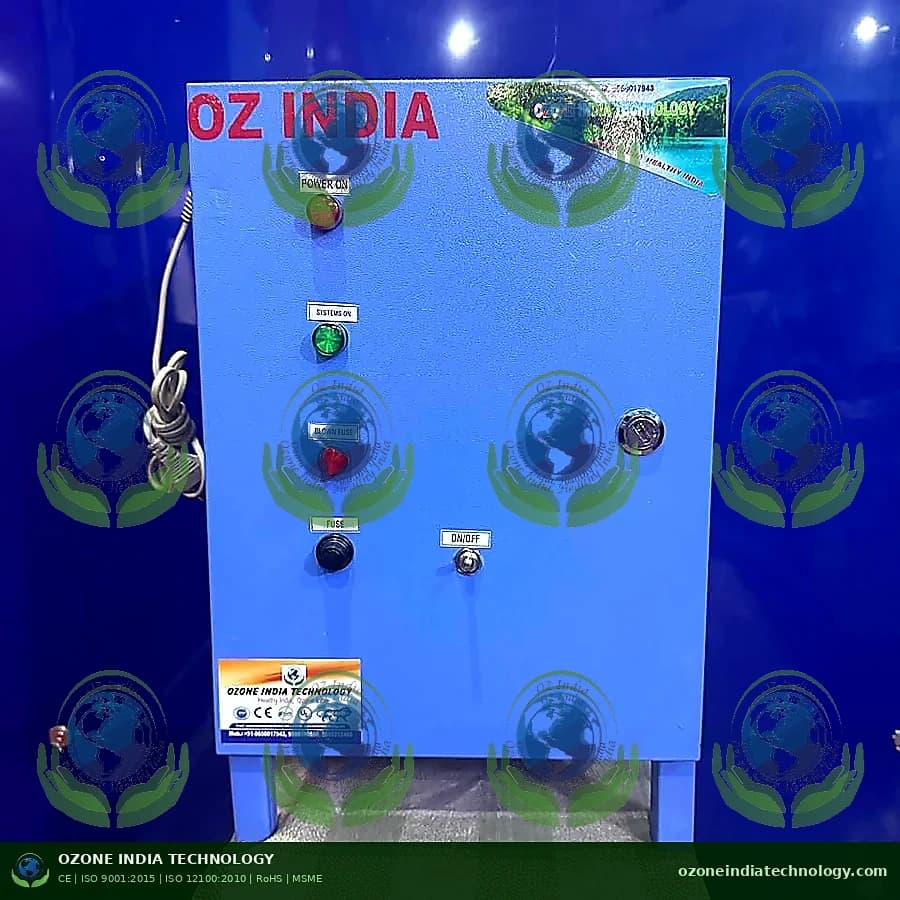
Ozone Generator — Light Industrial 5g/hr
Light industrial ozone generator for small water treatment plants and commercial disinfection
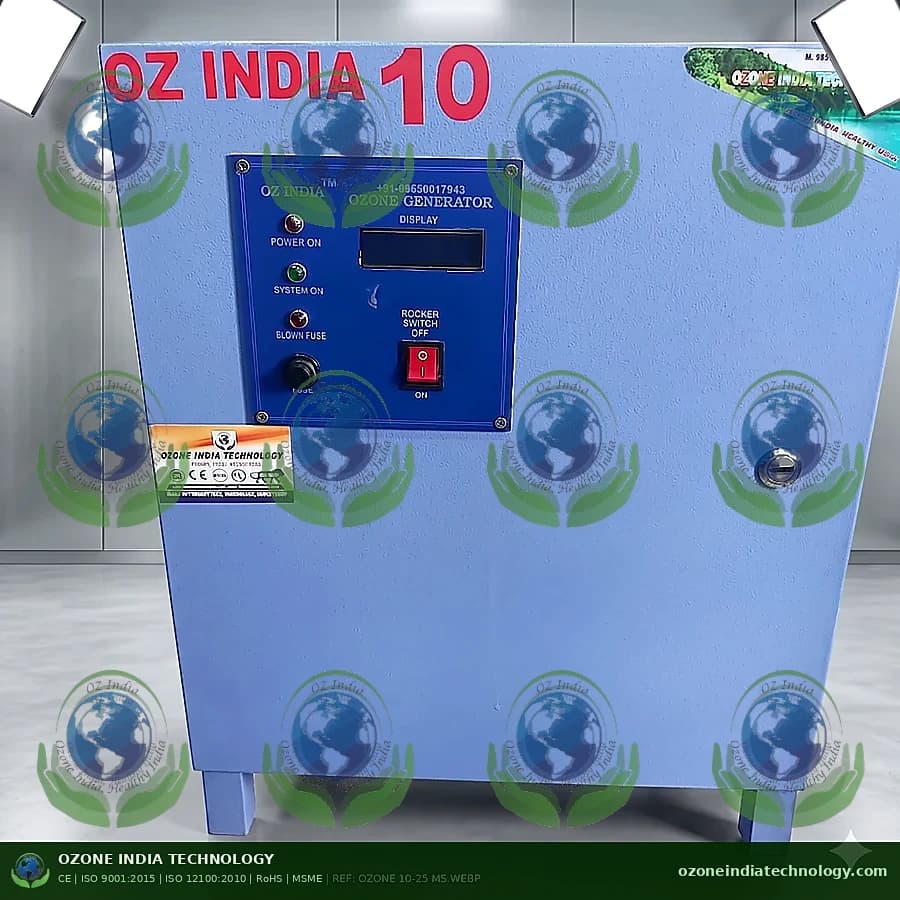
Ozone Generator — 25g/hr Industrial
Industrial 25g/hr ozone generator for medium STP ETP and water treatment plants up to 5 MLD
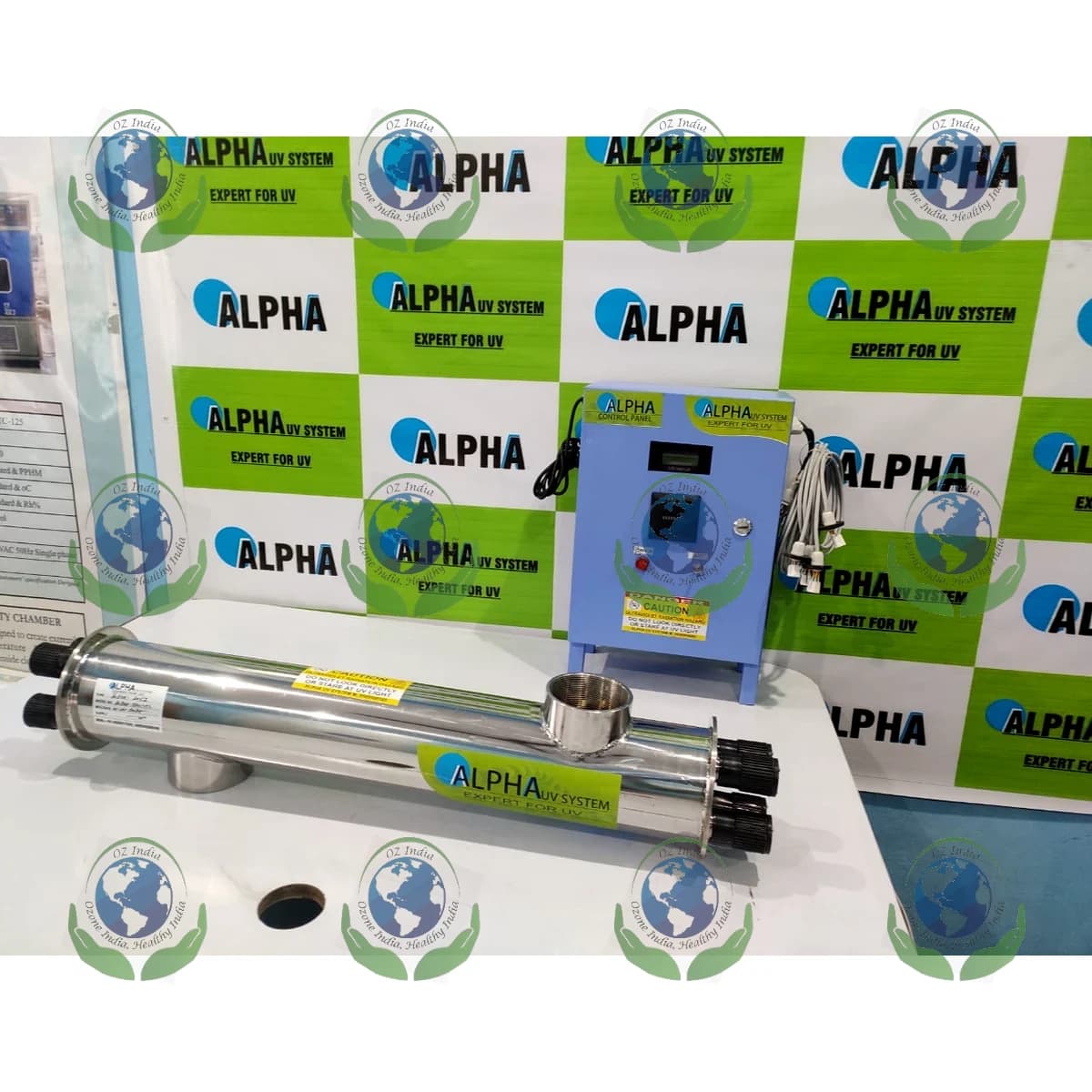
UV Pool & Aquaculture Series
UV disinfection for swimming pools and aquaculture — reduces chlorine 80%, eliminates chloramines
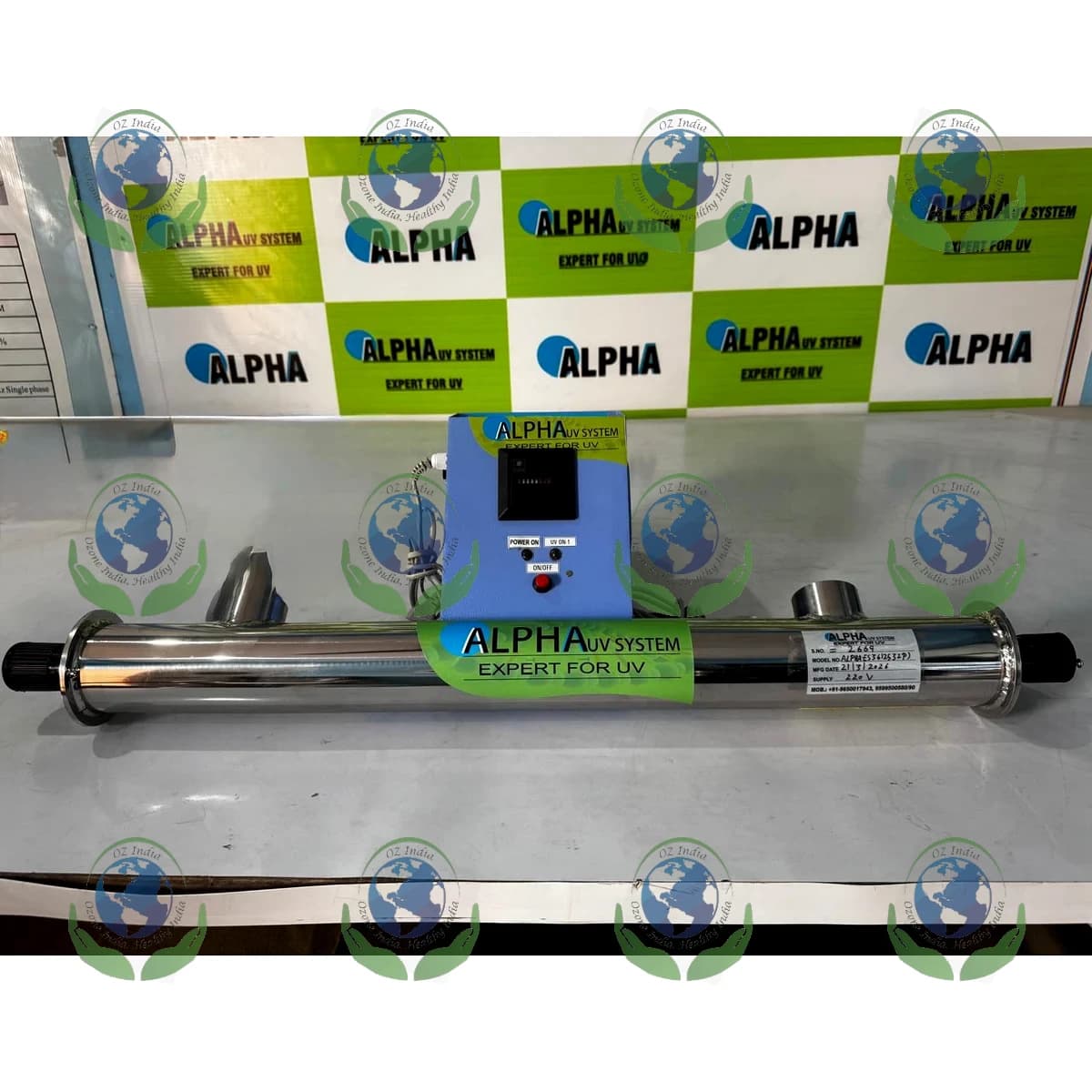
UV Compact Series — 100 to 2000 LPH
Compact inline UV water disinfection — 100 to 2000 LPH — SS304 chamber, OEM and commercial ready
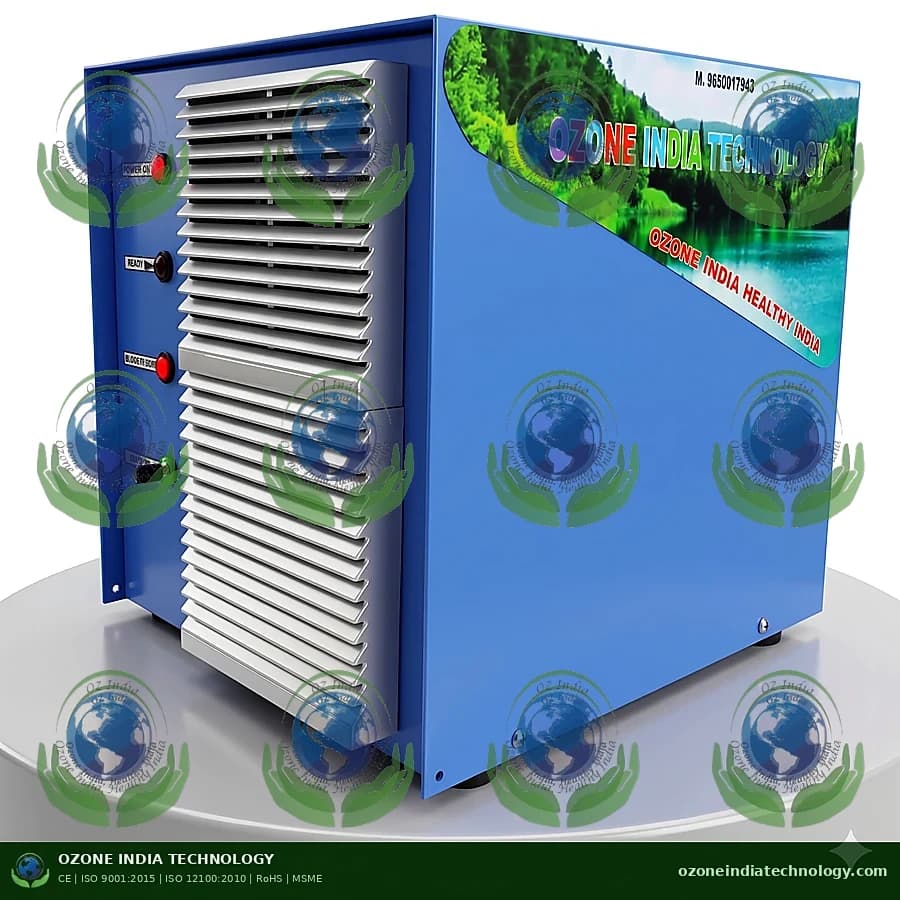
Ozone Air Purifier
Compact ozone air purifier for room disinfection odour control and air sterilization
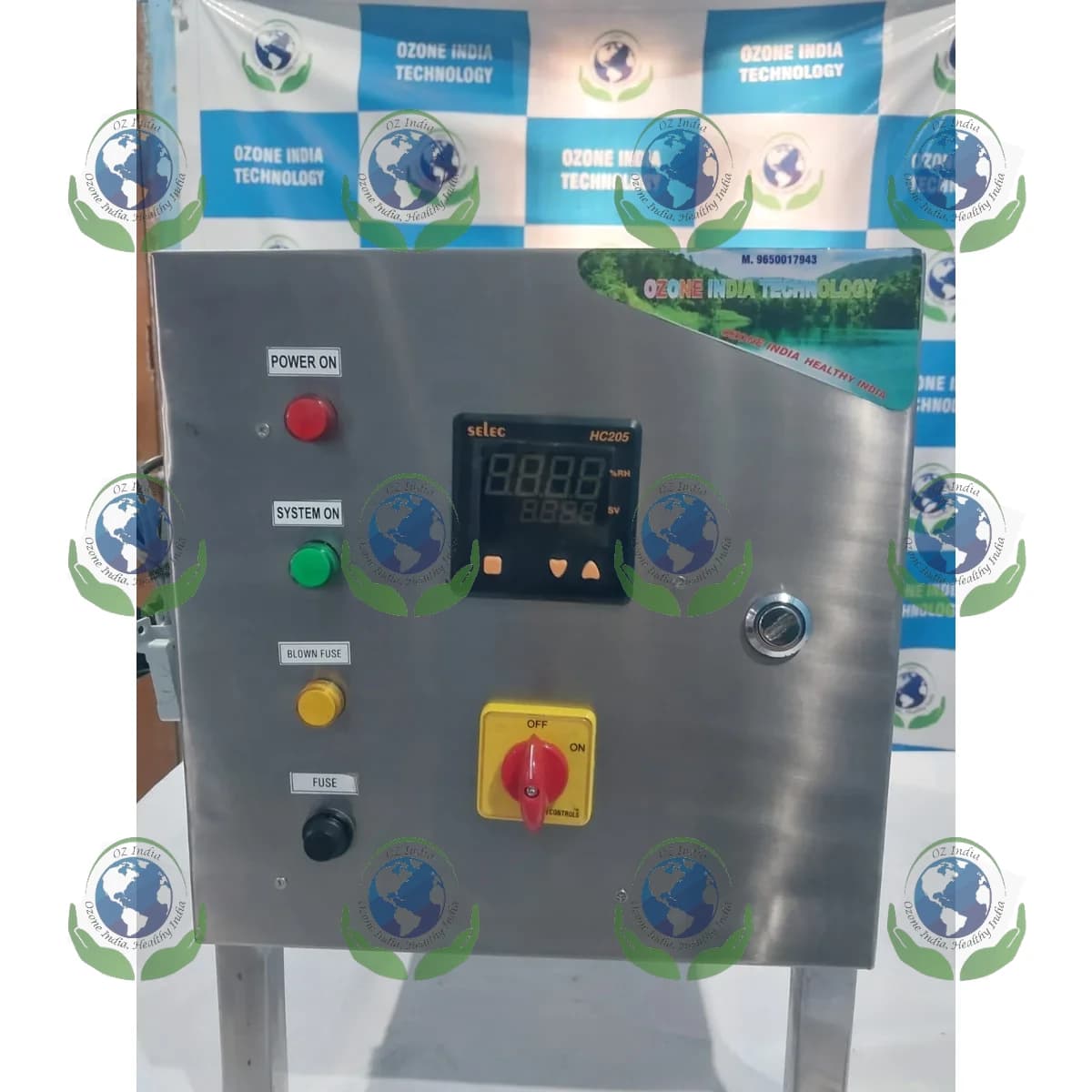
Ultrasonic Humidifier Industrial
Industrial piezoelectric ultrasonic humidifier 1-100 kg per hour for textile mills pharmaceutical and data centres
SIZING GUIDE
Installation & Sizing Guide
Sizing an ozone generator for hotels requires separate calculations for each application, then a decision on combined vs independent generator configurations. For hotel STP ozone: generator capacity (g/hr) = STP design flow (m³/hr) × 4 mg/L dose × 1.3 safety factor ÷ 1000. A 200 m³/day hotel STP requires: (200 ÷ 24) × 4 × 1.3 ÷ 1000 = 0.043 kg/hr = 43 g/hr — an OZ India 30–50g/hr unit is appropriate. Contact tank volume = flow (m³/hr) × 20 min HRT ÷ 60 = 8.3 × 0.33 = 2.8 m³ (can be a retrofitted underground tank). For ozone laundry cold wash: size at 5g/hr per 100 kg/hr linen processing capacity, with dissolution tank volume = 30 minutes of laundry water flow.
Cooling tower ozone generator for hotels is sized on basin volume and recirculation flow. Standard rule: 1g/hr ozone per 10 m³ cooling tower basin volume, with Venturi injector sized for 5–10% of basin recirculation flow. A 50 m³ cooling tower requires a 5g/hr OZ India generator operated in 15-minute-on, 45-minute-off cycles. For HVAC duct ozone, the generator is sized at 0.5–1.0 g/hr per 1000 m³/hr of duct air volume for unoccupied-period treatment. Kitchen wastewater pre-treatment ozone is typically 2–5g/hr for kitchen flows of 20–50 m³/day. Combined total generator capacity for a 200-room 5-star hotel across all five applications: approximately 60–80g/hr — most economically served by one 30–50g/hr unit for STP + laundry, and separate smaller units for cooling tower and HVAC.
For hotels in coastal locations (Goa, Kerala backwaters, Andaman) or high-humidity hill stations, the feed air dryer for the ozone generator for hotels must handle ambient humidity up to 90% RH. OZ India specifies a dual-tower heatless regenerative desiccant dryer with -60°C dew point outlet for all coastal hotel applications — higher humidity in the feed air reduces ozone generator output and shortens corona cell life. For hill station hotels where temperatures drop below 10°C in winter, OZ India provides insulated generator enclosures and trace heating for outdoor installations. For desert resort hotels (Rajasthan, Kutch), dust filters protect the air intake from fine particulate that can contaminate the corona discharge cell.
Energy cost estimation for an ozone generator for hotels: OZ India air-fed generators consume 12–15 kWh/kg ozone; oxygen-fed generators consume 8–10 kWh/kg. For a 200-room hotel requiring a total of 30 kg/day ozone across all applications at ₹8/kWh electricity tariff, daily electricity cost is ₹2,400–3,600. Annual ozone energy cost: ₹8.7–13.1 lakh. This is recovered within months from: laundry heating energy savings (₹25–40 lakh/year), freshwater savings from STP reuse (₹5–10 lakh/year), chemical savings from cooling tower (₹3–5 lakh/year), and reduced linen replacement cost from gentler ozone cold wash. Total ROI for a complete ozone generator for hotels installation at a 200-room 5-star property: 18–24 months.
CASE STUDY
Integrated Hotel Ozone System — 5-Star Resort, Kerala
A 220-room 5-star resort on the Kerala backwaters was operating a 300 m³/day hotel STP discharging to a sensitive backwater ecosystem, while also running a high-volume laundry (600 kg/day linen) and a 60 m³ cooling tower for centralised HVAC. The resort was failing CPCB Class A STP discharge standards (coliform 10⁵ MPN/100mL vs 100 limit), spending ₹38 lakh/year on LPG for laundry hot water, and using 45 litres of liquid biocide monthly in the cooling tower. The resort was also 12 months from its scheduled LEED Silver recertification audit.
OZ India Technology designed and commissioned an integrated hotel ozone system: a 25g/hr oxygen-fed generator for STP tertiary treatment, a 10g/hr air-fed generator for ozone laundry cold wash on all 8 commercial washing machines, and a 3g/hr unit for cooling tower Legionella control. Post-commissioning results at 6 months: STP coliform <10 MPN/100mL (full CPCB Class A compliance); laundry LPG cost reduced by 68% (₹25.8 lakh/year saved); cooling tower biocide eliminated; 100% of STP effluent reused for resort landscaping saving ₹8.4 lakh/year in tanker water.
The resort's LEED Silver recertification audit awarded credits for cooling tower chemical elimination (WE Credit), STP water reuse (WE Credit), and innovation in laundry energy reduction — maintaining the LEED Silver certification. Total first-year verified savings from the ozone generator for hotels installation: ₹37.6 lakh in energy, water, and chemical costs, against a total installed project cost of ₹52 lakh. The resort's General Manager confirmed payback on investment at 16.5 months — and reported zero guest complaints related to linen quality, water odour, or HVAC air quality since commissioning.
FAQ
Frequently Asked Questions
What size ozone generator for hotels is required for a 100-room hotel STP?+
A 100-room hotel generates approximately 100–150 m³/day of wastewater. For CPCB Class A STP discharge at a 4 mg/L ozone dose: generator capacity = (150 ÷ 24) × 4 × 1.3 ÷ 1000 = 32.5 g/hr. OZ India recommends a 30–50g/hr ozone generator for hotels of this size, with an air dryer, Venturi injector, 3–4 m³ contact tank, and dissolved ozone monitor. Contact OZ India with your STP flow data for a precise sizing calculation and quotation within 24 hours.
How does ozone laundry cold wash work, and what energy saving does it deliver?+
Ozone laundry cold wash dissolves ozone at 0.5–1.0 mg/L into cold wash water at 30°C. Dissolved ozone is a stronger disinfectant than hot water at 90°C — achieving 3-log kill of E. coli and Staphylococcus on hotel linen. The energy saving comes from eliminating water heating: a 200-room hotel saving 60°C of temperature rise across 10,000 litres/day of laundry water saves approximately 697 kWh/day or ₹5,576/day (at ₹8/kWh) — ₹20 lakh/year. OZ India ozone generator for hotels installations in ITC-class properties have verified 68–72% laundry energy reductions.
Does ozone eliminate Legionella in hotel cooling towers?+
Yes. Ozone at 0.1–0.2 mg/L residual in cooling tower basin water achieves complete Legionella pneumophila inactivation — the bacterium responsible for Legionnaires' disease. WHO and ASHRAE 188 both recommend continuous oxidant residual maintenance as the primary Legionella control measure. An ozone generator for hotels deployed in cooling tower treatment eliminates the need for chemical biocides, prevents biofilm formation on heat exchanger surfaces, and provides automated, documented Legionella risk management. OZ India supplies dissolved ozone monitors and automatic dose control as standard for cooling tower ozone systems.
Can ozone help hotels achieve LEED or GRIHA green building certification?+
Yes. An ozone generator for hotels supports multiple LEED v4.1 and GRIHA credits: WE Credit for cooling tower chemical-free treatment (1–2 LEED points), WE Credit for non-potable water reuse from STP (1–2 points), and Innovation credits for laundry energy reduction. OZ India provides LEED documentation packages — efficiency data, water balance calculations, equipment certifications — to support hotel LEED submissions. GRIHA Version 2019 similarly awards points for water recycling and reduced chemical use that ozone systems directly enable.
How does ozone generator for hotels handle guest room air quality and odour?+
OZ India Ozone Air Purifiers or HVAC duct ozone injection systems treat guest room air during unoccupied periods (typically 2:00–5:00 AM). Ozone at 1–3 ppm in ducts eliminates mould, bacteria, and VOCs (including tobacco smoke, pet odours, and persistent food smells) accumulated in ductwork. Ozone concentration decays to below 0.05 ppm within 30–60 minutes — safe for guest occupancy. Room deodorisation for smoke damage or post-event treatment uses portable OZ India Ozone Car Purifier units in sealed rooms at 3–5 ppm for 2 hours.
What is the maintenance schedule for an ozone generator for hotels?+
OZ India ozone generator for hotels maintenance schedule: monthly — air dryer dew point check, ozone sensor zero calibration; quarterly — heat exchanger cleaning, inlet filter replacement, dissolved ozone sensor span calibration; annually — corona discharge cell electrode inspection (replacement every 2–3 years), air dryer desiccant replacement, Venturi injector cleaning. OZ India AMC includes 4 scheduled visits, 24×7 remote monitoring, emergency response within 48 hours, and all consumables. Average annual AMC cost for a mid-scale hotel ozone system: ₹1.5–3.0 lakh.
Is ozone safe for hotel staff and guests?+
Properly designed ozone generator for hotels installations are completely safe for hotel occupants. Dissolved ozone in STP, laundry, and cooling tower water poses no inhalation risk. Ozone gas systems (HVAC, guest room treatment) operate only in unoccupied conditions, with ozone ambient air monitors (OSHA limit: 0.1 ppm TWA) mandatory in plant rooms. OZ India supplies ozone ambient air monitors with audible alarm at 0.05 ppm and automatic generator shutdown at 0.1 ppm as standard. CE certification and compliance with EN 50–271 safety standards for ozone generators are documented in our Declaration of Conformity.
RELATED
Related Applications
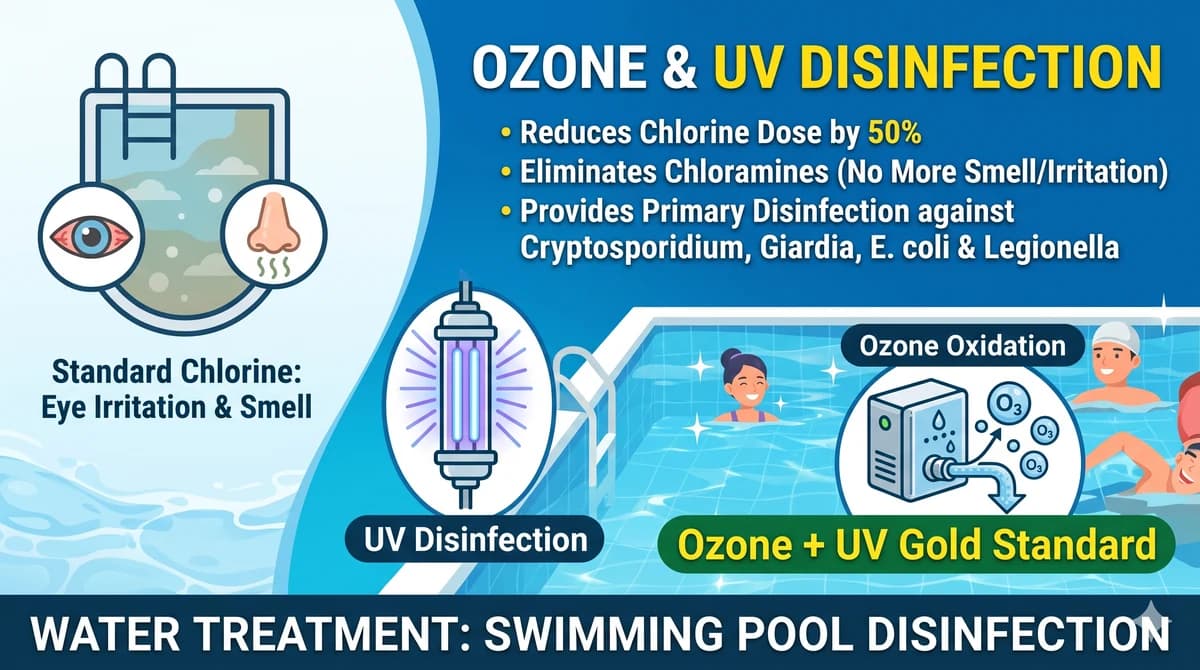
Swimming Pool Disinfection
Swimming pool ozonator and medium-pressure UV — 80% chlorine reduction, zero chloramines, IS:3426 compliant
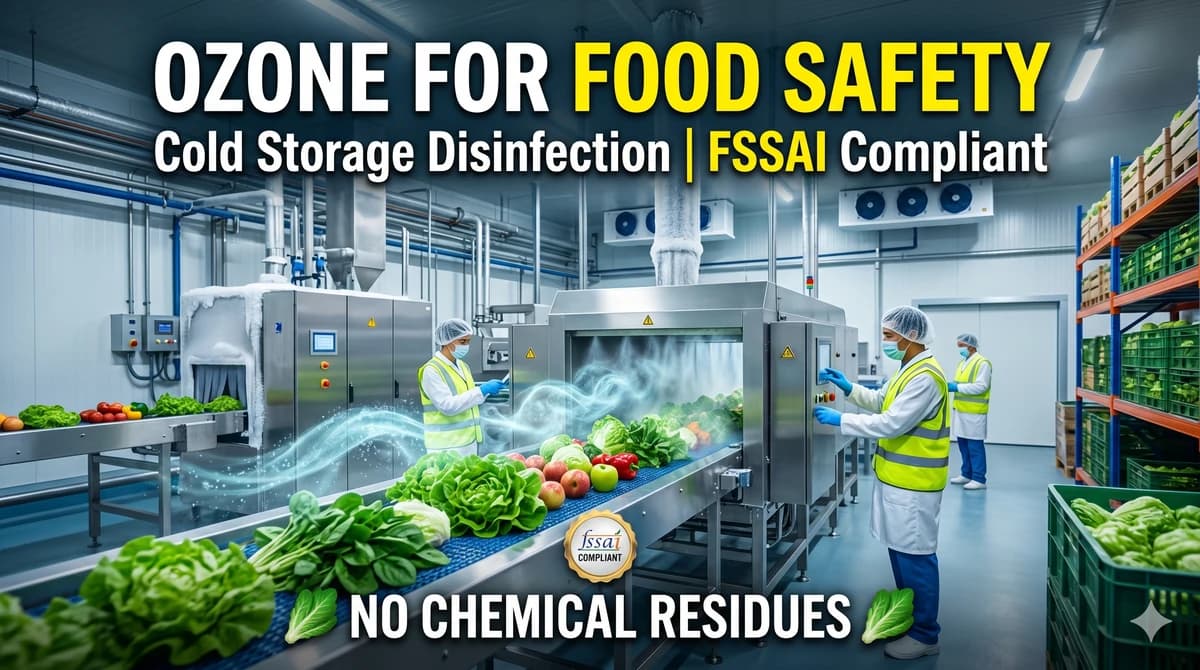
Food Processing and Safety
FSSAI-compliant ozone disinfection for food contact surfaces, CIP, cold storage, and vegetable washing
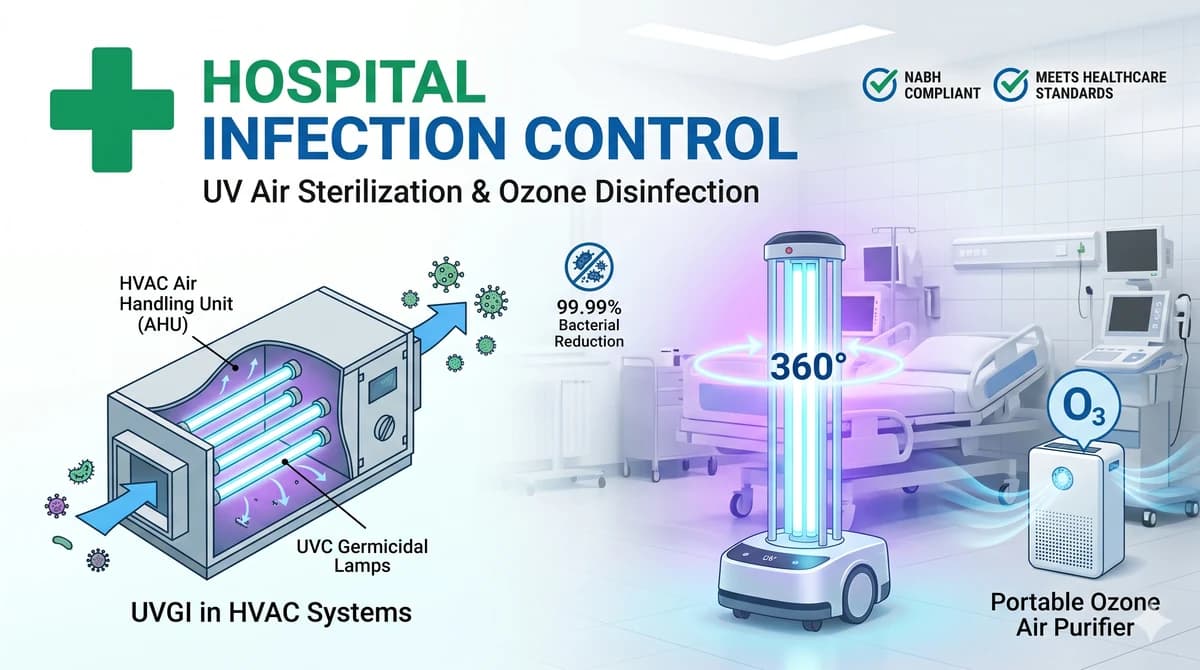
Hospital and Healthcare
NABH-aligned UV and ozone disinfection for hospital air, water, surfaces, and instrument sterilization