
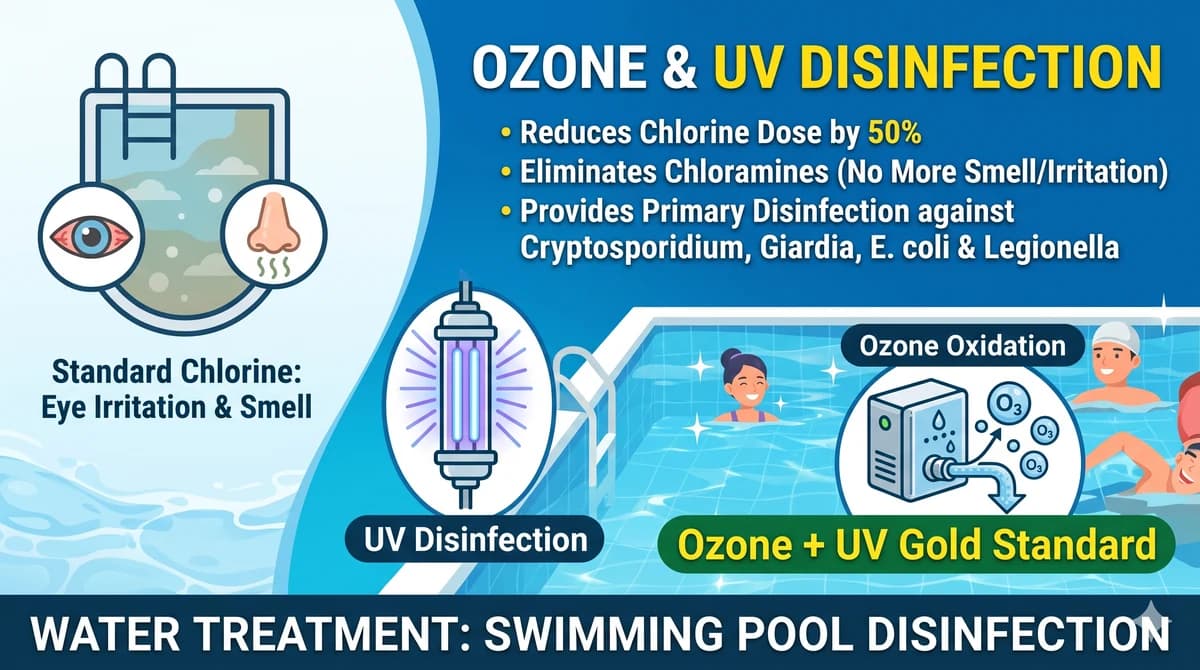
Pool Ozone Generator for Swimming Pool Disinfection
Swimming pool ozonator and medium-pressure UV — 80% chlorine reduction, zero chloramines, IS:3426 compliant
THE NEED
Why Swimming Pool?
80%
chlorine reduction with ozone pool system
100%
chloramine elimination — no eye or skin irritation
4-log
kill of Cryptosporidium — resistant to chlorine
IS:3426
BIS standard for pool water — met with ozone+UV
30%
operating cost saving vs chlorine-only systems
Zero
trihalomethane (THM) formation with ozone
OVERVIEW
What is Swimming Pool?
Ozone for swimming pool water treatment has emerged as the global gold standard for pool disinfection — adopted by Olympic aquatic centres, five-star hotel pools, school pools, and public bathing facilities worldwide, including India's rapidly growing network of hotel pools in Bengaluru, Hyderabad, Chennai, and Mumbai. The fundamental problem with conventional pool chlorination is chloramine formation: when chlorine reacts with urine, sweat, sunscreen, and body oils introduced by swimmers, it forms combined chlorine compounds (chloramines) including trichloramine (NCl₃), which is responsible for the characteristic eye redness, respiratory irritation, and skin dryness that swimmers experience — not, as commonly misunderstood, from chlorine itself, but from its reaction byproducts. The WHO Guidelines for Safe Recreational Water Environments, Volume 2 (2006) identify chloramine control as the primary indoor pool air quality challenge, and identify ozone for swimming pool treatment as the most effective technology for chloramine destruction.
The chemistry of ozone for swimming pool treatment is well-established in peer-reviewed literature. Glauner et al. (2004), publishing in Water Research (38(18), 3897–3908), demonstrated that ozone at 0.8–1.2 mg/L residual in pool water destroys chloramines — including trichloramine — at a rate 3,000 times faster than free chlorine. In a side-stream ozone system treating 25–30% of pool recirculation flow, ozone for swimming pool application reduces combined chlorine (measured as chloramines) by 50–75% compared to chlorine-only pools, bringing trichloramine below 0.2 mg/m³ in pool air — the detection threshold for irritation. Richardson et al. (2010), publishing in Mutation Research, documented the genotoxicity of disinfection byproducts formed in chlorinated pools, providing the toxicological basis for the global shift to ozone for swimming pool treatment. Indian pool operators, particularly those serving CBSE and ICSE schools with year-round training programmes, face increasing parent concern about chloramine exposure — making ozone for swimming pool installation a health-driven competitive differentiator.
Cryptosporidium parvum — the chlorine-resistant protozoan parasite responsible for pool-associated diarrhoeal disease outbreaks — is the most dangerous pathogen risk in pool water. Conventional chlorination at 1–3 mg/L free chlorine requires over 10,000 minutes of contact time to achieve 2-log Cryptosporidium inactivation — effectively useless in the pool environment. Ozone for swimming pool treatment achieves 2-log Cryptosporidium inactivation at a CT of just 1.0 mg/L·min (1 minute at 1 mg/L dose) — a 10,000-fold advantage over chlorine. The WHO (2006) and US CDC both recommend ozone or UV-C as the primary technology for Cryptosporidium control in public pools, with residual chlorine (0.5–1.0 mg/L — half the conventional dose) maintained as secondary disinfectant. CPHEEO (Central Public Health and Environmental Engineering Organisation) guidelines for Indian public pools align with WHO standards — and ozone for swimming pool compliance is explicitly endorsed in CPHEEO's Manual on Water Supply and Treatment.
India's swimming pool market has expanded dramatically since 2015, driven by Smart City infrastructure investment, the growth of premium residential apartments with shared pool amenities, CBSE school mandatory sports facilities, and the hotel sector's pool-as-differentiator marketing. Current estimates place India's installed pool count at 150,000–200,000, growing at 12% annually, with the vast majority still operating on chlorine-only treatment. Redevelopment of public pools under the Khelo India programme — including Olympic-specification 50-metre pools in Bengaluru, Pune, Hyderabad, and Delhi — has introduced BIS IS:3950 pool water quality standards to a new generation of facility managers who recognise that ozone for swimming pool treatment is required to meet international competition standards. BIS IS:3950 limits combined chlorine to 0.2 mg/L — a standard that chlorine-only pools rarely maintain, and that ozone for swimming pool systems consistently achieve.
Indoor pool air quality represents an underappreciated public health challenge in Indian contexts. Urban indoor pools — hotel pools, school pools, gym pools, and multi-purpose sports complexes — ventilate trichloramine (NCl₃) from the water surface into the pool hall air. Trichloramine is a volatile irritant that concentrates in indoor pool air at 0.3–1.5 mg/m³ in chlorine-only pools, causing the eye redness, coughing, and asthma exacerbation that parents, teachers, and coaches attribute to 'too much chlorine.' ASHRAE Standard 62.1-2022 recommends 4–6 air changes per hour in indoor pool spaces — but ventilation alone cannot control trichloramine without addressing its source. Ozone for swimming pool treatment at 25–30% side-stream flow destroys the chloramine precursors in the recirculation water, reducing trichloramine generation at source and bringing pool hall air quality to WHO-recommended levels below 0.2 mg/m³. OZ India Technology installs ozone for swimming pool systems at Olympic training pools, hotel indoor pools, and school pools across India, with dissolved ozone monitors ensuring the 0.4–0.8 mg/L dissolved ozone target is maintained in the treatment loop.
THE SCIENCE
How Ozone & UV Work in Swimming Pool
Ozone for swimming pool treatment operates on a side-stream principle: 25–30% of the pool's recirculation flow (the main flow that circulates pool water through sand filters and returns to the pool) is diverted into an ozone contact chamber where it receives a dose of 0.8–1.5 mg/L dissolved ozone. After 2–4 minutes contact time, ozone destroys chloramines, oxidises organic contaminants (urine, sweat, sunscreen residues, body oils), and inactivates Cryptosporidium and other chlorine-resistant pathogens. The treated side-stream is then recombined with the main recirculation flow before the UV system (if present) and free chlorine injection point. The recombined flow returns to the pool with dramatically reduced organic and chloramine load — allowing free chlorine to maintain a 0.5–1.0 mg/L residual (vs 2–3 mg/L in chlorine-only pools) for the minimum required protective function without excessive chloramine generation.
The OZ India ozone for swimming pool system includes: a corona discharge ozone generator (2–10g/hr depending on pool volume), an air preparation unit with air dryer (-60°C dew point), a Venturi injector for ozone dissolution into the side-stream, a contact vessel (2–4 minutes HRT), a catalytic ozone destructor for off-gas treatment, and a dissolved ozone monitor. A critical safety component is the off-gas destructor — unreacted ozone in the contact vessel headspace must be treated before venting to the pool hall, as ozone above 0.1 ppm (OSHA limit) causes respiratory irritation. OZ India's catalytic ozone destructor (MnO₂ catalyst) reduces off-gas ozone to below 0.02 ppm before venting — safe even in the enclosed pool hall environment.
The mechanism of chloramine destruction by ozone for swimming pool treatment involves direct oxidation of the nitrogen-chlorine (N-Cl) bonds in chloramine molecules. Monochloramine (NH₂Cl), dichloramine (NHCl₂), and trichloramine (NCl₃) are all oxidised by ozone within seconds, regenerating free nitrogen (as nitrate) and free chlorine. This 'chloramine destruction' reaction actually increases the free chlorine residual in the pool — meaning that less chlorine addition is required to maintain the same free chlorine level in ozone-treated pools vs chlorine-only pools. Operators of pools with ozone for swimming pool systems typically reduce chlorine dosing by 50–75%, reducing chemical costs, reducing chemical delivery and storage requirements, and reducing the risk of over-chlorination accidents.
UV-C disinfection is frequently paired with ozone for swimming pool treatment in premium installations — a combination endorsed by WHO (2006) and the FINA (World Aquatics) technical guidelines for competition pools. In this combined system, UV-C at 40–60 mJ/cm² provides 3-log Cryptosporidium inactivation independently of ozone, while ozone in the side-stream destroys chloramines and organic load. The combination allows free chlorine reduction to 0.5 mg/L — the minimum residual required by WHO for swimmer protection — while achieving higher pathogen kill and lower combined chlorine than either ozone or UV alone. OZ India Technology supplies complete UV + ozone for swimming pool systems for Olympic-specification 50-metre competition pools, providing both the UV-C water treatment system (100–200,000 LPH capacity) and the ozone generator as an integrated package.
Dissolved ozone control is the critical process variable in ozone for swimming pool systems. The OZ India dissolved ozone monitor provides continuous 4–20 mA output of dissolved ozone concentration in the side-stream, feeding back to the ozone generator control panel. Target dissolved ozone in the side-stream treatment loop: 0.4–0.8 mg/L. If dissolved ozone drops below 0.4 mg/L (indicating higher organic load from heavy bather load), the generator automatically increases output. If dissolved ozone exceeds 0.8 mg/L, output reduces — preventing over-dosing and protecting pool operators from ozone accumulation in the plant room. The ozone ambient air monitor in the pool plant room activates an audible alarm at 0.05 ppm and initiates generator shutdown at 0.1 ppm, ensuring OSHA 1910.1000 compliance for pool maintenance staff working in the plant area.
THE SOLUTION
Ozone India Technology Solution
OZ India Technology manufactures and installs ozone for swimming pool systems for the full range of Indian pool sizes and types — from 25-metre hotel pools (volume 500–750 m³) to Olympic 50-metre competition pools (volume 2,500 m³), school and residential pools (volume 150–300 m³), and indoor aquatic centres with multiple pool circuits. Our standard ozone for swimming pool package includes the ozone generator, air dryer, Venturi injector, contact vessel, off-gas destructor, dissolved ozone monitor, ozone ambient air monitor, and automatic control panel — all factory-assembled on a stainless steel skid and tested before dispatch. CE certification and ISO 9001:2015 manufacturing ensure compliance with international pool equipment standards.
OZ India ozone for swimming pool sizing options: the 2g/hr Ozone Generator for pools up to 150 m³ (school and residential pools); the 5g/hr system for pools 150–500 m³ (hotel pools, fitness club pools); the 10–25g/hr system for pools 500–2500 m³ (Olympic pools, large hotel water parks). All systems include automatic dissolved ozone control, off-gas destructor, and ambient air safety monitor. Pool operators in chloramine-problem locations — indoor pools in Delhi NCR, Bengaluru's high-bather-load aquatic centres, school pools with year-round competitive training — benefit most immediately from ozone for swimming pool installation, with chloramine complaints typically eliminated within the first month of operation.
Retrofit of ozone for swimming pool systems into existing pools requires only connection to the existing recirculation pipework — no pool civil works, no liner modifications, no pump replacement. OZ India engineers conduct a site survey to identify the optimal side-stream take-off and return connection points, size the contact vessel, and determine the plant room location for the ozone generator skid. Typical retrofit installation time for a 25-metre hotel pool: 3–5 days. Our installation team carries all required tools, materials, and commissioning equipment. Post-installation, OZ India verifies ozone for swimming pool performance by measuring combined chlorine (chloramines) in pool water before and after system commissioning — providing the client with documented proof of chloramine reduction.
OZ India provides comprehensive after-sales support for ozone for swimming pool installations: Annual Maintenance Contract (AMC) covering 4 preventive maintenance visits per year, all consumables (corona cell, Venturi, sensor membrane, destructor catalyst), remote monitoring via GSM telemetry, and emergency response within 48 hours. Pool operators unfamiliar with ozone technology receive a 1-day training programme on system operation, safety procedures, dissolved ozone monitoring, and log-keeping for BIS IS:3950 compliance documentation. Our pool ozone references across India — including Bengaluru's BBMP-operated Olympic pool, ITC Hotel pools, and multiple Kendriya Vidyalaya school pools — are available on request.
PERFORMANCE
Without vs With OZ India Treatment
| Parameter | Without Treatment | With OZ India System |
|---|---|---|
| Combined Chlorine (Chloramines) | 0.4–1.5 mg/L (above BIS IS:3950 limit) | <0.1 mg/L (full BIS compliance) |
| Free Chlorine Required | 2.0–3.0 mg/L | 0.5–1.0 mg/L (WHO minimum) |
| Cryptosporidium Inactivation | Ineffective at practical Cl₂ dose | 2-log at CT 1.0 mg·min/L |
| Trichloramine in Pool Air | 0.3–1.5 mg/m³ (WHO above limit) | <0.1 mg/m³ (WHO compliant) |
| Swimmer Eye/Skin Irritation | Frequent complaints | Eliminated — chloramine-free water |
| Chlorine Chemical Cost | 100% baseline | 25–50% of baseline (50–75% saving) |
| Water Change Frequency | Every 6–12 months (organic buildup) | Every 18–24 months |
| Disinfection Byproducts (THMs) | Elevated — Richardson et al. (2010) | Significantly reduced by ozone oxidation |
PERFORMANCE DATA
Technical Performance Data
Reference data for ozone treatment system design and validation — applicable to Swimming Pool applications. All data per standard water treatment engineering practice (AWWA, WHO, CPCB guidelines).
Pathogen Log Inactivation at 3 mg/L Ozone (CT = 45 mg·min/L)
BOD Reduction (%) vs Ozone Dose — Typical STP/ETP Secondary Effluent
E. coli Log Inactivation vs Contact Time at 3 mg/L Ozone
System Sizing Guide — Plant Flow Rate vs Ozone Generator Capacity
RECOMMENDED EQUIPMENT
Products for Swimming Pool
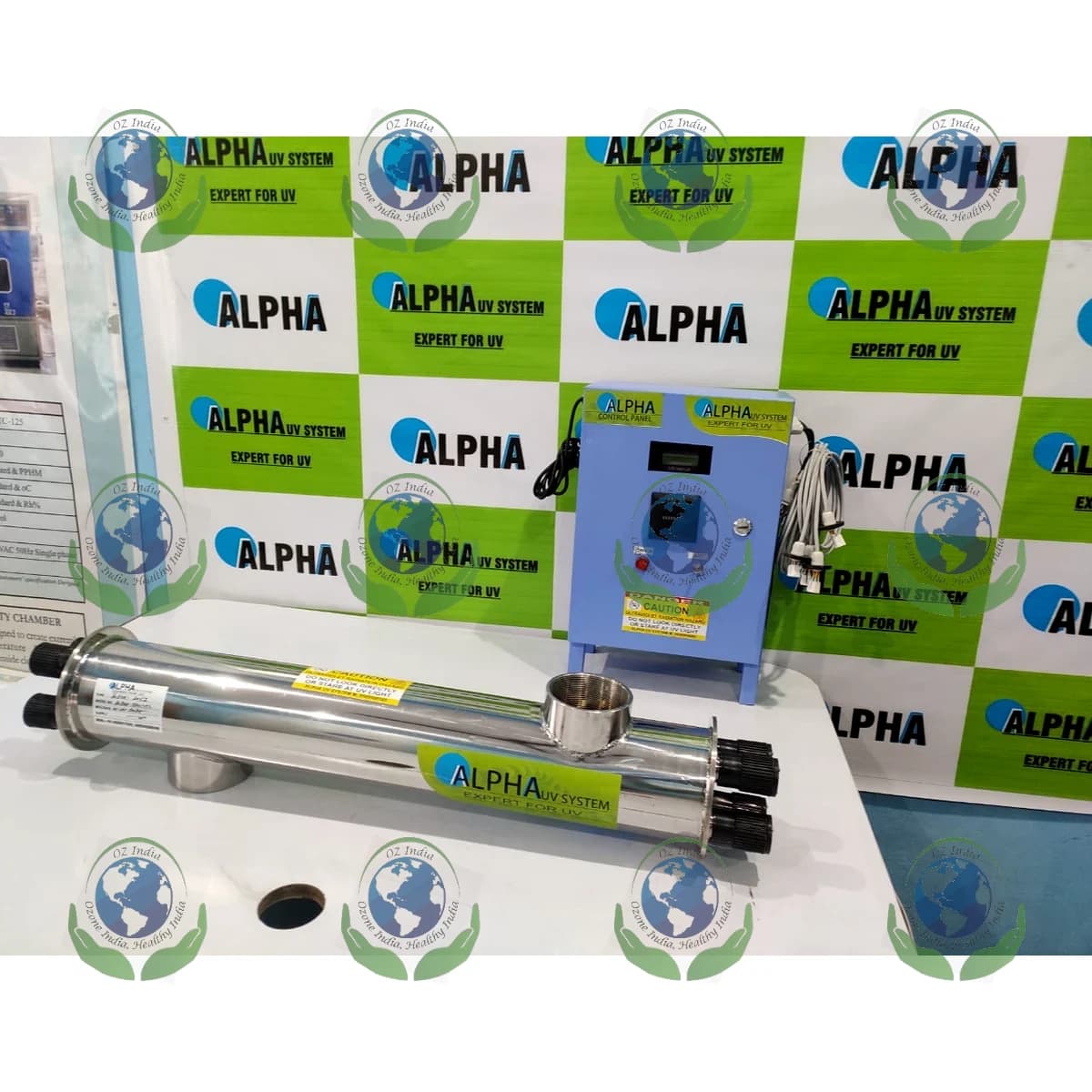
UV Pool & Aquaculture Series
UV disinfection for swimming pools and aquaculture — reduces chlorine 80%, eliminates chloramines
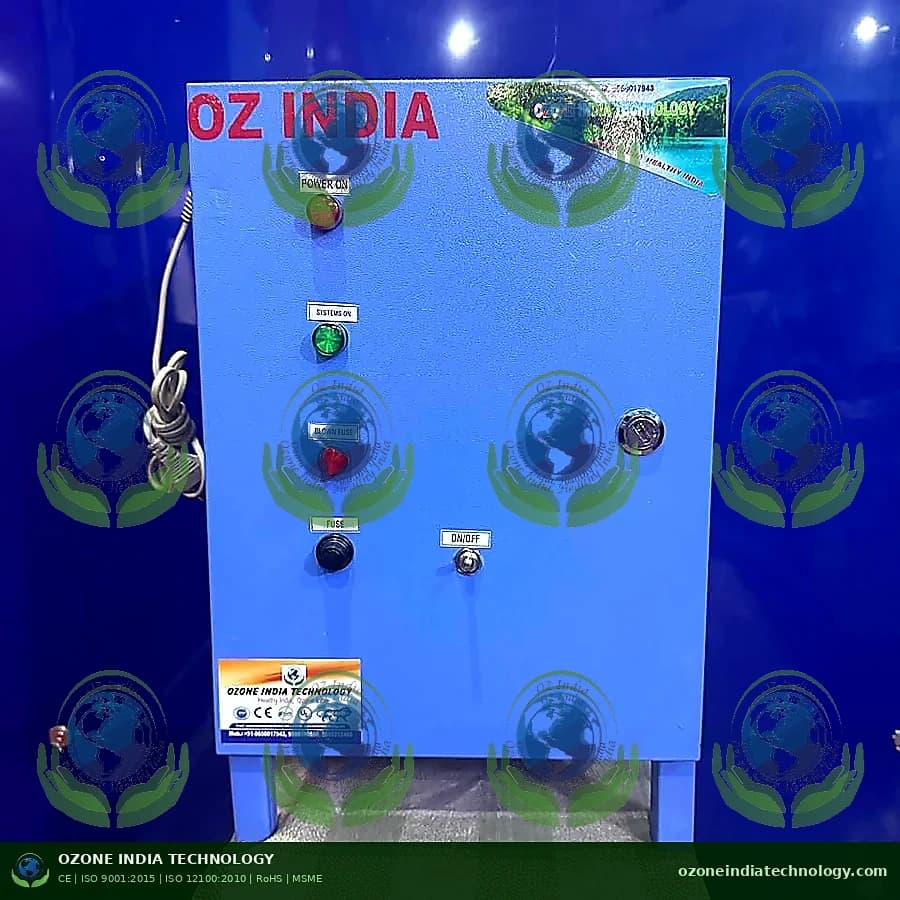
Ozone Generator — Light Industrial 5g/hr
Light industrial ozone generator for small water treatment plants and commercial disinfection
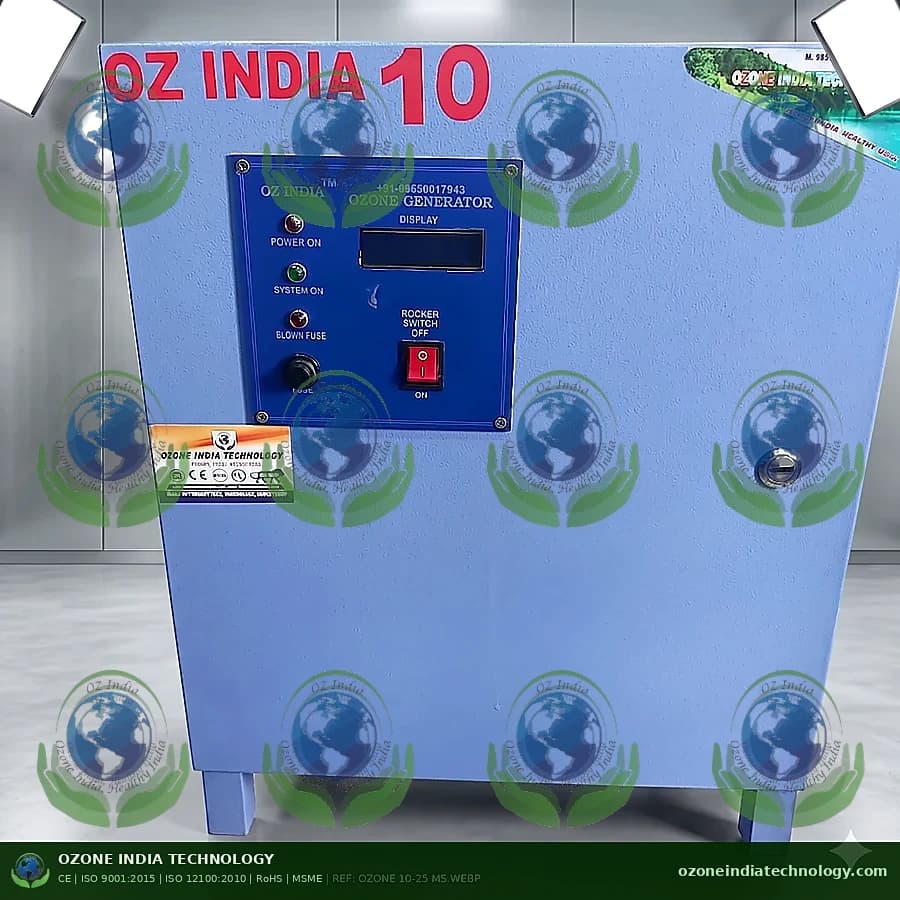
Ozone Generator — 25g/hr Industrial
Industrial 25g/hr ozone generator for medium STP ETP and water treatment plants up to 5 MLD
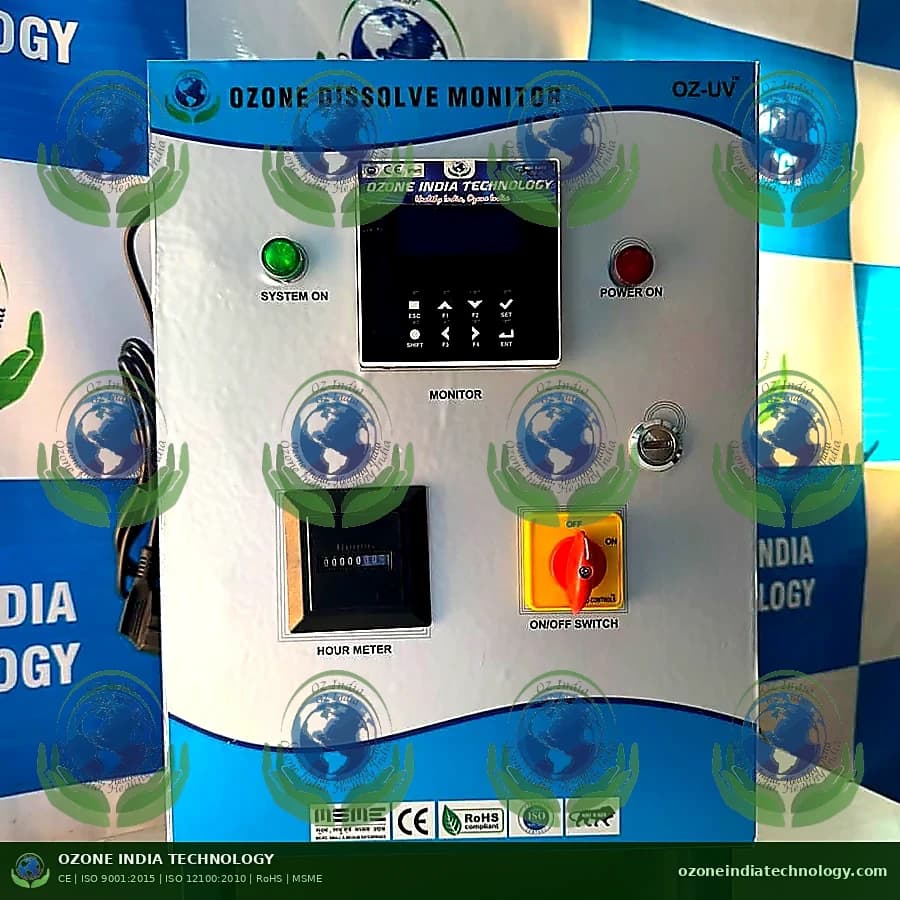
Ozone Dissolve Monitor with Contactor Support
In-line dissolved ozone monitor for water treatment process control with contactor support
SIZING GUIDE
Installation & Sizing Guide
Sizing ozone for swimming pool requires four inputs: pool volume (m³), recirculation flow rate (m³/hr — typically the pool volume turns over every 6–8 hours for public pools per BIS IS:3950), bather load (swimmers/session), and whether the pool is indoor or outdoor. Ozone generator capacity (g/hr) = side-stream flow (25% of recirculation flow, m³/hr) × ozone dose (1.0 mg/L) × 1.3 safety factor ÷ 1000 × 1000 (to convert kg to g). For a 500 m³ hotel pool with recirculation flow of 83 m³/hr: side-stream = 20.8 m³/hr; generator capacity = 20.8 × 1.0 × 1.3 = 27 g/hr — OZ India's 25g/hr system with 10% headroom is appropriate.
Contact vessel sizing for ozone for swimming pool: volume (m³) = side-stream flow (m³/hr) × HRT (3 minutes) ÷ 60 = 20.8 × 0.05 = 1.04 m³. A 1.5 m³ pressure vessel (stainless steel 316L, 6 bar rated) provides adequate margin. The contact vessel must be rated for ozone service — OZ India supplies 316L stainless steel vessels with PTFE seals for ozone for swimming pool applications. Contact vessel installation is typically in the pool plant room alongside existing recirculation pumps and sand filters, with no civil works required.
For Olympic 50-metre competition pools (volume 2,500 m³, recirculation flow 417 m³/hr), ozone for swimming pool generator sizing: side-stream 104 m³/hr; generator capacity = 104 × 1.0 × 1.3 = 135 g/hr. OZ India supplies this scale with a 75–350g/hr oxygen-fed ozone generator paired with a PSA Oxygen Generator — oxygen-fed systems achieve 10g/hr ozone per kWh vs air-fed systems' 6g/hr/kWh, reducing the operating cost for large competition pools. Multiple generators in parallel provide N+1 redundancy for competition pools where downtime is unacceptable during events.
Chlorine saving from ozone for swimming pool installation can be calculated from pool volume and bather load. A 500 m³ pool treating 100 swimmers/day without ozone requires 3.0 mg/L free chlorine maintenance and 2.0 kg/day chlorine addition. With ozone for swimming pool treatment: free chlorine target reduces to 0.8 mg/L; chlorine addition reduces to 0.6 kg/day — 70% saving. At ₹35/kg chlorine, annual chemical savings = (2.0 − 0.6) kg/day × 365 × ₹35 = ₹17,885/year. For large indoor pools with 500+ swimmers/day, chemical savings exceed ₹80,000/year — contributing substantially to the payback on the ozone for swimming pool capital investment.
CASE STUDY
Olympic Training Pool Ozone Retrofit — Bengaluru Aquatic Centre
A Bengaluru municipal aquatic centre operating an Olympic 50-metre competition pool (2,500 m³) was experiencing persistent chloramine problems: combined chlorine averaging 0.6 mg/L (3× the BIS IS:3950 limit of 0.2 mg/L), frequent swimmer eye and respiratory complaints from the coaching staff and athletes, and recurring Cryptosporidium detection in quarterly water quality tests. Chlorine consumption was 8 kg/day, representing ₹1.02 lakh/month in chemical costs. The pool management committee had received a formal notice from the District Health Officer regarding BIS non-compliance.
OZ India Technology designed and installed an ozone for swimming pool side-stream treatment system: a 150g/hr oxygen-fed ozone generator with PSA oxygen supply, a 4 m³ 316L stainless steel contact vessel (3 minutes HRT), Venturi injector, catalytic off-gas destructor, dissolved ozone monitor, and ozone ambient air monitor in the plant room. The system treats 30% of the pool's 417 m³/hr recirculation flow as the dedicated ozone side-stream.
Results at 3 months post-commissioning: combined chlorine 0.08 mg/L (60% below BIS limit); zero Cryptosporidium detected in 6 consecutive monthly tests; chlorine consumption reduced to 2.5 kg/day (69% reduction, saving ₹64,750/month); swimmer and coach complaints eliminated within 3 weeks of commissioning. The District Health Officer confirmed BIS IS:3950 compliance at the next inspection. The pool management estimated full payback on the ozone for swimming pool installation within 22 months based on chemical savings alone, before accounting for reduced sick days among athletes and avoided regulatory penalties.
FAQ
Frequently Asked Questions
How much chlorine can ozone for swimming pool treatment save?+
Ozone for swimming pool treatment reduces chlorine consumption by 50–75% in most pool applications. A pool requiring 3.0 mg/L free chlorine without ozone can maintain the WHO-recommended 0.5–1.0 mg/L residual with ozone — cutting daily chlorine addition by 60–70%. For a 500 m³ hotel pool, this translates to annual chlorine savings of ₹15,000–25,000. For a large 2,500 m³ Olympic pool, savings reach ₹6–8 lakh/year in chemical costs alone, representing a significant contribution to the ozone for swimming pool system payback period.
Does ozone eliminate Cryptosporidium in pool water?+
Ozone for swimming pool treatment is the most effective technology for Cryptosporidium control. While chlorine at practical doses (3 mg/L) requires over 10,000 minutes to achieve 2-log Cryptosporidium inactivation, ozone achieves the same result at CT = 1.0 mg/L·min — less than 2 minutes at 0.8 mg/L dissolved ozone. WHO (2006) and US CDC both recommend ozone or UV-C as the primary Cryptosporidium control technology in public pools, with residual chlorine maintained only as a secondary safety layer.
Will ozone irritate swimmers' eyes or lungs?+
No — ozone for swimming pool treatment reduces, not increases, swimmer irritation. Eye redness and respiratory irritation in pools is caused by chloramines (trichloramine), not free chlorine. Ozone destroys chloramines 3,000 times faster than chlorine. Dissolved ozone in pool return water is rapidly quenched by chlorine before reaching swimmers, and the OZ India off-gas destructor ensures ozone in pool hall air remains below 0.02 ppm — 5× below the OSHA limit. Pools with ozone for swimming pool treatment consistently report zero swimmer irritation complaints within weeks of commissioning.
Is ozone for swimming pool treatment compliant with BIS IS:3950 standards?+
Yes. BIS IS:3950 sets combined chlorine below 0.2 mg/L, free chlorine 0.5–1.0 mg/L (pH 7.2–7.8), and total coliform below 1 MPN/100mL — all achievable and consistently maintained with ozone for swimming pool treatment. Ozone does not conflict with BIS residual chlorine requirements, as pools retain 0.5–1.0 mg/L free chlorine as the required residual disinfectant. The OZ India dissolved ozone monitor provides continuous log data for BIS compliance records.
How long does it take to retrofit ozone for swimming pool into an existing pool?+
Retrofit of OZ India ozone for swimming pool system into an existing pool takes 3–5 days for a standard hotel pool (25–33 metres) and 7–10 days for an Olympic 50-metre pool. No civil works or pool liner modifications are required. Installation involves tapping the existing recirculation pipework for the side-stream takeoff and return connections, installing the generator skid in the plant room, connecting the dissolved ozone monitor and control panel, and commissioning the system. OZ India's installation team handles the complete retrofit and hands over a commissioned, documented system.
What is the operating cost of ozone for swimming pool systems?+
OZ India ozone for swimming pool system operating costs: electricity 12–15 kWh/kg ozone (air-fed) or 8–10 kWh/kg (oxygen-fed); annual consumables (corona cell, sensor membrane, destructor catalyst) ₹30,000–80,000 depending on system size; AMC ₹50,000–1,50,000/year. Total annual operating cost for a 500 m³ hotel pool: ₹1.2–2.0 lakh. This is more than offset by chlorine savings (₹15,000–25,000), reduced water change frequency (ozone pools change water less often), and reduced balancing chemical (pH, alkalinity) consumption.
Should ozone for swimming pool be combined with UV treatment?+
For indoor pools and competition pools where Cryptosporidium risk is highest, combining ozone for swimming pool with UV-C is the gold standard endorsed by WHO and FINA. UV-C at 40–60 mJ/cm² provides independent 3-log Cryptosporidium inactivation, while ozone controls chloramines and organic load. The combination allows free chlorine reduction to 0.5 mg/L while achieving superior pathogen kill. OZ India supplies complete UV + ozone for swimming pool packages for Olympic pools. For outdoor residential and hotel pools with lower bather load and Cryptosporidium risk, ozone alone with 0.8 mg/L residual chlorine is typically sufficient.
RELATED
Related Applications
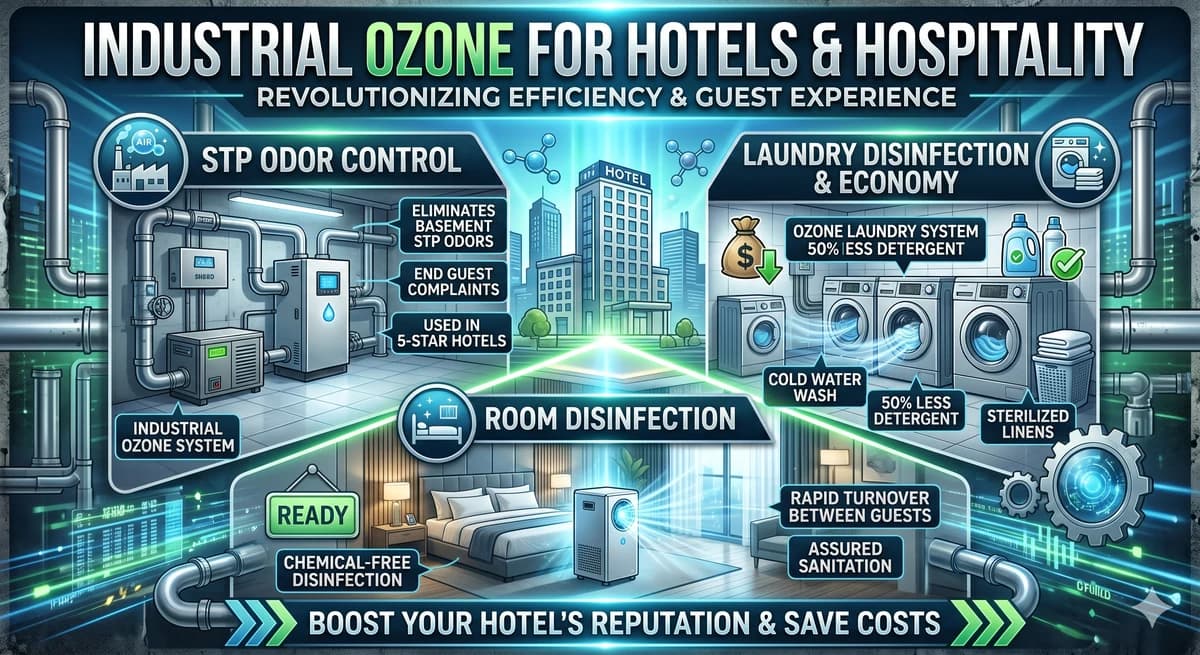
Hotel and Hospitality
Comprehensive ozone and UV solutions for hotel laundry, pool, kitchen, and indoor air quality
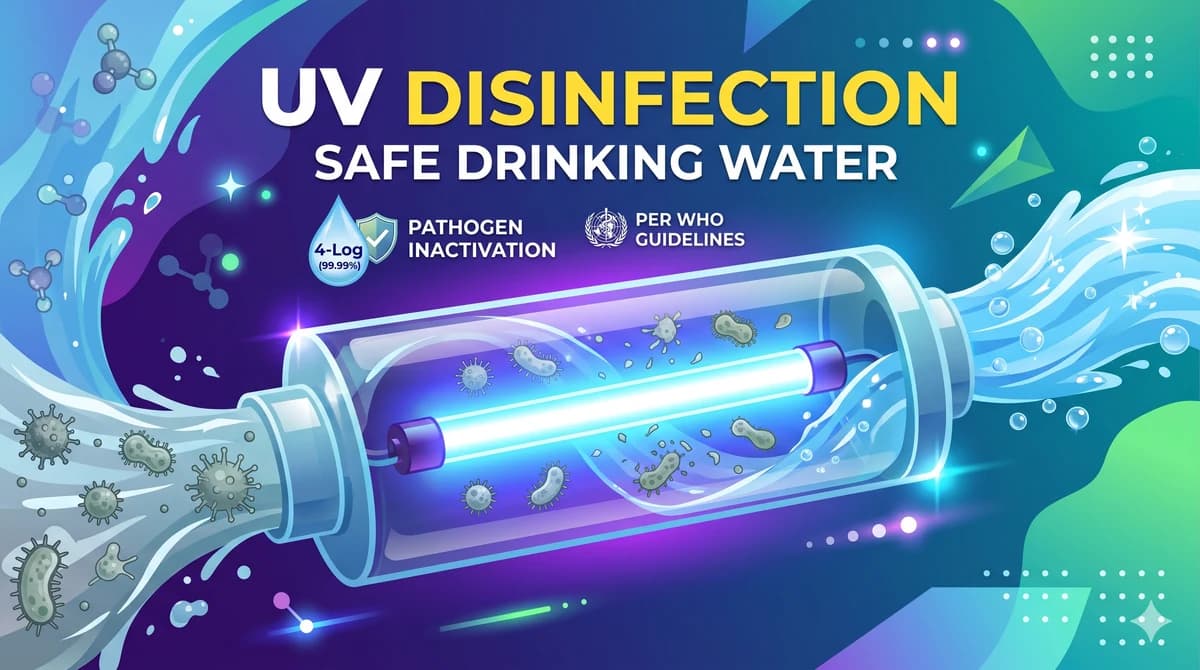
Drinking Water Treatment
IS:10500 compliant ozone and UV disinfection for bottled water, RO plants, and municipal drinking water
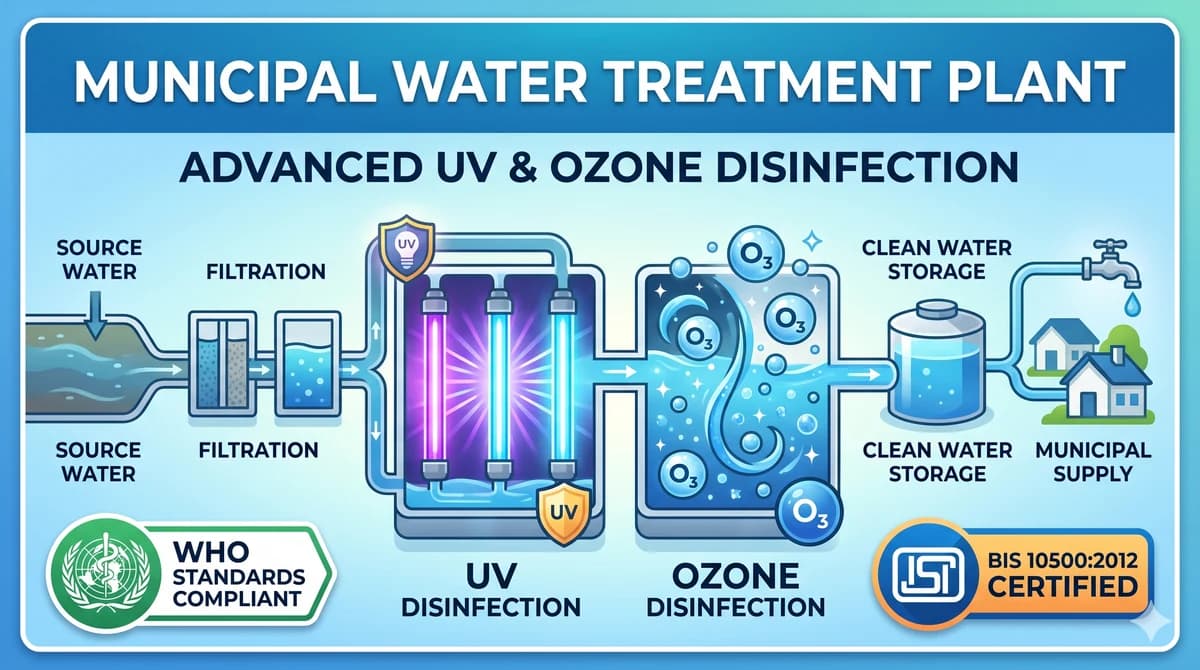
Water Treatment Plant (WTP)
Ozone and UV for superior raw water treatment — iron, manganese, taste, odour, and Cryptosporidium control
Have a question about Swimming Pool?
Talk to our engineers — free technical consultation
WhatsApp Us Now