
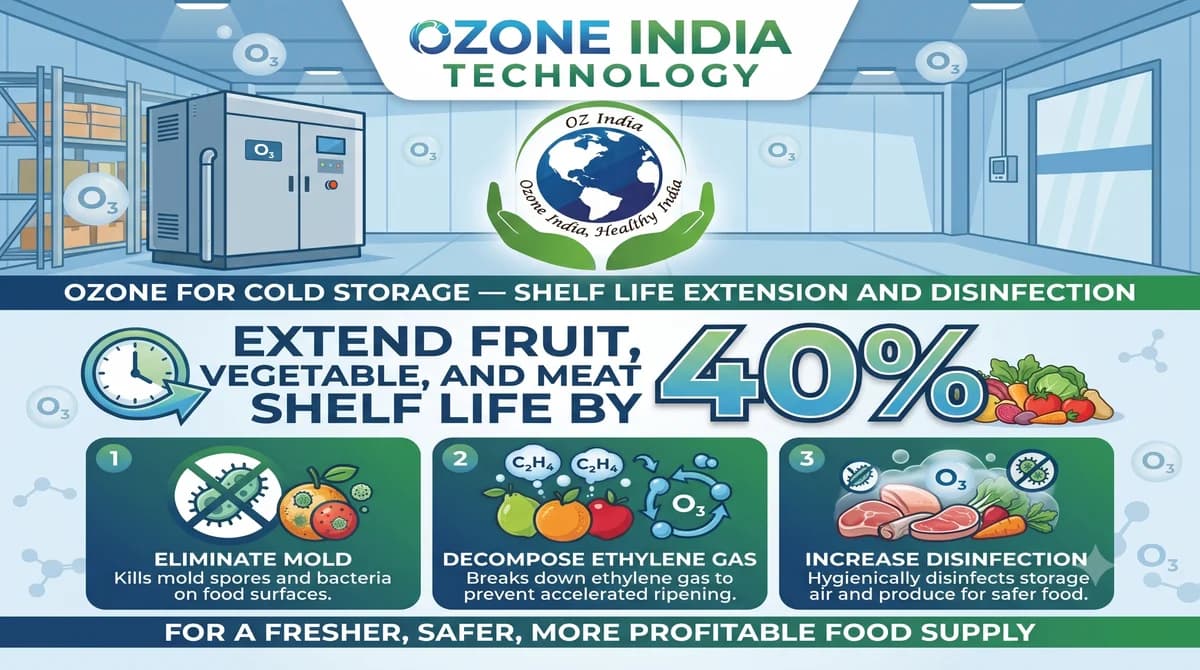
Ozone for Cold Storage — Shelf Life Extension and Disinfection
Extend fruit, vegetable, and meat shelf life by 40% with ozone — eliminate mould, bacteria, and ethylene gas
THE NEED
Why Cold Storage?
40%
shelf life extension with ozone cold storage treatment
92,000 Cr
rupees annual food waste in India — cold storage losses are a major cause
99.99%
mould spore kill in cold room at 0.1 ppm ozone
FSSAI
GRAS status — ozone approved for food contact applications
Zero
chemical residue — ozone reverts to oxygen
70%
ethylene removal delays ripening in fruits and vegetables
OVERVIEW
What is Cold Storage?
Cold storage facilities — refrigerated warehouses, controlled-atmosphere (CA) rooms, blast freezers, and cold chain distribution centres — underpin India's ₹2.1 lakh crore horticulture and food processing sector. India wastes an estimated 40% of its horticultural produce, worth ₹90,000 crore annually, primarily due to post-harvest fungal spoilage, premature ripening, and microbial contamination during cold storage, according to the National Horticulture Mission. Ozone for cold storage has emerged as the most effective single intervention available to cold storage operators to simultaneously address all three root causes — ethylene gas accumulation, fungal proliferation, and bacterial contamination — without chemical residues on food surfaces, making it the preferred technology for FSSAI, FDA, and APEDA export compliance.
Ethylene gas (C₂H₄) is the primary driver of premature ripening in cold stored fruits and vegetables. Climacteric fruits — apples, bananas, mangoes, pears, tomatoes — produce and respond to ethylene internally, accelerating their own ripening in a hormonal cascade. In a sealed cold room, ethylene concentrations can reach 50–200 ppm within days of introducing fresh produce, triggering climacteric ripening in sensitive crops and reducing saleable shelf life by 30–50%. Conventional solutions — potassium permanganate sachets (KMnO₄ absorbers), catalytic converters, and ethylene scrubbers — are costly, require regular replacement, and are effective only near the absorber material. Ozone for cold storage destroys ethylene by direct oxidative attack: the ozone-ethylene reaction proceeds rapidly (k = 1.6 × 10⁻¹⁸ cm³/molecule/s) and converts ethylene to CO₂ and H₂O without any harmful by-products, maintaining ethylene below 5 ppb throughout the cold room uniformly.
Fungal spoilage causes 15–25% of Indian cold storage losses, with Botrytis cinerea (grey mould), Aspergillus niger, Penicillium expansum, and Alternaria species being the primary culprits in grape, apple, mango, and pomegranate cold rooms. These organisms are introduced on produce surfaces and in harvesting debris, germinate at temperatures as low as 0°C, and spread by airborne spore dispersal within the cold room — converting a small initial infection into a room-wide outbreak within 2–3 weeks. Chlorine fumigation and sulphur dioxide pads (used in grape cold rooms) leave chemical residues, require occupational safety precautions, and are prohibited by EU and US import regulations for many commodities. Ozone for cold storage at 0.1–0.3 ppm continuous atmospheric concentration achieves 99%+ spore inactivation without chemical residues on produce, complying with FSSAI's GRAS designation for ozone in food environments (under FDA 21 CFR 173.368, adopted by reference).
Bacterial contamination in cold storage affects meat, dairy, fish, and minimally processed vegetable products. Psychrotrophic bacteria — Listeria monocytogenes, Pseudomonas fluorescens, Yersinia enterocolitica — grow slowly but steadily at refrigeration temperatures, reducing product shelf life and posing food safety risks. Conventional surface sanitisation between storage batches uses quaternary ammonium compounds (QACs) or peroxyacetic acid sprays that leave surface residues and require 30–60 minute dwell times before product re-entry. Ozone for cold storage continuously sanitises all cold room surfaces — walls, floors, racking, conveyor belts, refrigeration coils — without the need for manual application, rinsing, or pre-entry ventilation. Khadre et al. (2001), published in the Journal of Food Science, documented 3–5 log reductions in Listeria and Salmonella on stainless steel surfaces after 60 minutes of atmospheric ozone treatment at 0.3 ppm.
The regulatory framework for ozone for cold storage in India has clarified significantly since 2010. FSSAI Food Safety Standards Regulations 2011 permit ozone as a processing aid in food contact environments, consistent with FDA GRAS status (21 CFR 173.368, granted 2001) and EU Regulation (EC) 852/2004 on food hygiene, which permits ozone as an antimicrobial treatment without mandatory labelling. APEDA (Agricultural and Processed Food Products Export Development Authority) cold chain certification for export commodities now includes ozone as a recommended post-harvest treatment in its guidelines, recognising that produce from ozone-treated cold storage achieves the microbial standards required for EU and US market entry. Codex Alimentarius CAC/RCP 53 (Code of Hygienic Practice for Fresh Fruits and Vegetables) recommends post-harvest atmosphere control including ethylene management — a requirement that ozone directly addresses.
THE SCIENCE
How Ozone & UV Work in Cold Storage
Ozone for cold storage is generated by a corona discharge ozone generator mounted externally to the cold room, operating at ambient temperature and humidity. The generator feeds dry ozone-enriched air into the cold room through insulated stainless steel tubing, typically distributing ozone from multiple ceiling-mounted diffusers to ensure uniform concentration throughout the room volume. Cold room temperatures (0°C to 10°C) slow the ozone decomposition rate, extending its effective half-life from 20–30 minutes at ambient to 45–60 minutes at 4°C — providing more effective treatment time relative to ozone generated. This temperature-dependent stability makes ozone for cold storage particularly effective: the cold room environment amplifies ozone persistence without requiring higher generation rates.
The target ozone concentration for cold storage depends on the commodity. For fruits and vegetables, atmospheric ozone at 0.1–0.3 ppm is maintained continuously — sufficient for ethylene destruction and surface mould control without phytotoxicity. At concentrations above 0.5 ppm, sensitive commodities (leafy greens, strawberries, fresh herbs) can exhibit surface bleaching or accelerated senescence. Potatoes, apples, citrus, onions, and root vegetables tolerate 0.3–0.5 ppm continuously. For cold room sanitisation between batches (empty room treatment), ozone for cold storage is applied at 1–5 ppm for 2–6 hours to achieve deep sanitisation of all surfaces, including hidden areas of pallet racking and refrigeration coil fins where spores accumulate. The OZ India dissolved ozone monitor with atmospheric measurement mode (0–10 ppm range) controls ozone concentration throughout both modes.
Ethylene destruction by ozone in cold storage follows well-established chemistry. Ozone reacts with ethylene's C=C double bond in a cycloaddition reaction forming molozonide (1,2,3-trioxolane), which rapidly decomposes to formaldehyde and formic acid, then fully oxidises to CO₂ and H₂O. The reaction rate constant ensures that at 0.1 ppm ozone, ethylene concentrations are maintained below 5 ppb — below the threshold for ethylene response in all climacteric fruits. For a standard 1000 m³ apple CA cold room generating ethylene at 5 ppm/day, maintaining 0.1 ppm ozone residual requires approximately 200–400 mg O₃ per hour — achievable with an OZ India 5g/hr ozone generator, which produces 5,000 mg/hr, allowing for room air leakage and ozone demand from produce surfaces.
Mould control by ozone for cold storage operates through oxidative destruction of fungal cell membranes. Ozone attacks the unsaturated fatty acids in fungal membranes, causing lipid peroxidation and membrane disruption that kills vegetative mycelium within minutes. Fungal spores are more resistant than vegetative cells due to their thick outer coat, but are inactivated by ozone at CT values achievable during batch sanitisation cycles. Kim and Yousef (2000), published in the Journal of Food Protection, demonstrated 5-log inactivation of A. niger spores after 30 minutes exposure to 2 ppm ozone — directly translatable to the empty-room sanitisation mode of ozone for cold storage. Between storage batches, OZ India systems automatically run a high-concentration (2–5 ppm) sanitisation cycle for 2–4 hours, followed by ventilation to below 0.1 ppm before produce re-entry.
OZ India ozone for cold storage systems are delivered as complete skid-mounted packages with automatic mode switching between continuous low-dose treatment (produce present) and high-dose batch sanitisation (empty room). The PLC control panel monitors atmospheric ozone concentration via the OZ India ozone ambient air monitor, automatically maintaining the set concentration by adjusting ozone generator output. A door contact sensor detects when cold room doors open and pauses ozone injection during personnel entry, resuming treatment when the door closes. This automated safety interlock ensures worker exposure never exceeds OSHA's 0.1 ppm TWA limit. An audible alarm activates if atmospheric ozone rises above 0.2 ppm (STEL limit) during the continuous treatment mode, providing an additional safety layer for cold room workers conducting manual tasks inside the treated room.
THE SOLUTION
Ozone India Technology Solution
OZ India Technology's cold storage ozone system is available in three standard configurations matched to cold room size: the CS-5 (5g/hr ozone generator, for cold rooms up to 1,500 m³), the CS-10 (10g/hr, up to 3,000 m³), and the CS-25 (25g/hr, up to 7,500 m³ or multi-room installations). Each system is pre-assembled on a compact stainless steel skid: ozone generator with integrated air dryer (achieving -60°C dew point for stable operation at cold room ambient conditions), 316L stainless steel gas distribution manifold, ceiling diffusers (PVDF, ozone-resistant), atmospheric ozone monitor, door interlock safety relay, and a PLC panel with 5-inch HMI displaying real-time ozone concentration, treatment mode, temperature, and alarm status. All skid components are rated for cold storage ambient conditions (0°C to 15°C ambient outside the cold room, -25°C where the gas distribution pipe enters the cold room through insulated penetrations).
For potato cold storage — a major application across Madhya Pradesh and Maharashtra where India stores 30+ million MT annually — ozone for cold storage at 0.1–0.2 ppm reduces sprouting by inhibiting the ethylene that triggers dormancy break, extends storage life by 4–6 weeks, and controls dry rot (Fusarium sambucinum) and soft rot (Erwinia carotovora) on stored tubers. OZ India has commissioned cold storage ozone systems at 15+ potato cold stores across Agra, Aligarh, and Mathura — India's largest potato cold storage belt — with documented reduction in chemical fungicide use of 60–80% and reduction in storage losses from 8–12% to 3–5%.
For apple cold storage in Himachal Pradesh and Uttarakhand, ozone for cold storage controls superficial scald (caused by α-farnesene oxidation products) and blue mould (Penicillium expansum) — the two major causes of apple cold storage losses in Indian hill states. Unlike the diphenylamine (DPA) anti-scald treatment banned by the EU and under review by FSSAI, ozone for cold storage achieves scald control without any chemical residues, enabling HP apple exporters to meet EU and US import standards. OZ India apple cold storage systems include continuous ethylene monitoring as an optional add-on, providing growers and cold store operators with real-time ripening status data.
OZ India provides complete cold storage ozone project delivery: initial consultation and cold room audit (size, insulation, existing refrigeration system, commodity type), system specification and quotation, supply and delivery, installation by OZ India-certified engineers, commissioning with produce trials (monitoring produce quality weekly for 4 weeks post-installation), operator training, and 12-month warranty. Our engineers are experienced in working within active cold storage facilities during non-peak hours to minimise operational disruption. Post-installation support includes AMC packages with quarterly maintenance visits, sensor calibration certificates, and 48-hour emergency response — critical for cold storage operators who cannot afford equipment downtime during peak storage seasons (October–February for apples, March–May for mangoes).
PERFORMANCE
Without vs With OZ India Treatment
| Parameter | Without Treatment | With OZ India System |
|---|---|---|
| Ethylene Control | 100–200 ppm ethylene accumulation; rapid ripening | Ozone for cold storage: ethylene maintained below 5 ppb; ripening arrested |
| Fungal Spoilage Rate | 8–15% produce loss to Botrytis and Penicillium | Ozone for cold storage: 1–3% spoilage; 80%+ reduction |
| Shelf Life Extension | Baseline cold storage shelf life | 30–60% extension with ozone for cold storage, depending on commodity |
| Chemical Residues on Produce | SO₂ pads, fungicide residues (MRL compliance risk) | Zero residues — ozone reverts to oxygen (ozone for cold storage is FSSAI GRAS) |
| Room Sanitisation | Manual QAC spray between batches; labour and chemical cost | Automated high-dose ozone cycle; zero labour, zero chemicals |
| APEDA Export Compliance | Chemical treatment records required; MRL risk | Residue-free certification with ozone for cold storage; no MRL risk |
| Annual Chemical Cost | ₹2–5 lakh (SO₂ pads, KMnO₄, fungicide sprays) | ₹0 chemical cost with ozone for cold storage; only electricity |
| Bacterial Contamination Control | Periodic manual sanitisation; biofilm on surfaces | Continuous surface and air disinfection; biofilm prevention |
PERFORMANCE DATA
Technical Performance Data
Reference data for ozone treatment system design and validation — applicable to Cold Storage applications. All data per standard water treatment engineering practice (AWWA, WHO, CPCB guidelines).
Pathogen Log Inactivation at 3 mg/L Ozone (CT = 45 mg·min/L)
BOD Reduction (%) vs Ozone Dose — Typical STP/ETP Secondary Effluent
E. coli Log Inactivation vs Contact Time at 3 mg/L Ozone
System Sizing Guide — Plant Flow Rate vs Ozone Generator Capacity
RECOMMENDED EQUIPMENT
Products for Cold Storage
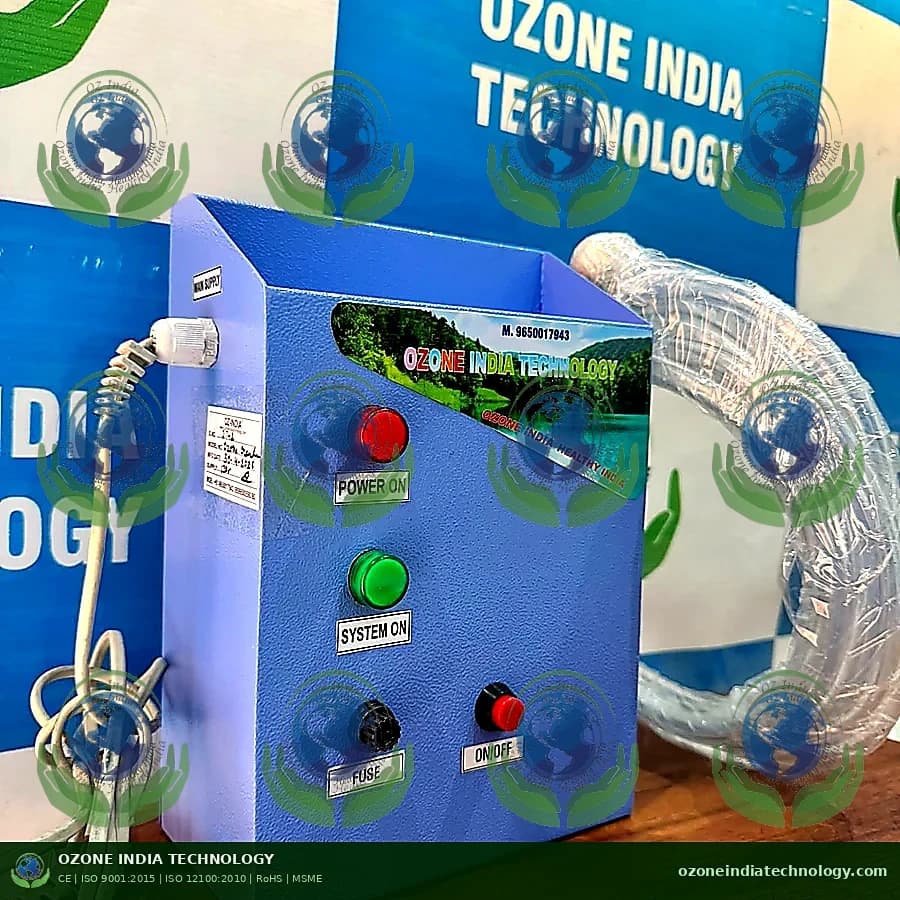
Ozone Generator — Portable 2g/hr
Compact corona discharge ozone generator for small-scale water treatment and air purification
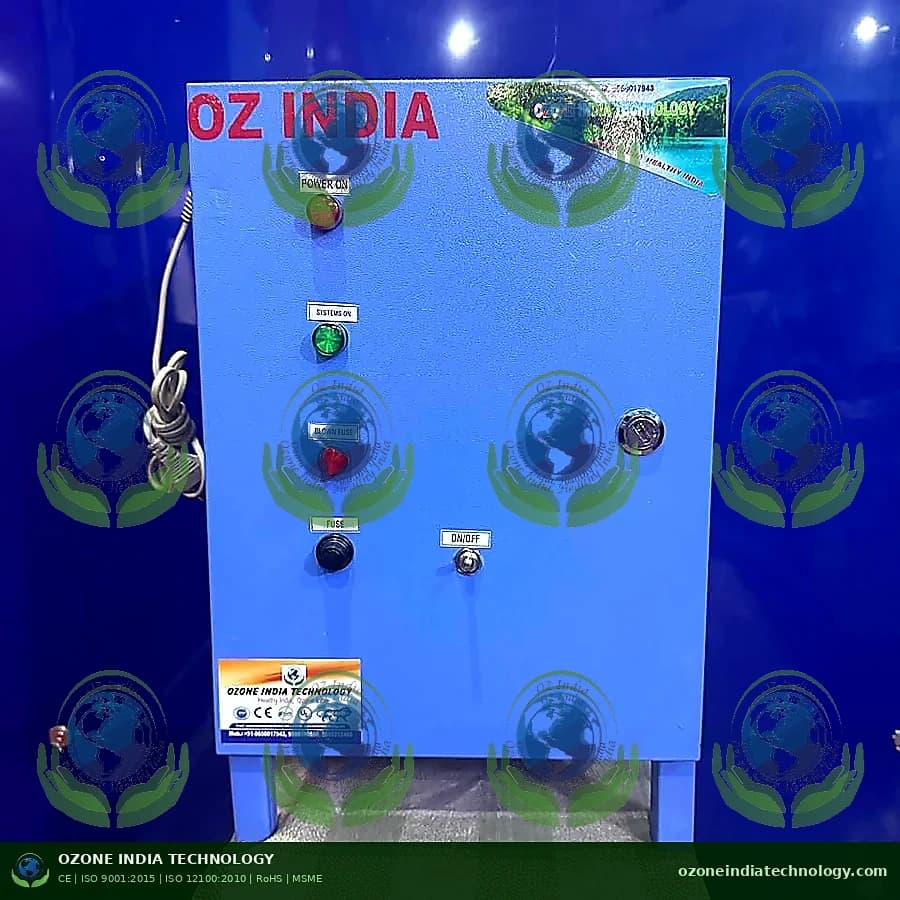
Ozone Generator — Light Industrial 5g/hr
Light industrial ozone generator for small water treatment plants and commercial disinfection
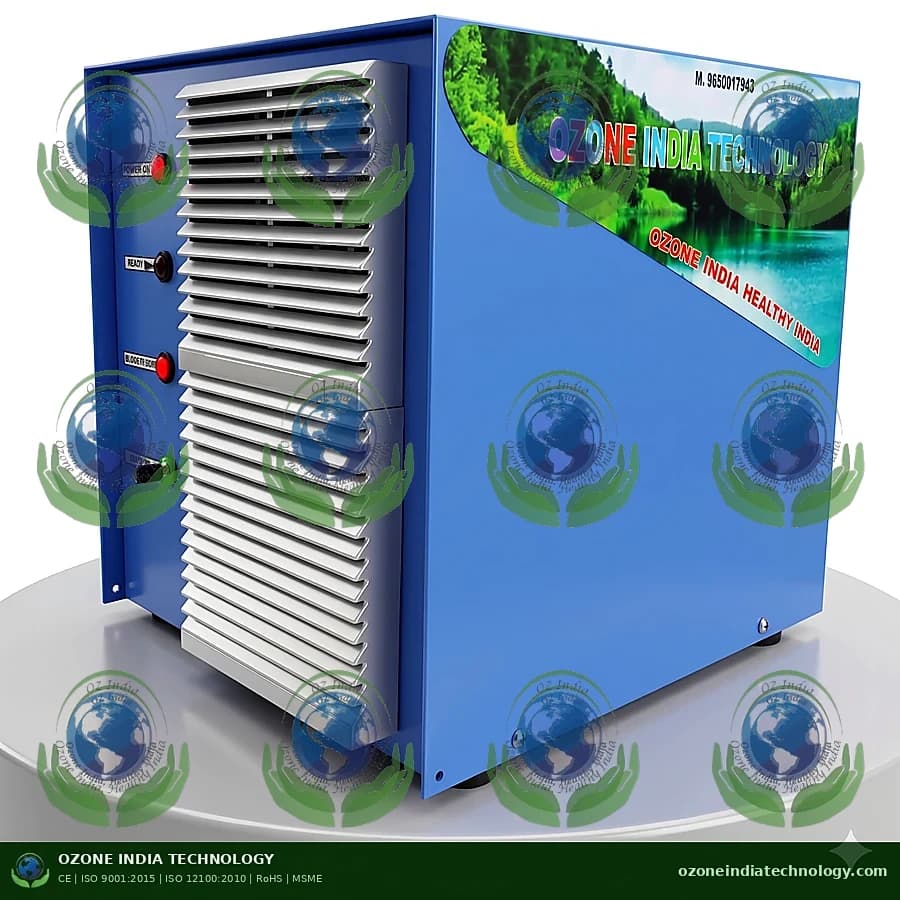
Ozone Air Purifier
Compact ozone air purifier for room disinfection odour control and air sterilization
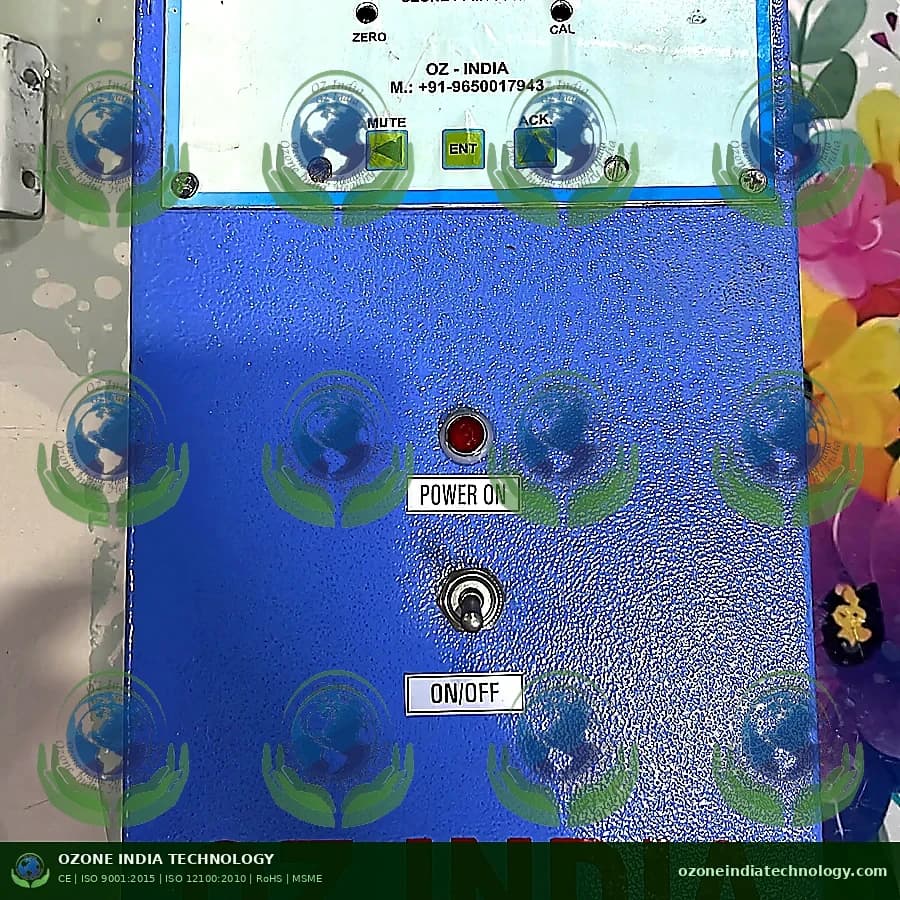
Ozone Ambient Air Monitor
Real-time ozone air monitoring with Delta PLC, HMI touchscreen & USB data logging
SIZING GUIDE
Installation & Sizing Guide
Sizing ozone for cold storage requires three parameters: cold room volume (m³), commodity type (determines target ozone concentration and tolerance), and infiltration rate (how frequently room air is exchanged through door openings and leakage). Ozone requirement (g/hr) = Room volume (m³) × Target concentration (ppm) × Air exchange rate (volumes/hr) × Ozone demand factor (1.5–3.0 for produce-loaded rooms). For a 2,000 m³ apple cold room with target 0.15 ppm and air exchange 0.3 volumes/hour: 2,000 × 0.15 × 10⁻³ × 0.3 × 2.0 = 0.18 g/hr ozone demand. OZ India applies a 5–10× safety factor to account for ozone demand from produce surfaces, produce-generated ethylene and CO₂, and seasonal variation in door opening frequency during harvest intake periods.
Commodity-specific ozone concentration guidance, validated from published literature and OZ India field experience: Potatoes — 0.1–0.2 ppm continuous; Apples — 0.05–0.15 ppm continuous; Grapes — 0.05–0.1 ppm continuous (very sensitive); Onions — 0.2–0.4 ppm continuous; Citrus — 0.1–0.3 ppm continuous; Meat (chilled) — 0.1–0.3 ppm continuous; Fish (chilled) — 0.1–0.2 ppm continuous; Dairy — 0.05–0.1 ppm continuous. Empty-room sanitisation for all commodities: 2–5 ppm for 2–4 hours. These ranges represent upper safe limits — OZ India recommends starting at the lower bound and increasing concentration gradually over 2–3 weeks while monitoring produce quality.
Multiple cold rooms sharing a common refrigeration machine room can be served by a single centralised ozone generator with a distribution manifold and individual flow control valves to each cold room. This central system approach reduces capital cost compared to individual room systems and simplifies maintenance — only one generator to service. OZ India centralised cold storage ozone systems serve 2–10 cold rooms from a single generator skid, with individual atmospheric ozone monitors in each room providing independent dose control. The centralised approach is standard for new cold storage construction; retrofit installations on existing cold stores typically use individual room systems to avoid disruption during installation.
Ozone monitor placement is critical for accurate dose control and personnel safety. OZ India installs the atmospheric ozone sensor at the breathing zone height (1.5 metres) in the highest-traffic area of the cold room — typically near the pallet racking inspection walkway. The sensor cable is routed to the external control panel through a sealed gland. A second monitor is installed in the machine room where the ozone generator is located, protecting maintenance personnel. Sensor calibration is required every 6 months using a certified ozone calibration gas standard — OZ India provides calibration as part of the AMC package, with calibration certificates suitable for FSSAI and APEDA food safety audit documentation.
CASE STUDY
Apple Cold Storage Loss Reduction at Shimla Hills Horticulture Cooperative, HP
A 40-member apple growers' cooperative in Kotgarh, Himachal Pradesh, operated four 1,200 m³ controlled-atmosphere cold rooms with a combined storage capacity of 12,000 quintals. The cooperative had been experiencing 12–18% annual storage losses from Penicillium blue mould and superficial scald, reducing the value of their apple crop by ₹28–40 lakh per season. EU buyers were also requesting ozone treatment documentation as part of residue-free certification for the export market, where HP apples compete with New Zealand and Chilean fruit.
OZ India Technology assessed the four cold rooms and installed one CS-10 system (10g/hr ozone generator) with a distribution manifold serving all four rooms simultaneously, with individual atmospheric ozone monitors in each room and a central PLC panel. System installation was completed in 5 days between the apple harvest intake period and the storage season. Ozone concentration was set at 0.1 ppm continuous treatment, switching to a 3 ppm 3-hour sanitisation cycle between batches. Over the first storage season, Penicillium incidence reduced from 8.3% of stored fruit to 1.4%, and superficial scald incidence dropped from 6.2% to 0.8%.
Total storage losses for the cooperative fell from 15% to 3.8% in the first ozone-treated season — a ₹32 lakh improvement in realised crop value on a system capital cost of ₹8.5 lakh. EU export customers accepted the OZ India ozone treatment records as residue-free certification supporting, enabling the cooperative to achieve a premium price of ₹15/kg versus ₹11/kg for non-certified domestic market fruit. The cooperative renewed their AMC contract for the second year and added ozone monitoring data to their Global GAP certification documentation. Return on investment was achieved within the first storage season.
FAQ
Frequently Asked Questions
Is ozone for cold storage safe for produce — will it damage fruits and vegetables?+
At recommended concentrations (0.05–0.3 ppm depending on commodity), ozone for cold storage does not damage produce. FSSAI has granted GRAS status to ozone as a food processing aid, consistent with FDA 21 CFR 173.368 (2001). Sensitive commodities like grapes, strawberries, and leafy greens require careful ozone for cold storage concentration control at the lower end (0.05–0.1 ppm), while robust commodities like potatoes, onions, and citrus tolerate 0.3–0.5 ppm. OZ India recommends a 2-week trial period starting at the minimum effective concentration and monitoring produce appearance weekly before establishing the operational setpoint.
How much can ozone for cold storage extend shelf life?+
Documented shelf life extensions from ozone for cold storage range from 30–60% depending on commodity and baseline conditions. OZ India field data from Indian ozone for cold storage installations show: apples — 4–6 additional weeks of marketable quality; potatoes — 6–8 weeks reduced sprouting and weight loss; grapes — 2–3 additional weeks without SO₂ pad treatment; onions — 30% reduction in weight loss and sprouting. These figures represent average improvements compared to conventional cold storage without ozone treatment at similar temperature and humidity settings.
Can ozone for cold storage replace sulphur dioxide pads in grape cold rooms?+
Yes — ozone for cold storage at 0.05–0.1 ppm continuous treatment can replace or substantially reduce sulphur dioxide pad usage in grape cold rooms. SO₂ pads leave sulphur dioxide residues on grape surfaces that are regulated by EU maximum residue limits (10 mg/kg for table grapes) and require special documentation for export. Ozone for cold storage leaves no residues and is accepted by all major export markets. OZ India has installed ozone systems in three grape cold stores in Nashik, Maharashtra — the largest grape-growing region in India — with documented elimination of SO₂ pad costs (₹3–4 lakh per season) and maintained export compliance.
What is the electricity consumption of an ozone for cold storage system?+
OZ India ozone for cold storage systems consume 150–400 watts of electricity for the ozone generator and ancillary equipment. At ₹7/kWh and 8,760 hours per year continuous operation, annual electricity cost is ₹9,000–25,000 — a fraction of the value of produce losses prevented. In comparison, potassium permanganate ethylene absorbers for a 1,000 m³ room cost ₹1.5–3 lakh per season and require monthly replacement. The OZ India ozone for cold storage system has no consumable materials (air-fed units use only electricity) and continues operating for 10+ years with routine maintenance.
Does ozone for cold storage comply with FSSAI and APEDA export requirements?+
Yes — FSSAI Food Safety Standards Regulations permit ozone as a processing aid in food contact environments (consistent with FDA 21 CFR 173.368). APEDA cold chain certification guidelines for export horticulture recommend ozone for cold storage as a post-harvest treatment. Ozone leaves no chemical residues on produce (it reverts to oxygen), so there are no MRL (Maximum Residue Level) concerns for any export market. OZ India provides a technical dossier with each ozone for cold storage installation suitable for inclusion in APEDA export certification, FSSAI food safety management system documentation, and Global GAP certification records.
Is ozone for cold storage safe for workers who enter the treated room?+
OZ India ozone for cold storage systems include a door interlock safety system that pauses ozone injection whenever a cold room door is opened, preventing worker exposure during room entry. The atmospheric ozone monitor alarms at 0.1 ppm (OSHA TWA limit) and triggers automatic ozone generator shutdown. For extended entry to perform manual work inside an ozone-treated room, the system includes a manual hold function that suspends ozone for cold storage treatment for a configurable time period. After the hold period expires, treatment resumes automatically. Workers are trained during system commissioning on the interlock operation and emergency procedures.
How does ozone for cold storage compare to catalytic ethylene scrubbers?+
Catalytic ethylene scrubbers (such as KMnO₄ absorbers and platinum catalyst systems) remove ethylene only in the recirculated air stream passing through the scrubber unit — they do not address surface contamination, mould spores, or bacterial populations. Ozone for cold storage simultaneously destroys ethylene throughout the room volume, controls surface mould and bacteria on produce and room surfaces, and eliminates odours. Capital cost for a catalytic scrubber for a 1,000 m³ room is ₹2–4 lakh, with consumable replacement costs of ₹1–2 lakh per season. OZ India ozone for cold storage system capital cost is similar or lower, with zero consumable costs and broader spectrum of benefits.
RELATED
Related Applications
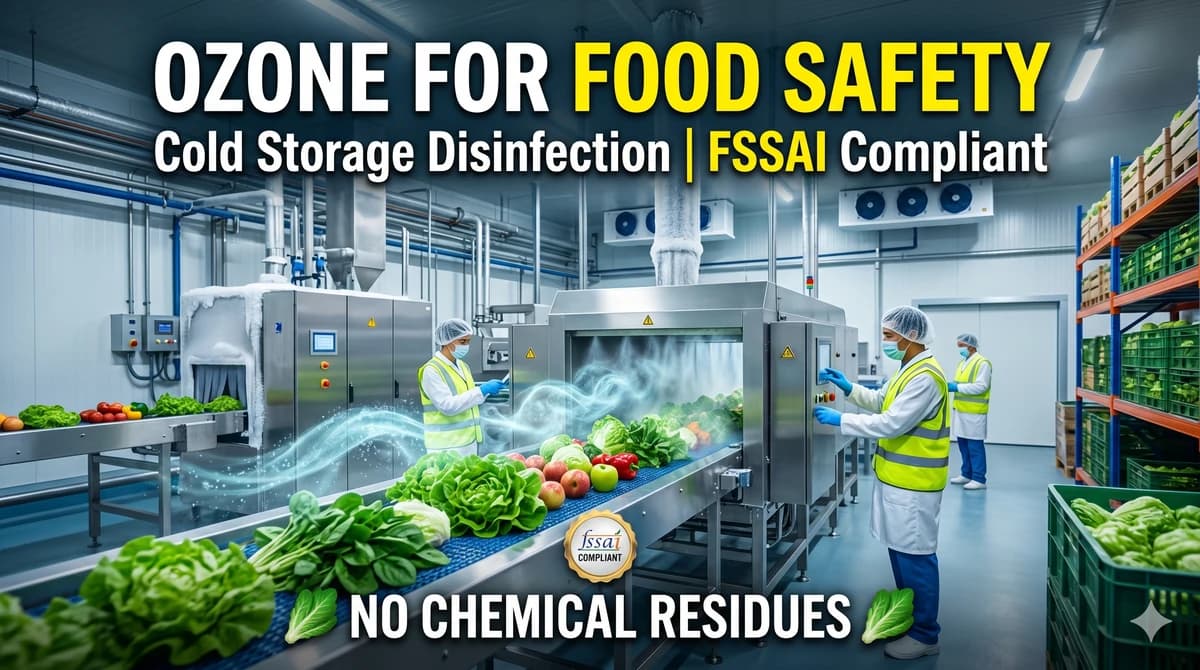
Food Processing and Safety
FSSAI-compliant ozone disinfection for food contact surfaces, CIP, cold storage, and vegetable washing
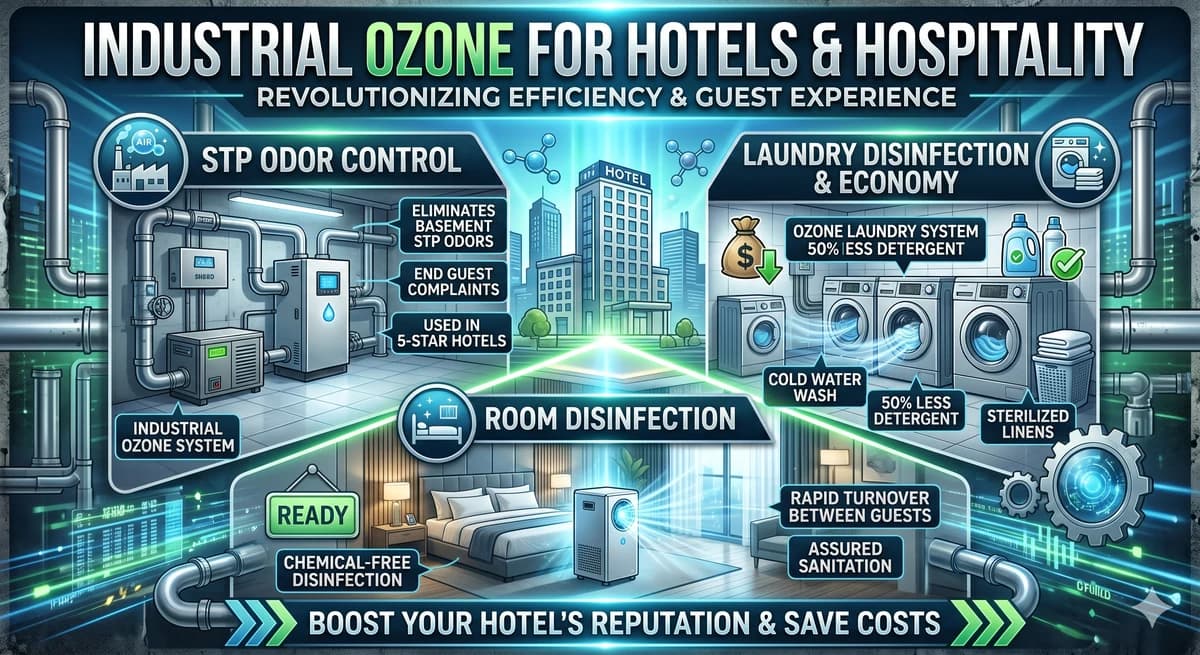
Hotel and Hospitality
Comprehensive ozone and UV solutions for hotel laundry, pool, kitchen, and indoor air quality
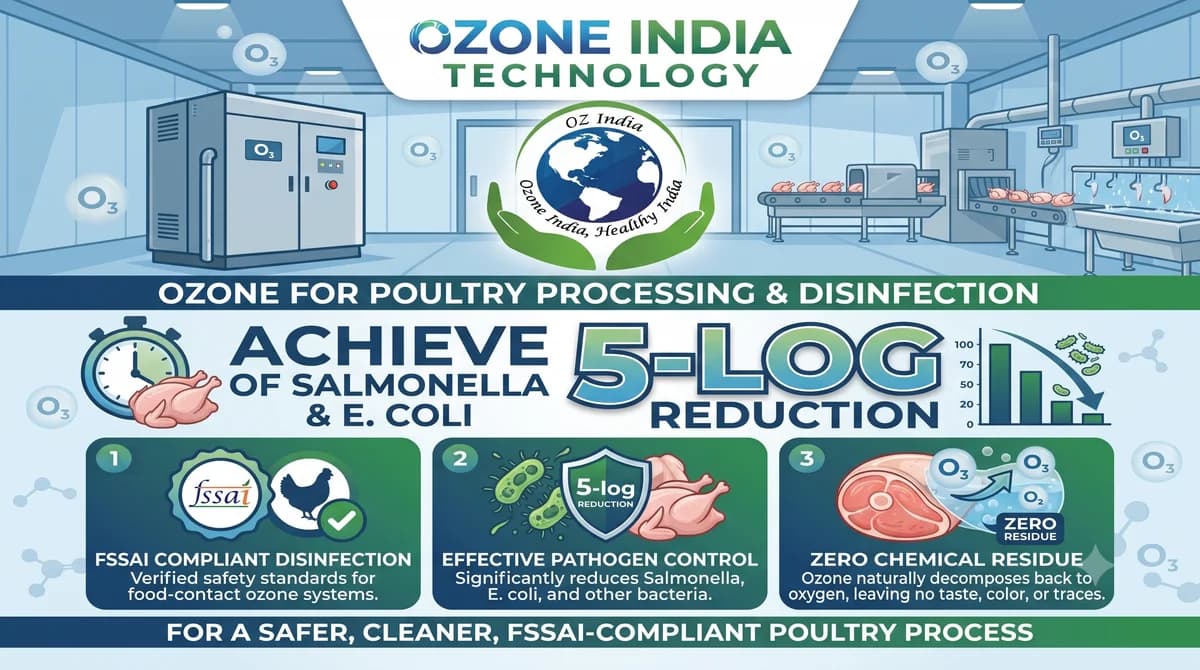
Poultry Processing and Disinfection
FSSAI-compliant ozone disinfection for poultry — 5-log Salmonella reduction, zero chemical residue
Have a question about Cold Storage?
Talk to our engineers — free technical consultation
WhatsApp Us Now