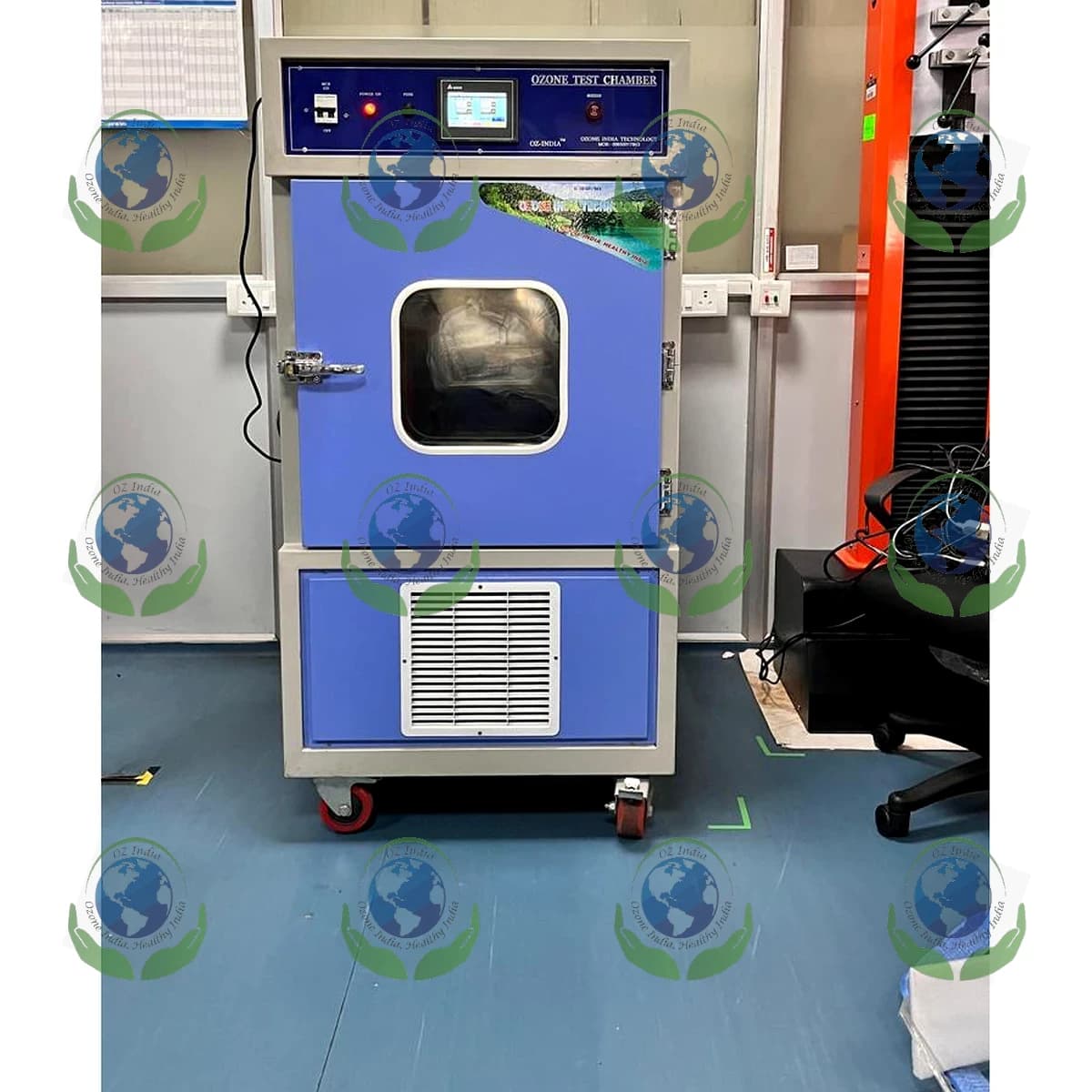
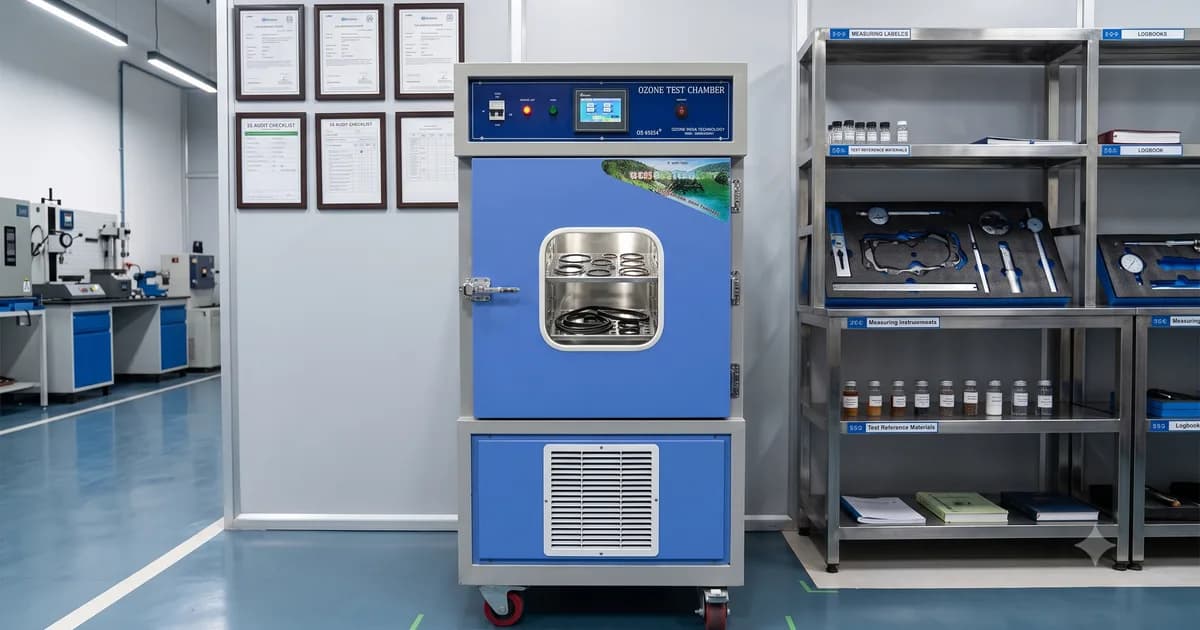
Ozone test chamber for Indo-Japanese automotive manufacturer India is a quality investment that Dawnsun Kyosei Engineering Pvt. Ltd. (DKEPL) made when they ordered an ozone testing chamber from Ozone India Technology for their Noida facility. DKEPL is an Indo-Japanese joint venture — the name reflects Dawnsun (Indian) and Kyosei (Japanese philosophy of symbiosis) — with plants in Noida, Delhi NCR and Chennai, Tamil Nadu. This blog explains why Indo-Japanese automotive manufacturers require certified ozone test chamber equipment, what standards DKEPL needed to meet, and how Ozone India Technology supplied a complete turnkey solution.
Why Indo-Japanese Automotive JVs Need a Certified Ozone Test Chamber
Japanese automotive quality management is among the most rigorous in the world. Japanese OEMs — Honda, Toyota, Suzuki, Yamaha, Mitsubishi — operate to JASO (Japanese Automobile Standards Organisation) specifications that require rubber and polymer components to be tested in an ozone test chamber before batch approval. Indo-Japanese joint ventures inherit these standards from their Japanese partners and must maintain Japanese-equivalent quality laboratories at their Indian plants.
IATF 16949 — the international quality management standard for automotive production — requires that rubber component suppliers demonstrate ozone cracking resistance data from a calibrated ozone test chamber as part of PPAP (Production Part Approval Process) submission. Without an in-house ozone test chamber or a qualified external lab, PPAP approval from Japanese OEMs is not achievable.
DKEPL operates under strict supply chain requirements from their Japanese counterpart, which means every rubber seal, O-ring, hose, gasket, and polymer moulding must carry test data from a certified ozone test chamber before it can be supplied to the end OEM. The investment in an in-house chamber eliminates the 2–3 week external lab turnaround and enables batch-level testing at the point of manufacture.
About Dawnsun Kyosei Engineering Pvt. Ltd.
Dawnsun Kyosei Engineering Pvt. Ltd. (DKEPL) is an Indo-Japanese joint venture engineering company with its head office/Plant 1 in Noida, Uttar Pradesh, and Plant 2 in Kancheepuram, Tamil Nadu. The company manufactures precision engineering components for the automotive sector, combining Indian manufacturing capabilities with Japanese technology standards.
DKEPL procured one Ozone Test Chamber Static Model OZ-INDIA-OTC from Ozone India Technology for their Noida facility. Technical requirements included the full PDIR (Pre-Delivery Inspection Report), material test certificate, and ELV/RoHS compliance certificate — documentation requirements directly inherited from Japanese automotive supply chain standards. The ozone test chamber was ordered to "Static Model" specification, confirming ISO 1431-1 (static strain) testing as the primary application.
Japanese Automotive Standards for Rubber Ozone Testing
Japanese automotive OEMs specify ozone testing through a combination of Japanese domestic standards and international standards:
- JASO M 308: Japanese automobile rubber material standard covering ozone resistance
- ISO 1431-1: Static strain ozone cracking resistance — the international standard adopted by all Japanese OEMs
- ISO 1431-3: Reference and alternative ozone exposure methods
- JIS K 6259: Japanese Industrial Standard for ozone cracking resistance of rubber
- IATF 16949 + AIAG PPAP: Requires ozone test chamber data in the material qualification package
The Ozone India Technology OZ-INDIA-OTC ozone test chamber (Static Model) is designed to meet all these standards. The static model maintains specimen strain at a fixed elongation (typically 20%) for the full test duration without mechanical movement — exactly as specified in ISO 1431-1 and JASO M 308.
The chamber's electrochemical ozone sensor, PID control system, and digital LED display provide traceable, repeatable test conditions. Every ozone test chamber from Ozone India Technology is supplied with CE Declaration of Conformity (CE-2621A) and ISO 9001:2015 certificate (UQ-270426AD1), which are accepted in PPAP submissions to Japanese OEM quality auditors.
Technical Specification: OZ-INDIA-OTC Static Model
The ozone test chamber supplied to DKEPL Noida is the OZ-INDIA-OTC Static Model:
| Parameter | Value |
|---|---|
| Model | OZ-INDIA-OTC (Static) |
| Cabinet | MS Powder Coated |
| Inner Chamber | SS-304 |
| Test Type | Static Strain |
| Ozone Concentration | 25–500 pphm, ±5% stability |
| Temperature | 20–70°C, ±2°C |
| Humidity | 55% ±5% RH |
| Sensor | Electrochemical type |
| Display | 3½-digit LED |
| Control | PID digital controller |
| Packaging | Included |
| Freight | Included to Noida |
| Commissioning | Included |
The "Static Model" designation distinguishes this ozone test chamber from the Rotary (Dynamic) model. In a static chamber, specimens are mounted on a fixed jali frame at a set elongation. In a dynamic/rotary model, specimens are also subjected to repeated bending. DKEPL's automotive rubber testing requirement specified static testing per ISO 1431-1, which is the most common configuration for incoming quality inspection.
IATF 16949 Compliance Through In-House Ozone Test Chamber
Indo-Japanese JVs and their Tier-1/Tier-2 suppliers must maintain IATF 16949 certification to supply to OEMs. This standard requires:
- Control Plan coverage: All rubber compounds must be listed in the Control Plan with the ozone test frequency and acceptance criteria
- MSA (Measurement System Analysis): The ozone test chamber must be calibrated and included in the gauge calibration register
- PPAP Material Qualification: Initial sample ozone test data must be included in the PPAP Level 3 package
- SPC and data records: Test results must be retained for the minimum retention period specified by the OEM (typically 15 years for safety-related parts)
An in-house ozone test chamber makes all of these requirements achievable within the manufacturing facility. External lab dependence creates chain-of-custody documentation gaps that IATF auditors frequently raise as non-conformances.
Learn more about ozone test chamber product specifications
How Ozone India Technology Supports DKEPL's Quality System
Ozone India Technology provided DKEPL with the complete documentation package for IATF 16949 compliance:
- PDIR (Pre-Delivery Inspection Report): Factory inspection record for the ozone test chamber before dispatch
- Material Test Certificate: Confirms SS-304 inner chamber material and MS cabinet steel grade
- CE Declaration of Conformity: CE-2621A — required for IATF quality system equipment records
- ISO 9001:2015 Certificate: UQ-270426AD1 — manufacturer's quality system certification
- ELV/RoHS Compliance Certificate: Required by the Japanese partner and confirmed in the PO terms
- Calibration Certificate: Ozone concentration and temperature calibration traceable to national standards
This documentation bundle means DKEPL can incorporate the ozone test chamber into their quality management system immediately, without additional supplier audits or certificate requests.
IATF 16949 Rubber Testing Requirements — Ozone Test Chamber Coverage
Automotive Rubber Component Failure Modes — Ozone vs Other Causes (%)
Indo-Japanese Auto JV Ozone Test Chamber Market — By Region (%)
External Lab vs In-House OTC — Lead Time Impact (Days)
Industries Served by Ozone India Technology's Ozone Test Chamber
Beyond automotive JVs like DKEPL, the ozone test chamber from Ozone India Technology serves:
Natural Rubber and Synthetic Rubber Compounders
Rubber compounders supplying to automotive, industrial, and medical markets test every batch in an ozone test chamber before shipment. India produces over 800,000 tonnes of natural rubber annually, with Kerala accounting for over 90% of output.
Electrical and Electronics Component Manufacturers
Japanese standards (JIS C 0920, IEC 60068) require ozone testing for rubber-sealed connectors, grommets, and cable sleeves used in automotive electronics and consumer electronics applications.
Export-Oriented Manufacturers
Any Indian company supplying rubber components to Japan, Korea, Germany, or the US requires ozone test chamber data as part of the export qualification package. Ozone India Technology's CE-certified equipment generates internationally accepted test data.
Conclusion — Ozone Test Chamber for Indo-Japanese Automotive Excellence
Dawnsun Kyosei Engineering Pvt. Ltd.'s purchase of the OZ-INDIA-OTC ozone test chamber reflects the standard of quality infrastructure expected at an Indo-Japanese automotive JV. The combination of Japanese-standard testing requirements and Indian manufacturing efficiency is exactly what Ozone India Technology enables — a CE and ISO-certified ozone test chamber, complete with IATF-supporting documentation, at a factory-direct price.
For automotive manufacturers, Indo-Japanese JVs, or Tier-1 suppliers across India who need a reliable ozone test chamber, Ozone India Technology provides same-day quotations, complete PPAP-supporting documentation, and pan-India installation commissioning. Visit our ozone test chamber landing page, explore our full product range, or contact us directly. Call +91 96500 17943 for a free IATF 16949 alignment consultation.