
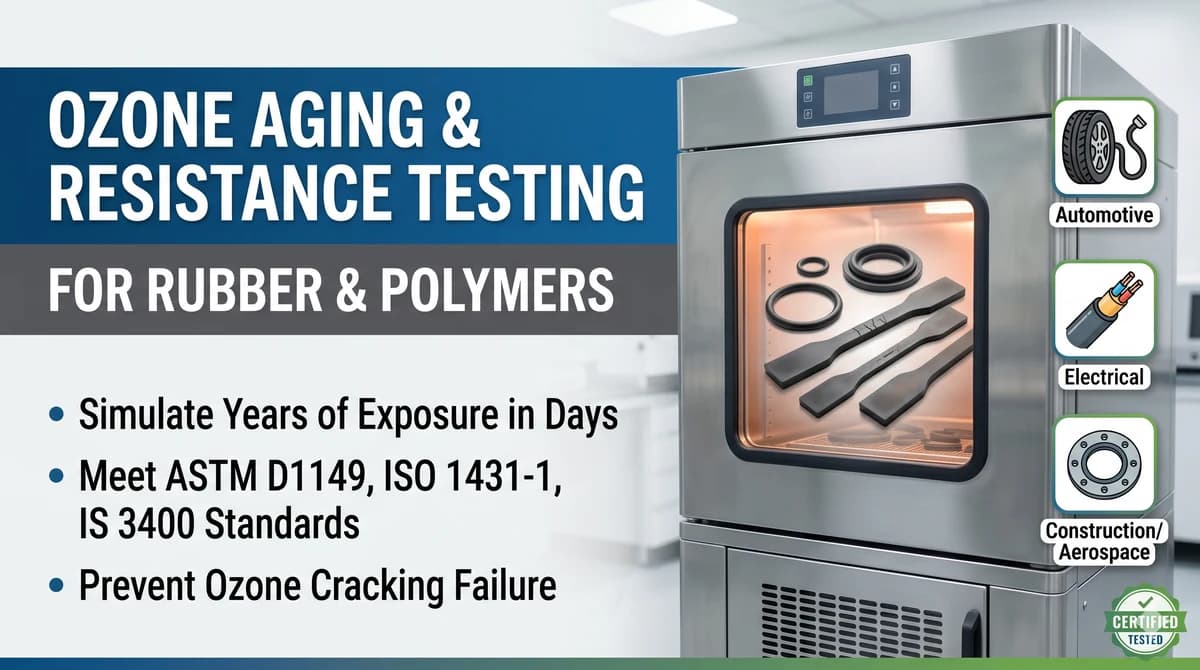
Ozone Test Chamber for Rubber and Polymer Testing
IS:3400 / ISO 1431 / ASTM D1149 compliant ozone test chambers for rubber ozone cracking and ageing tests
THE NEED
Why Rubber Testing?
IS:3400
BIS standard for rubber ozone resistance testing
ISO 1431
international standard for ozone ageing of rubber
ASTM D1149
US standard for rubber ozone cracking test
0.2–5 ppm
ozone concentration range for accelerated ageing
40°C
standard test temperature for ozone ageing
±0.1 ppm
ozone concentration accuracy of OZ India chamber
OVERVIEW
What is Rubber Testing?
Ozone cracking is the dominant failure mode for sulphur-vulcanised rubber in outdoor service — a spontaneous, brittle fracturing of the polymer surface caused by electrophilic attack of atmospheric ozone on carbon–carbon double bonds in the elastomer backbone. The ozone test chamber for rubber testing was developed specifically to accelerate and standardise this degradation in a controlled laboratory environment, allowing rubber compounders, automotive engineers, and certification laboratories to predict the service life of rubber articles in days rather than years. As atmospheric ozone concentrations in urban India range from 40–90 ppb in summer and automotive rubber components must survive 10–15 years of field service, the ozone test chamber for rubber testing provides the only scientifically defensible bridge between laboratory formulation and field performance. ASTM D1149-22 and ISO 1431-1:2012 are the universally accepted test standards that govern the test chamber's design and operating parameters.
The degradation mechanism begins when ozone molecules — each carrying a partial positive charge on the central oxygen atom — selectively attack the pi-electrons of olefinic C=C double bonds present in natural rubber (NR, polyisoprene), styrene–butadiene rubber (SBR), polychloroprene (CR), and nitrile rubber (NBR). The electrophilic addition produces an unstable molozonide that rapidly rearranges to a carbonyl oxide and a carbonyl fragment, ultimately yielding chain scission products. When the rubber specimen is held under tensile strain during ozone exposure, these chain scissions propagate perpendicular to the principal stress direction — creating the characteristic 'ozone cracks' that are visible to the naked eye as fine surface fissures running perpendicular to the applied elongation. The ozone test chamber for rubber testing replicates this mechanism at accelerated ozone concentrations of 50–200 ppm, temperatures of 25–40°C, and specimen elongations of 10–80%, producing in 24–96 hours the cracking that would otherwise appear after months or years outdoors. ASTM D1149 and ISO 1431-1 specify the exact combination of variables that produces results correlatable to atmospheric service.
The regulatory framework governing the ozone test chamber for rubber testing covers multiple jurisdictions. In India, BIS IS 3400 (Part 18): Methods of Test for Vulcanised Rubber — Ozone Resistance is the national standard, technically equivalent to ISO 1431-1. DIN 53509 remains the reference in German and European automotive supply chains, while ASTM D1149 governs North American and export markets. ISO 1431-3:2000 addresses dynamic ozone testing — where specimens cycle through extension and relaxation during ozone exposure to simulate the flexing experienced by automotive hoses, wiper blades, and tyre sidewalls under road conditions. NABL-accredited testing laboratories in India operating ozone test chambers for rubber testing under ISO/IEC 17025 must demonstrate proficiency across IS 3400 and ISO 1431-1, with instrument calibration traceable to national measurement standards maintained by the National Physical Laboratory (NPL) in New Delhi per NABL (2020) accreditation criteria.
The Indian rubber industry is heavily concentrated in automotive supply chains and is directly affected by the ozone test chamber for rubber testing requirements of OEM quality systems. Automotive rubber suppliers to Maruti Suzuki (Gurugram), Tata Motors (Pune), Honda Cars India, Mahindra, and Hyundai must comply with OEM-specific rubber testing requirements that reference ASTM D1149 and ISO 1431-1 as mandatory tests for weather seals, door seals, window seals, engine mounts, and under-bonnet hoses. India's tyre industry — represented by MRF, Apollo Tyres, CEAT, JK Tyre, and Bridgestone India — operates the largest volume of ozone test chambers for rubber testing in the country, qualifying new tread compounds and sidewall formulations for ozone resistance before commercial launch. Tyre sidewalls contain 40–60 phr carbon black with antiozonant packages; each new formulation must pass an ozone test chamber for rubber testing protocol before the compound is approved for production.
Antiozonant technology forms the commercial context that makes the ozone test chamber for rubber testing commercially essential. Two classes of antiozonants protect sulphur-vulcanised rubber: chemical antiozonants such as p-phenylenediamine (p-PPDA) derivatives including 6PPD and IPPD, which function by preferential reaction with ozone at the rubber surface (sacrificial oxidation), and physical antiozonants — microcrystalline paraffin waxes that bloom to the rubber surface forming a protective barrier layer. Formulating an effective antiozonant package for a specific rubber article requires systematic testing in an ozone test chamber for rubber testing to screen concentration levels, evaluate synergistic combinations, and confirm performance under both static (ISO 1431-1) and dynamic (ISO 1431-3) conditions. Automotive Tier-1 suppliers such as Motherson Sumi, Minda Industries, and Endurance Technologies maintain in-house ozone test chamber for rubber testing capability specifically to accelerate antiozonant formulation development and reduce time-to-approval in OEM qualification processes.
THE SCIENCE
How Ozone & UV Work in Rubber Testing
The ozone test chamber for rubber testing comprises three primary subsystems that must function in precise coordination: the ozone generation system, the environmental control system (temperature and air circulation), and the specimen exposure system (static stretching frame or dynamic drive mechanism). The ozone generation system uses corona discharge technology — identical to OZ India's ozone generators — in which dry, filtered air or oxygen is passed between two high-voltage electrodes separated by a dielectric. The resulting corona discharge dissociates O₂ molecules into oxygen radicals that recombine to form O₃. The ozone generator output is controlled by a PID loop that compares the measured chamber concentration (from the ozone analyser) with the set-point — typically 50 ppm (static test, ISO 1431-1, Clause 7.1) or 25–200 ppm depending on the test specification. ASTM D1149-22 specifies a concentration of 50±5 ppm for the standard accelerated ageing test.
Ozone concentration measurement inside the ozone test chamber for rubber testing is performed by a UV photometric ozone analyser (254 nm absorption), which is the reference method specified in ISO 1431-1 Clause 6.3. The analyser samples chamber air continuously via a PTFE sample line, measuring ozone absorbance against a blank reference cell. The analyser output (4–20 mA, 0–1000 ppm range) feeds back to the ozone generator control, creating a closed-loop system that maintains ozone concentration within ±5% of set-point throughout the test duration. Electrochemical ozone sensors are permitted as alternatives in some specifications but require more frequent calibration and are sensitive to humidity and temperature fluctuations — making the UV photometric method preferred for NABL-accredited ozone test chamber for rubber testing laboratories requiring ISO/IEC 17025-traceable measurements.
Temperature uniformity is critical in the ozone test chamber for rubber testing because ozone solubility in rubber, the rate of antiozonant diffusion to the surface, and the kinetics of the ozonolysis reaction are all temperature-dependent. ISO 1431-1 specifies 40°C ± 2°C as the standard test temperature, with forced air circulation at 0.5–1 m/s to ensure uniform temperature distribution and continuous replenishment of depleted ozone at the specimen surface. The chamber walls are heated by embedded electric resistance heaters with PID control, while a circulating fan provides air homogeneity. Temperature uniformity is mapped during calibration per NABL requirements, with all points within the specimen exposure zone demonstrating ±2°C deviation from the set-point — a critical parameter in NABL laboratory accreditation audits for ozone test chamber for rubber testing capability.
The specimen mounting system in a static ozone test chamber for rubber testing uses PTFE or stainless steel mandrels and extension frames that stretch dumbbell or ring specimens to the specified elongation percentage before chamber door closure. ISO 1431-1 specifies specimen geometry (dumbbell Type 1 per ISO 37, or ring specimens), elongation levels (typically 20%, 40%, and 60% for static test), and minimum specimen count (5 per condition). Elongation below the threshold strain for crack initiation (which varies by compound, typically 5–15%) yields no cracking regardless of ozone exposure duration — the threshold strain must always be exceeded in valid ozone test chamber for rubber testing procedures. ASTM D1149 requires 20% and 35% elongation as standard levels.
For dynamic ozone testing per ISO 1431-3:2000, the ozone test chamber for rubber testing is equipped with an electrically-driven mechanism that cycles specimens through a specified elongation range at a defined frequency — typically 0.5 Hz between 0% and 25% elongation for 48 hours. Dynamic testing is more severe than static testing and is specified by automotive OEMs for components that flex continuously in service — radiator hoses, CV boot seals, and wiper blade rubbers. The dynamic mechanism in an OZ India ozone test chamber can accommodate up to 10 specimens simultaneously, with individual specimen holders allowing different elongation amplitudes. The correlation between dynamic ozone test chamber for rubber testing results and field service life is documented in automotive OEM test specifications such as Tata Motors TCS 48009 and Maruti Suzuki MS-40.
THE SOLUTION
Ozone India Technology Solution
OZ India Technology's ozone test chamber for rubber testing series is designed and manufactured at our Greater Noida facility to fully comply with ASTM D1149-22, ISO 1431-1:2012, ISO 1431-3:2000, DIN 53509, and BIS IS 3400 (Part 18). The chamber body is constructed from 304 stainless steel with 100 mm mineral wool insulation and a double-wall design that eliminates thermal gradients. The internal chamber volume ranges from 50 litres (benchtop, for R&D) to 500 litres (production qualification and NABL-accredited testing), with larger walk-in configurations available for full-scale tyre sidewall and automotive seal assemblies. Our ozone generator subsystem uses precision corona discharge cells with ceramic dielectrics for stable ozone output over 15,000 operating hours — eliminating the concentration drift that affects glass dielectric designs. Each ozone test chamber for rubber testing is factory-calibrated using a UV photometric reference analyser with NABL-traceable calibration certificate before despatch.
The OZ India ozone test chamber for rubber testing control system provides independent PID loops for ozone concentration, temperature, and (in humidity-controlled models) relative humidity. The touch-screen HMI logs all parameters at 1-minute intervals, with USB and Ethernet data export for seamless integration into laboratory information management systems (LIMS). NABL-accredited laboratories receive factory documentation including uncertainty budgets for ozone concentration, temperature uniformity, and air velocity measurements — the three critical measurement parameters specified in ISO 1431-1. Our chambers have been validated at NABL-accredited rubber testing laboratories in Pune, Chennai, and Gurugram, where they support quality audits by Maruti Suzuki, Tata Motors, and Apollo Tyres.
The complete OZ India ozone test chamber for rubber testing package includes: CE-certified ozone generator, UV photometric ozone analyser (0–200 ppm, ±2% accuracy), PID-controlled heating system (25–70°C range), forced-air circulation fan, stainless steel specimen mounting frames for static elongation (12 positions at 10–80%), PTFE internal fittings throughout, ozone destructor on chamber exhaust, ambient air ozone safety monitor, and comprehensive factory test documentation. Optional accessories include a dynamic specimen drive mechanism (0.1–2 Hz, ±60 mm stroke) for ISO 1431-3 compliance, photostability UV lamp array for combined ozone–UV weathering studies, and a remote monitoring module for 24×7 unattended test operation with SMS/email alerts on concentration drift or temperature excursion.
OZ India provides comprehensive after-sales support for ozone test chamber for rubber testing installations, recognising that NABL-accredited laboratories face strict calibration schedules and audit requirements. Annual calibration service visits by OZ India field engineers include: UV analyser NIST/NPL-traceable calibration, temperature mapping per EN 60068-3-5, air velocity measurement per ISO 1431-1 Annex A, and ozone concentration uniformity mapping. Calibration certificates issued by OZ India carry NABL-traceable references to satisfy ISO/IEC 17025 audit requirements. Spare parts — ozone generator cells, UV analyser lamps, circulating fan motors — are maintained ex-stock in Greater Noida for next-day despatch to rubber testing laboratories across India.
PERFORMANCE
Without vs With OZ India Treatment
| Parameter | Without Treatment | With OZ India System |
|---|---|---|
| Ozone concentration accuracy | Uncontrolled atmospheric exposure (40–90 ppb) | 50 ± 5 ppm (1000× accelerated), PID controlled |
| Test duration for cracking | 6–18 months field exposure | 24–96 hours in ozone test chamber for rubber testing |
| Reproducibility | Poor — season, location, UV, temperature all vary | High — ISO 1431-1 specifies controlled environment |
| Standards compliance | Non-compliant with ASTM D1149 / ISO 1431-1 | Full compliance with ASTM D1149, ISO 1431-1, IS 3400 |
| OEM qualification acceptance | Not accepted by Maruti/Tata/Honda QMS | Mandatory test for weather seal approval |
| Dynamic testing capability | Not feasible in field conditions | ISO 1431-3 dynamic drive mechanism available |
| NABL accreditation support | Not applicable | Full calibration documentation with NPL-traceable references |
| Antiozonant development cycle | 12–18 months field validation per formulation | 72-hour screening, 4–8 weeks full qualification |
PERFORMANCE DATA
Technical Performance Data
Reference data for ozone treatment system design and validation — applicable to Rubber Testing applications. All data per standard water treatment engineering practice (AWWA, WHO, CPCB guidelines).
Pathogen Log Inactivation at 3 mg/L Ozone (CT = 45 mg·min/L)
BOD Reduction (%) vs Ozone Dose — Typical STP/ETP Secondary Effluent
E. coli Log Inactivation vs Contact Time at 3 mg/L Ozone
System Sizing Guide — Plant Flow Rate vs Ozone Generator Capacity
RECOMMENDED EQUIPMENT
Products for Rubber Testing
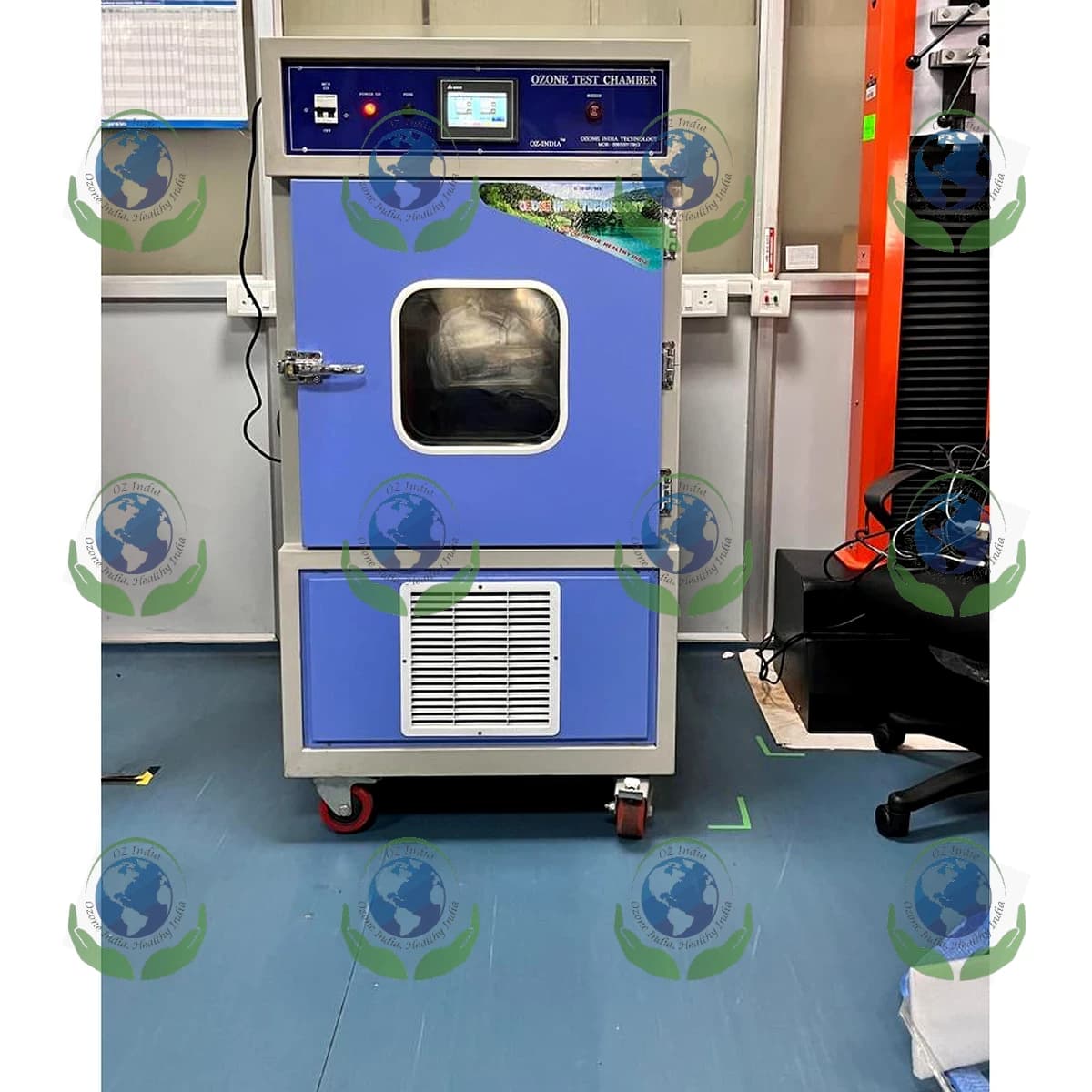
Ozone Test Chamber
IS 3400 ASTM D1149 ISO 1431-1 compliant ozone test chamber for rubber and polymer ozone resistance testing
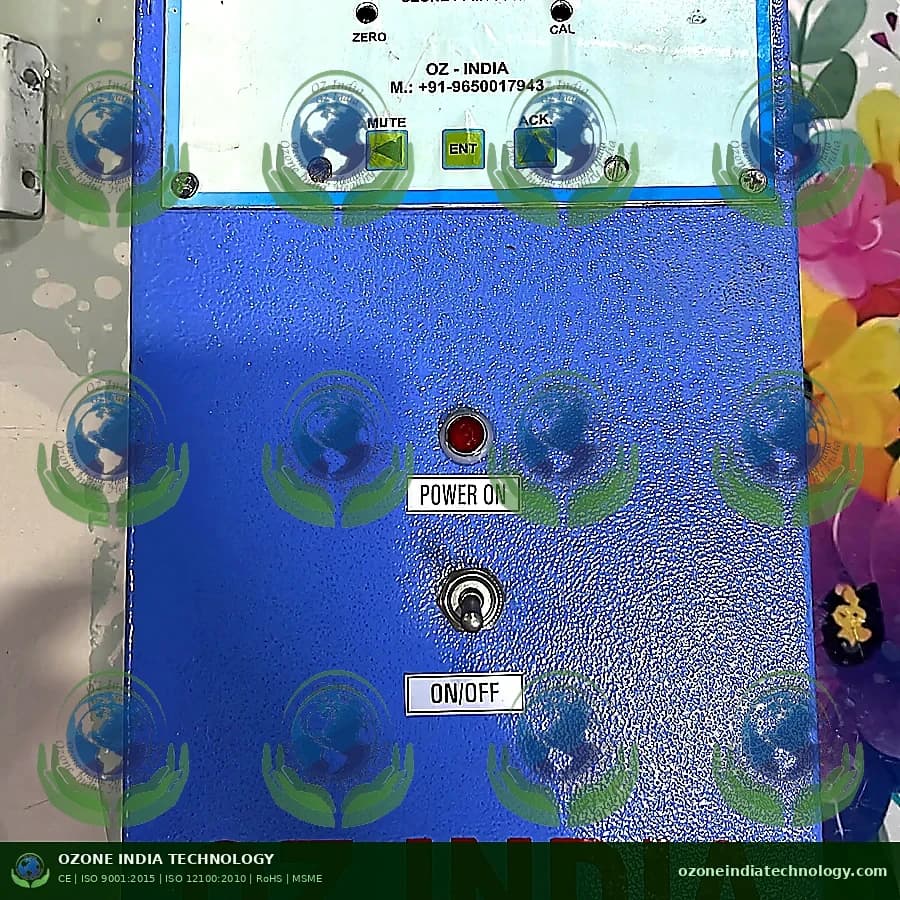
Ozone Ambient Air Monitor
Real-time ozone air monitoring with Delta PLC, HMI touchscreen & USB data logging
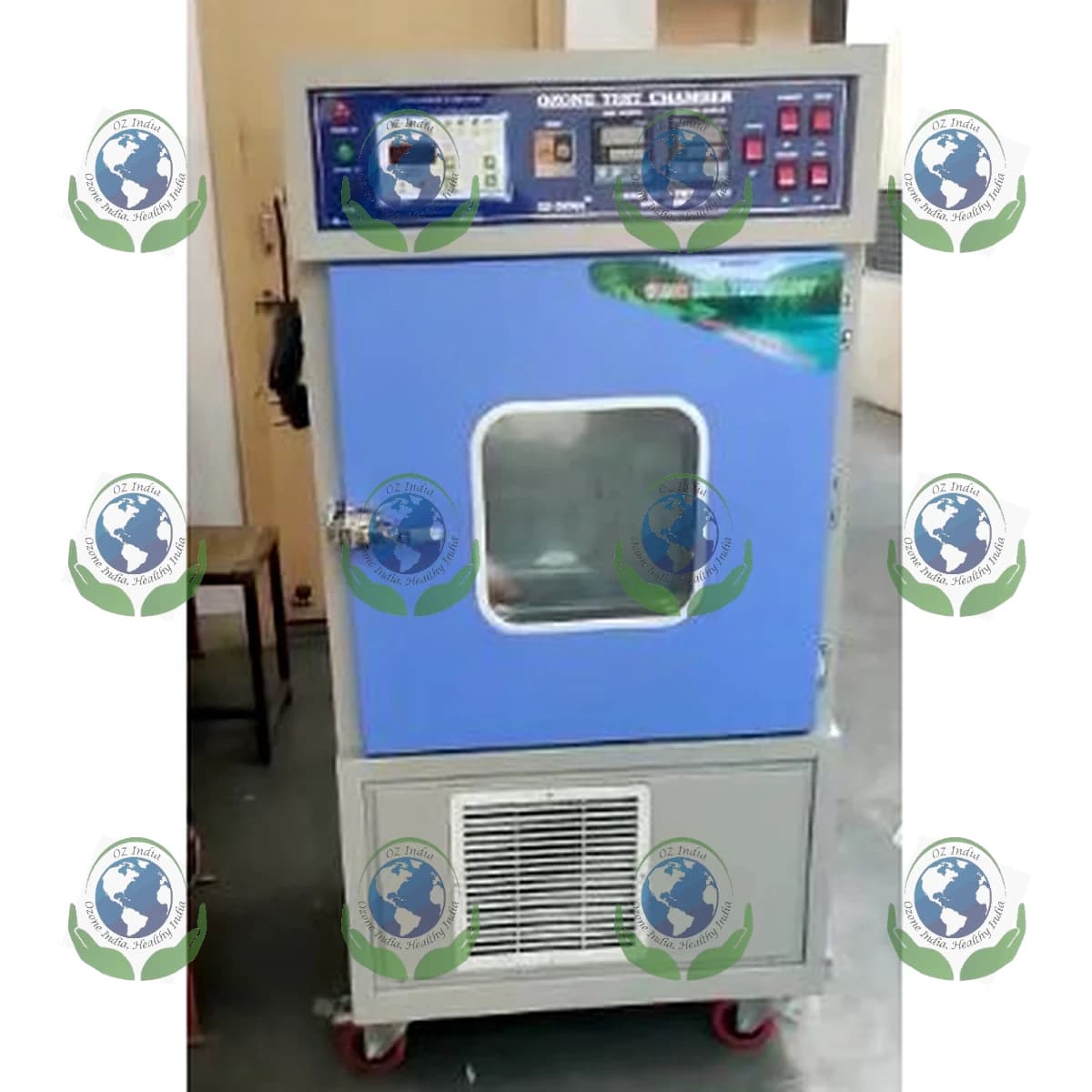
Environmental Chamber
Combined temperature and humidity environmental test chamber -40 to 150 degrees C for product reliability testing
SIZING GUIDE
Installation & Sizing Guide
Selecting the correct ozone test chamber for rubber testing requires matching chamber volume to the number of specimens tested per batch, the specimen dimensions specified by the applicable standard, and the throughput required to support the laboratory's workload. ISO 1431-1 dumbbell specimens (Type 1, 115 mm total length, 25 mm gauge length) and ring specimens (inside diameter 44.6 mm, width 6.3 mm, thickness 2.0 mm) have relatively small individual volumes, but each mandrel frame occupies 80–150 cm² of chamber cross-section and requires clear space on all sides to ensure uniform ozone exposure. A 50-litre chamber typically accommodates 6–8 mandrel frames (30–40 specimens at 20%, 40%, and 60% elongation); a 200-litre chamber accommodates 20–25 mandrel frames supporting simultaneous multi-compound, multi-elongation screening — the configuration favoured by rubber R&D laboratories at tyre companies and automotive suppliers.
The ozone generator capacity for the ozone test chamber for rubber testing is determined by the ozone consumption rate — the sum of ozone consumed by: (1) reaction with rubber specimens and their antiozonant packages, (2) ozone decomposition on chamber walls, and (3) ozone continuously purged with fresh air to maintain concentration stability. For a 200-litre chamber at 50 ppm ozone concentration, 40°C, with 25 rubber specimens, the generator capacity requirement is typically 1–3 g/hr — sized generously to allow rapid concentration recovery after each chamber opening. For 200 ppm high-concentration tests specified in certain automotive OEM protocols, the generator requirement increases proportionally; OZ India specifies a minimum 5 g/hr generator for 200-ppm capability to ensure concentration recovery within 15 minutes of specimen loading.
Air supply quality is an often-overlooked sizing parameter in the ozone test chamber for rubber testing. The feed air must be dried to a dew point below -60°C to prevent moisture interference with the corona discharge and to ensure accurate UV photometric ozone measurement. OZ India ozone test chambers include a dedicated heatless desiccant air dryer sized to maintain feed air dew point below -60°C at maximum airflow. Compressed air supply requirement is 0.5–2 Nm³/hr at 4–6 bar for benchtop systems; 2–5 Nm³/hr for large-format chambers. Laboratories without a central compressed air supply can use an OZ India oil-free compressor package — supplied as an optional add-on to avoid contamination of the ozone concentration measurement by compressor oil vapour, which would produce erroneous UV analyser readings.
Installation planning for the ozone test chamber for rubber testing must address ventilation and worker safety. ISO 1431-1 and OSHA regulations require that the test chamber be operated in a room with mechanical exhaust ventilation maintaining ambient ozone below 0.1 ppm (OSHA PEL TWA). OZ India test chambers include a catalytic ozone destructor on the chamber exhaust — reducing off-gas ozone from 50–200 ppm to below 0.05 ppm before venting to the room. An OZ India ambient air ozone monitor with audible alarm is supplied as standard, alerting operators to any seal failure or door leakage. The room ventilation requirement is 10–15 air changes per hour in the test chamber enclosure area — a specification that OZ India provides in a formal installation guide for each chamber, supporting laboratory design and approval by institutional safety officers.
CASE STUDY
NABL Laboratory Upgrade: Rubber Testing Supplier to Maruti Suzuki, Gurugram
A NABL-accredited rubber testing laboratory in Gurugram serving Tier-1 automotive rubber suppliers to Maruti Suzuki and Honda Cars India was operating an ageing imported ozone test chamber for rubber testing that had developed ozone concentration instability (±20% variation from set-point) due to degraded UV analyser lamp and worn corona cell electrodes. Maruti Suzuki's supplier quality audit flagged the concentration instability as a critical non-conformance, threatening the laboratory's ability to issue valid IS 3400 (Part 18) test certificates that its clients require for OEM part qualification.
OZ India Technology supplied a 200-litre stainless steel ozone test chamber for rubber testing with PID-controlled corona discharge generator (0–10 g/hr output), dual UV photometric ozone analysers (primary + standby), 25–70°C temperature control with ±1°C uniformity, and a dynamic specimen drive mechanism for ISO 1431-3 testing. Factory calibration documentation with NABL-traceable references was provided for temperature, ozone concentration, and air velocity. Post-installation, the laboratory passed its NABL re-accreditation audit without any non-conformances in the ozone testing scope.
Within six months of commissioning the new ozone test chamber for rubber testing, the laboratory expanded its accredited scope to include ISO 1431-3 dynamic testing, attracting contracts from three new automotive rubber suppliers requiring dynamic ozone testing for wiper blade and radiator hose qualification. Laboratory revenue from ozone testing scope increased by 140% in the first year. The OZ India system's 24×7 unattended operation capability with SMS alerts allowed overnight test runs, increasing throughput from 3 to 7 test batches per week without additional staffing costs.
FAQ
Frequently Asked Questions
What ozone concentration is specified by ASTM D1149 and ISO 1431-1 for standard rubber testing?+
ASTM D1149-22 specifies 50 ± 5 ppm (parts per million by volume) as the standard ozone concentration for the accelerated static ozone cracking test. ISO 1431-1:2012 similarly specifies 50 ± 5 ppm (equivalent to 50 ± 5 × 10⁻⁵ volume fraction) as the standard condition in Clause 7.1. Some automotive OEM specifications require higher concentrations — up to 100 or 200 ppm — to further accelerate the test and reduce duration. The OZ India ozone test chamber for rubber testing covers the full range from 25 to 200 ppm. NABL-accredited laboratories must document the concentration uncertainty (typically ±3–5 ppm) in their calibration records to comply with ISO/IEC 17025 measurement traceability requirements.
What is the difference between static and dynamic ozone testing for rubber?+
Static ozone testing (ISO 1431-1, ASTM D1149) holds rubber specimens at a fixed elongation (typically 20%, 40%, or 60%) throughout the ozone exposure — simulating components in constant stress, such as O-rings, seals under compression, and hose clamps. Dynamic ozone testing (ISO 1431-3:2000) cycles specimens between two elongation levels at a defined frequency (typically 0.5 Hz), simulating flexing components such as automotive hoses, wiper blades, and CV boots. Dynamic testing is significantly more severe because mechanical flexing disrupts the antiozonant wax bloom barrier and continuously exposes fresh rubber surface to ozone. The OZ India ozone test chamber for rubber testing supports both modes, with the dynamic drive mechanism available as an optional accessory.
Which elastomers are most susceptible to ozone attack?+
Elastomers with carbon–carbon double bonds (C=C) in their backbone are most susceptible: natural rubber (NR/IR), styrene–butadiene rubber (SBR), polychloroprene (CR/Neoprene), and nitrile rubber (NBR) are all highly vulnerable to ozone cracking. Saturated elastomers — EPDM (ethylene propylene diene monomer), silicone (VMQ), fluorosilicone (FVMQ), and fluoroelastomer (FKM/Viton) — are inherently ozone-resistant because they lack backbone C=C bonds. Automotive engineers specify EPDM for exterior weather seals precisely for this ozone resistance; natural rubber or SBR are used only in protected interior locations. The ozone test chamber for rubber testing is therefore most critical for NR, SBR, and NBR compound qualification.
How does antiozonant wax protect rubber, and how is protection validated?+
Microcrystalline paraffin wax antiozonants bloom from the rubber bulk to the surface, forming a thin physical barrier film that prevents ozone from reaching the polymer. Chemical antiozonants such as 6PPD (6-phenyl-1,3-phenylenediamine) react preferentially with ozone at the rubber surface, sacrificially consuming ozone before it attacks the polymer backbone. Validation requires exposure in the ozone test chamber for rubber testing at the specified concentration and elongation, followed by visual examination per IS 3400 (Part 18) — rating the number, width, and depth of cracks on a scale of 0 (no cracking) to 4 (deep cracking penetrating to the core). A passing result (grade 0–1 after 72 hours at 50 ppm, 40°C, 40% elongation) is required for automotive OEM qualification.
Can the same ozone test chamber be used for both rubber testing and other applications?+
The ozone test chamber for rubber testing is specifically optimised for the precision ozone concentration control, temperature uniformity, specimen mounting geometry, and air circulation requirements of ASTM D1149 and ISO 1431-1. While the chamber could in principle be used for other ozone exposure applications (packaging material ozone resistance, food ozone treatment trials), this is not recommended for NABL-accredited laboratories because cross-contamination from non-rubber materials may affect subsequent rubber test results and compromise calibration records. OZ India recommends dedicated instruments for dedicated test scopes in accredited laboratory environments.
What are the NABL accreditation requirements for an ozone test chamber for rubber testing laboratory?+
NABL accreditation under ISO/IEC 17025:2017 for ozone test chamber for rubber testing requires: (1) documented measurement uncertainty for ozone concentration (±3–5 ppm), temperature uniformity (±2°C), and air velocity (±0.1 m/s); (2) calibration of ozone analyser, temperature sensors, and velocity probes with references traceable to NPL or NIST; (3) proficiency testing through inter-laboratory comparison programmes; (4) documented method validation for IS 3400 (Part 18) or ISO 1431-1 as applicable; (5) equipment identification, calibration schedule, and maintenance records per NABL (2020) criteria. OZ India supplies factory calibration documentation with NABL-traceable references to support all five requirements.
What is the typical test duration for rubber ozone resistance testing?+
Standard test durations vary by specification. ISO 1431-1:2012 Clause 7 specifies a minimum 24-hour exposure at 50 ppm, 40°C, with visual assessment at 24, 48, and 72 hours. ASTM D1149-22 specifies 72 hours at 50 ppm as the standard test. Automotive OEM specifications may require 96–240 hours for weather seal qualification. The ozone test chamber for rubber testing from OZ India supports programmed multi-stage tests with automatic concentration and temperature profiles — allowing sequential exposure conditions to be run without manual intervention, which is essential for long-duration OEM qualification tests. Unattended overnight operation with SMS alerts is included in the OZ India control system.
RELATED
Related Applications
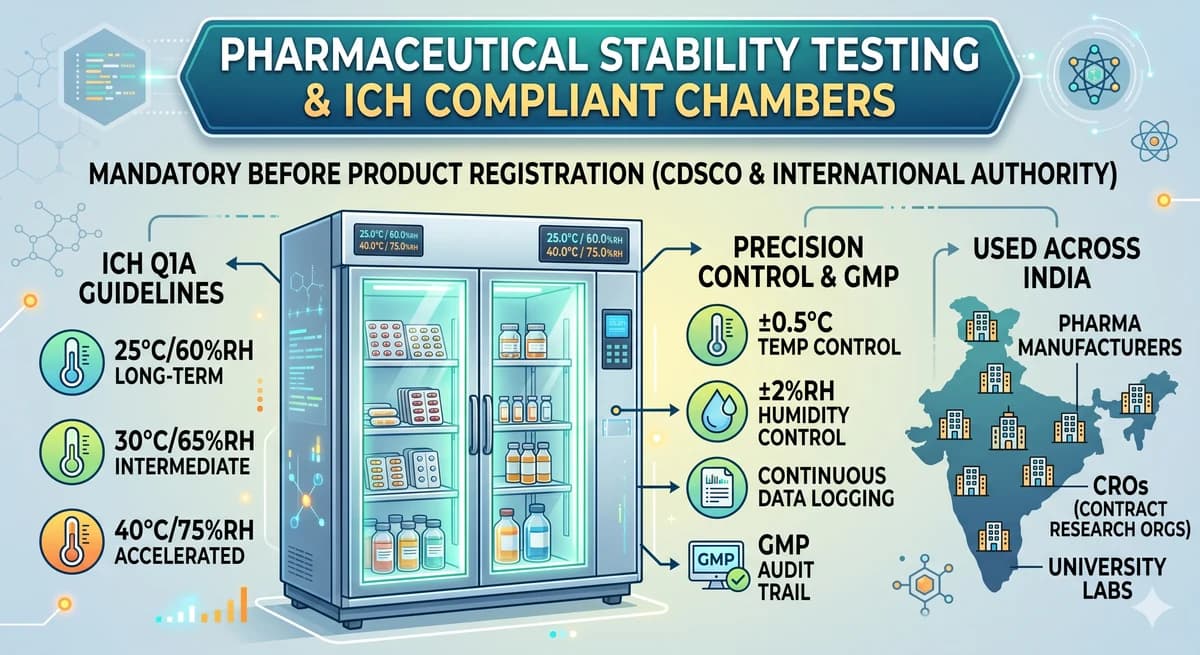
Pharmaceutical Stability Testing
ICH Q1A compliant stability chambers for Zone I–IV drug testing — CDSCO approved manufacturer
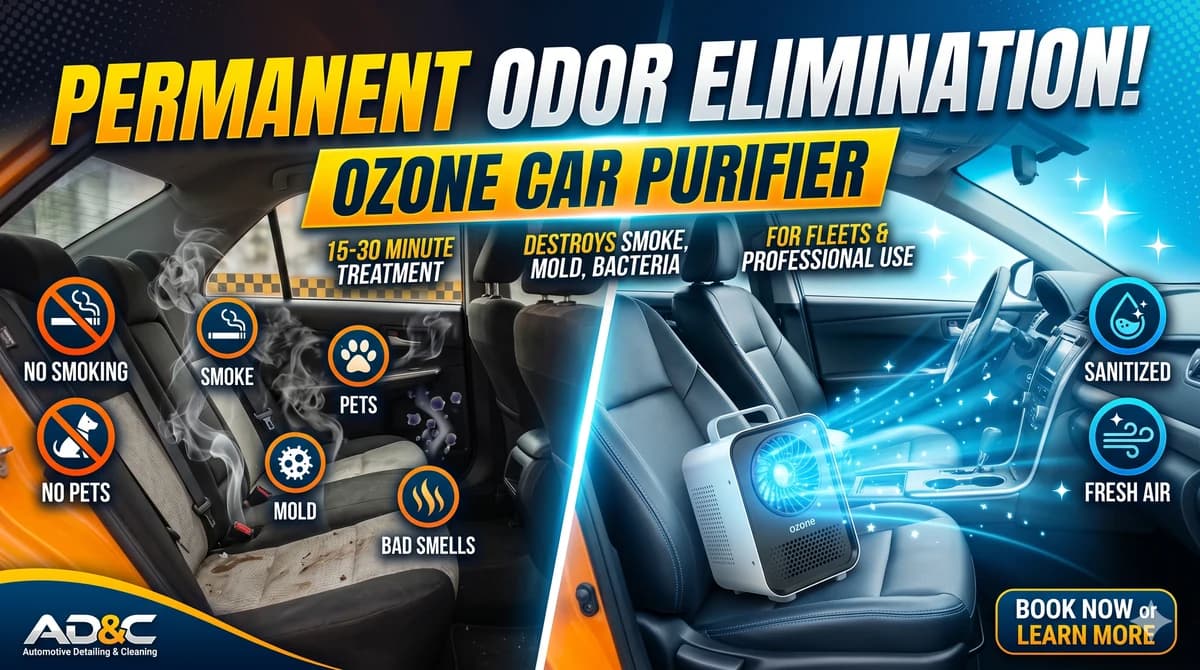
Automotive Detailing and Cleaning
Professional ozone treatment for car interiors — eliminates smoke, pet, and mould odours permanently

Food Processing and Safety
FSSAI-compliant ozone disinfection for food contact surfaces, CIP, cold storage, and vegetable washing
Have a question about Rubber Testing?
Talk to our engineers — free technical consultation
WhatsApp Us Now