
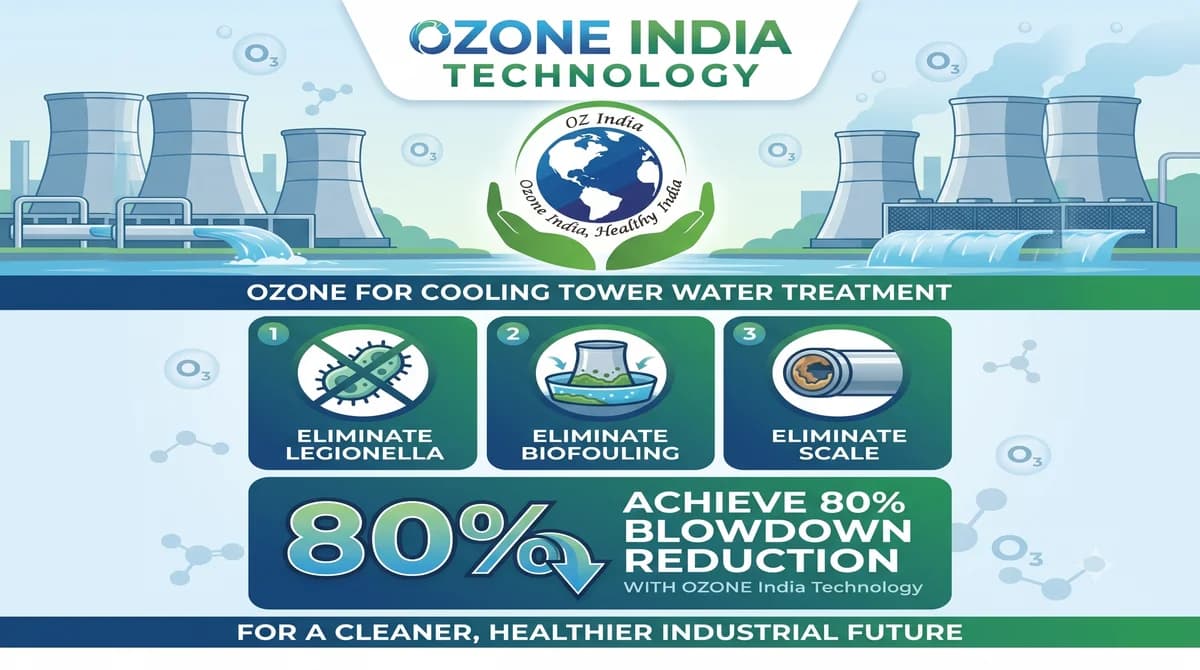
Ozone for Cooling Tower Water Treatment
Eliminate Legionella, biofouling, and scale in cooling towers — 80% blowdown reduction with ozone
THE NEED
Why Cooling Tower?
Legionella
killed at 0.1 mg/L ozone — zero chemical resistance
80%
blowdown reduction with 3x cycles of concentration
50%
chemical cost saving vs conventional biocide treatment
ASHRAE 188
Legionella risk management — ozone is the gold standard
Zero
biofilm formation with 0.05 mg/L residual ozone
3x
more cycles of concentration achievable with ozone
OVERVIEW
What is Cooling Tower?
Cooling towers are the thermal heart of large HVAC and industrial process systems, rejecting heat by evaporating a fraction of the circulating water to the atmosphere. Every major hotel, hospital, data centre, pharmaceutical plant, and petrochemical refinery in India operates at least one cooling tower — and each of those towers is a potential incubator for Legionella pneumophila, the gram-negative bacterium responsible for Legionnaires' disease, a severe and potentially fatal pneumonia. ASHRAE Standard 188-2018 (Legionellosis: Risk Management for Building Water Systems) now mandates Water Management Plans (WMPs) for all buildings with cooling towers, making proactive microbial control a legal and regulatory imperative rather than an optional best practice. Ozone for cooling tower water treatment offers the most scientifically defensible, chemical-minimal pathway to ASHRAE 188 compliance.
The biology of Legionella in cooling towers is well understood. The organism survives in water between 25°C and 50°C, with optimal growth at 35–46°C — precisely the basin temperatures maintained in most Indian commercial cooling towers during summer months. Legionella colonises biofilm on basin surfaces, tower fill media, and heat exchanger surfaces, using the biofilm matrix as both a nutrient source and a shield against conventional biocide treatment. Biofilm can develop to 200–400 µm thickness within weeks of inadequate biocide maintenance, and once established, residual chlorine at 1–2 ppm penetrates only the outer 10–20 µm of the biofilm layer. Ozone for cooling tower water treatment attacks the biofilm extracellular polymeric substance (EPS) directly through oxidative destruction, dispersing established colonies and preventing new formation — a mechanism that chlorine and quaternary ammonium compounds cannot replicate.
Scale deposition compounds the Legionella risk while simultaneously degrading heat exchanger thermal efficiency. As water evaporates in the cooling tower, dissolved mineral salts concentrate. Without chemical treatment, CaCO₃ (calcium carbonate) and MgSO₄ (magnesium sulphate) precipitate on heat exchanger surfaces and tower fill, forming insulating scale layers that increase approach temperature, reduce heat rejection capacity, and accelerate corrosion underneath scale deposits. The cycles of concentration (CoC) — the ratio of dissolved solids in circulating water to makeup water — determine how rapidly scale forms. Conventional treatment achieves CoC of 3–4, meaning 75% of makeup water is lost to blowdown to control TDS. Ozone for cooling tower water treatment enables CoC of 6–8 by maintaining microbiologically clean water with reduced biocide interference, cutting blowdown volume by 50–80% and reducing makeup water consumption proportionally.
The economic case for ozone for cooling tower water treatment is powerful and multi-dimensional. India's commercial cooling tower sector spends an estimated ₹2,800 crore annually on water treatment chemicals — oxidising biocides (chlorine, bromine, isothiazolinone), scale inhibitors (phosphonates, polyacrylates), corrosion inhibitors, and pH adjustment chemicals. A properly designed ozone system eliminates or dramatically reduces all biocide costs and scale inhibitor costs. Water savings from increased CoC reduce municipal water purchase costs in water-scarce cities like Delhi, Bangalore, and Chennai, where industrial water tariffs have doubled in the past decade. Energy savings from scale-free heat exchangers (every 1mm scale adds 10–15% energy penalty on chiller operation) compound the financial benefit. Typical payback periods for ozone for cooling tower water treatment are 18–30 months.
Regulatory pressure is intensifying in India. The CPCB has issued guidelines on cooling tower discharge quality, and the Bureau of Indian Standards has adopted ASHRAE 188 principles for Legionella risk management. After documented Legionella outbreaks in hotels and hospitals in Delhi (2019) and Mumbai (2022), state pollution control boards have begun requiring documentary evidence of water management plans for large cooling towers during operating licence renewals. Hotel chains operating under international brand standards (Hilton, Marriott, IHG) are additionally required to demonstrate ASHRAE 188 compliance in annual brand audits. Ozone for cooling tower water treatment, when properly documented with continuous monitoring records, provides the strongest compliance evidence available — demonstrating continuous pathogen suppression rather than periodic spot-check chemical dosing.
THE SCIENCE
How Ozone & UV Work in Cooling Tower
Ozone for cooling tower water treatment is delivered through a side-stream treatment loop that processes 5–10% of total circulating water flow continuously. The OZ India ozone generator produces O₃ from dry compressed air at concentrations of 5–12% by weight. Generated ozone is injected into the side-stream via a Venturi injector or fine-bubble contactor, achieving ozone dissolution at transfer efficiencies of 85–95%. The ozonated side-stream then re-enters the cooling tower basin, maintaining a residual ozone concentration of 0.3–0.5 ppm measured by the OZ India dissolved ozone monitor at the basin outlet. This residual level, established by Rodgers et al. (1994) and subsequently validated in multiple ASHRAE Transactions papers, achieves consistent Legionella suppression below detectable limits while remaining below the corrosion threshold for copper and mild steel components.
The mechanism by which ozone destroys Legionella and biofilm in cooling towers operates through three simultaneous oxidative pathways. First, molecular ozone (O₃, redox potential 2.07V) directly oxidises the peptidoglycan cell walls of planktonic bacteria, achieving 3-log Legionella inactivation at CT values of 0.5–1.0 mg/L·min per EPA 815-R-99-014 guidelines. Second, hydroxyl radicals (•OH, redox potential 2.80V) generated by ozone decomposition at pH 7.5–8.5 attack the EPS matrix of established biofilm, solubilising the polysaccharide backbone and exposing embedded Legionella and Pseudomonas cells to direct ozone attack. Third, ozone oxidises organic nutrients (dissolved organic carbon, ammonia, biological oxygen demand) that sustain biofilm growth, starving remaining organisms and preventing recolonisation. Gagnon et al. (2012), published in Water Research, demonstrated that ozone-treated cooling tower water maintained biofilm formation rates 92% lower than conventionally treated controls over a 90-day study period.
Scale control through ozone for cooling tower water treatment operates through a different mechanism than chemical scale inhibitors. Ozone oxidises dissolved organic matter that acts as a crystal growth template for CaCO₃ crystallisation, preventing oriented crystal growth on heat exchanger surfaces. Simultaneously, ozone micro-flocculates colloidal silica and calcium carbonate particles, allowing them to be removed by the side-stream blowdown rather than depositing on surfaces. The net result, documented by Farooq and Sarfraz (1998) and corroborated in multiple industrial case studies, is that ozone-treated cooling towers can operate at cycles of concentration of 6–8 without scale deposition — compared to CoC 3–4 for chemically treated systems. At CoC 8, makeup water consumption drops by 60% compared to CoC 3 operation, representing substantial water and sewer cost savings in Indian cities.
The OZ India ozone for cooling tower water treatment system includes automatic dose control based on continuous dissolved ozone monitoring. The amperometric dissolved ozone sensor measures residual ozone concentration in the basin every 60 seconds. When residual falls below 0.3 ppm — due to increased organic load from atmospheric dust, algae growth, or increased heat load — the controller automatically increases ozone generator output. Conversely, the system reduces ozone production during low-load periods (nights, weekends) to maintain the target residual without over-dosing, which would accelerate corrosion. A pH and conductivity monitor integrates with the blowdown control valve to automate CoC management, triggering blowdown when conductivity reaches the setpoint corresponding to the target CoC.
Safety engineering for ozone for cooling tower water treatment requires careful attention to off-gas management. Excess ozone not absorbed into the water exits the cooling tower with the air stream. At 0.3–0.5 ppm basin residual, off-gas ozone concentrations in the tower exhaust plume are typically 0.01–0.03 ppm — below OSHA's 0.1 ppm TWA limit and well below the 0.2 ppm STEL. Nevertheless, OZ India installs an ozone ambient air monitor at each cooling tower installation, positioned at the nearest air intake or occupied area, providing continuous ozone concentration measurement with alarm and automatic ozone generator shutdown if the OSHA threshold is approached. This safety layer ensures personnel safety and regulatory compliance without requiring architectural modifications to the tower enclosure.
THE SOLUTION
Ozone India Technology Solution
OZ India Technology's cooling tower ozone system is a complete, factory-assembled package engineered specifically for Indian commercial and industrial cooling tower applications. Each system comprises: the OZ India ozone generator (sized for the specific tower flow), an integrated air preparation unit with refrigerant dryer and desiccant polisher achieving -60°C dew point, a PVDF Venturi injector rated for the side-stream flow and system pressure, a 316L stainless steel ozone contact vessel with 2-minute retention time, OZ India dissolved ozone monitor with 4–20 mA output and Modbus RTU interface, a pH/conductivity analyser with automatic blowdown valve control, an ozone ambient air safety monitor, and a PLC-based control panel with 7-inch colour HMI and GSM remote alarm. All wetted components are ozone-resistant: PVDF piping, Viton O-rings, 316L stainless steel vessels. CE and ISO 9001:2015 certified.
System sizing for ozone for cooling tower water treatment follows the side-stream approach: the ozone generator must produce sufficient ozone to maintain 0.3–0.5 ppm residual in the full basin volume, accounting for ozone demand from organic load, ammonia, and heat exchanger surfaces. Typical ozone demand for commercial cooling towers is 0.4–0.8 g O₃ per m³ of circulating water per hour. For a 500 RT chiller plant with 300 m³ basin and 800 m³/hr circulation, ozone requirement is 320–640 g/hr — met by the OZ India 30-50g/hr or 75-350g/hr system depending on site-specific demand measurement. OZ India conducts a free site assessment including water quality analysis before specifying the system, ensuring right-sizing without over-investment.
The OZ India cooling tower ozone system integrates with the building's BMS (Building Management System) via Modbus TCP/IP or BACnet protocol, enabling central facility management teams to monitor ozone residual, pH, conductivity, blowdown frequency, and ozone generator status from their existing SCADA or BMS dashboard. This integration is increasingly required by international hotel brands as part of their ASHRAE 188 water management plan documentation — the BMS data log provides the continuous monitoring evidence that regulatory auditors and brand inspectors require. OZ India's engineering team handles BMS integration during commissioning, working with the building's electrical and controls contractor.
OZ India offers a 12-month comprehensive warranty on all cooling tower ozone systems, covering parts and labour for any manufacturing defects. Post-warranty support is available through Annual Maintenance Contracts (AMC) that include quarterly preventive maintenance visits, consumable replenishment (desiccant, sensor membranes), calibration certificates for the dissolved ozone and ambient air monitors, and priority emergency response within 48 hours at any location in India. Our service network covers Delhi NCR, Mumbai, Chennai, Bengaluru, Hyderabad, Ahmedabad, and Pune with local service engineers — ensuring rapid response for critical cooling tower applications in hospitals and data centres where downtime is unacceptable.
PERFORMANCE
Without vs With OZ India Treatment
| Parameter | Without Treatment | With OZ India System |
|---|---|---|
| Legionella Control | Periodic chemical shock dosing; gaps between treatments | Ozone for cooling tower water treatment: continuous basin residual 0.3–0.5 ppm; 24/7 suppression |
| Biofilm Removal | Surface biocide only; EPS matrix intact | Ozone oxidises EPS matrix; 90%+ biofilm ATP reduction |
| Cycles of Concentration | 3–4 CoC; frequent blowdown | Ozone for cooling tower water treatment: 6–8 CoC; 50–80% blowdown reduction |
| Annual Chemical Cost | ₹8–20 lakh/year (biocides, scale inhibitors, pH) | ₹1–3 lakh/year (minimal supplementary chemicals with ozone) |
| Heat Exchanger Fouling | Scale deposits; 10–15% efficiency penalty per mm | Scale-free surfaces with ozone for cooling tower water treatment; full design efficiency |
| ASHRAE 188 Evidence | Periodic dosing logs; gaps in monitoring | Continuous ozone residual log; strongest compliance evidence |
| Water Consumption | Baseline makeup water 100% | 40–50% reduction in makeup water demand via ozone for cooling tower water treatment |
| Operator Exposure | Handling liquid biocides; PPE required for dosing | No liquid chemical handling; automated closed ozone system |
PERFORMANCE DATA
Technical Performance Data
Reference data for ozone treatment system design and validation — applicable to Cooling Tower applications. All data per standard water treatment engineering practice (AWWA, WHO, CPCB guidelines).
Pathogen Log Inactivation at 3 mg/L Ozone (CT = 45 mg·min/L)
BOD Reduction (%) vs Ozone Dose — Typical STP/ETP Secondary Effluent
E. coli Log Inactivation vs Contact Time at 3 mg/L Ozone
System Sizing Guide — Plant Flow Rate vs Ozone Generator Capacity
RECOMMENDED EQUIPMENT
Products for Cooling Tower
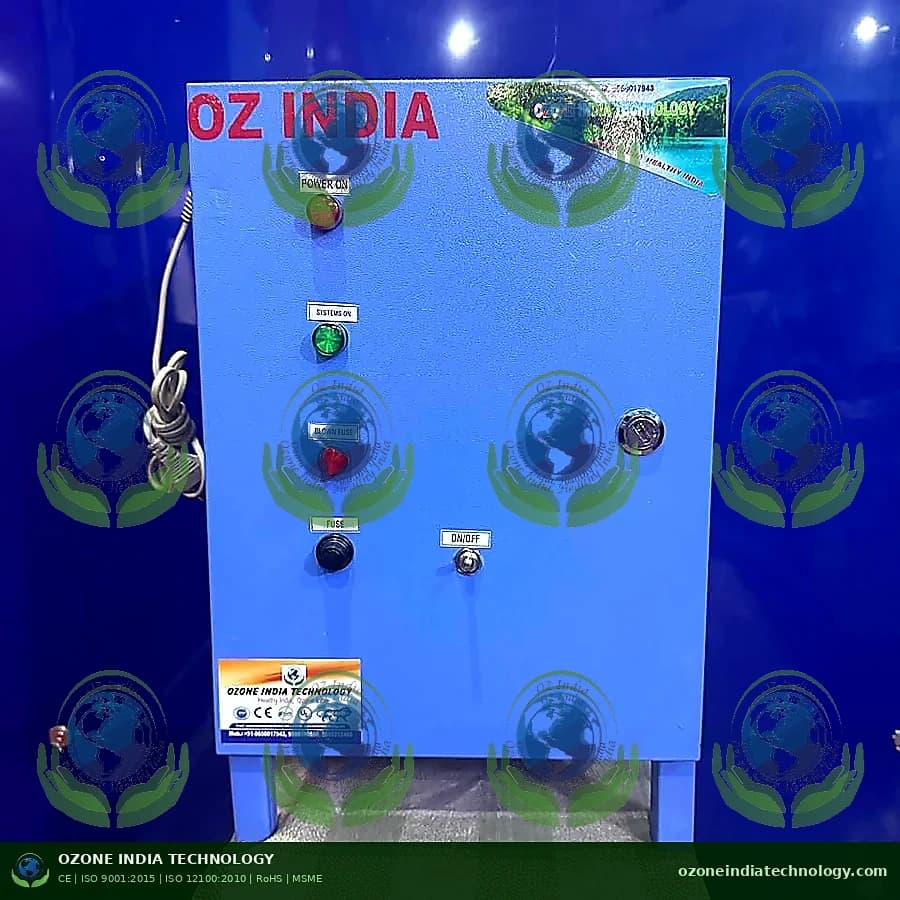
Ozone Generator — Light Industrial 5g/hr
Light industrial ozone generator for small water treatment plants and commercial disinfection
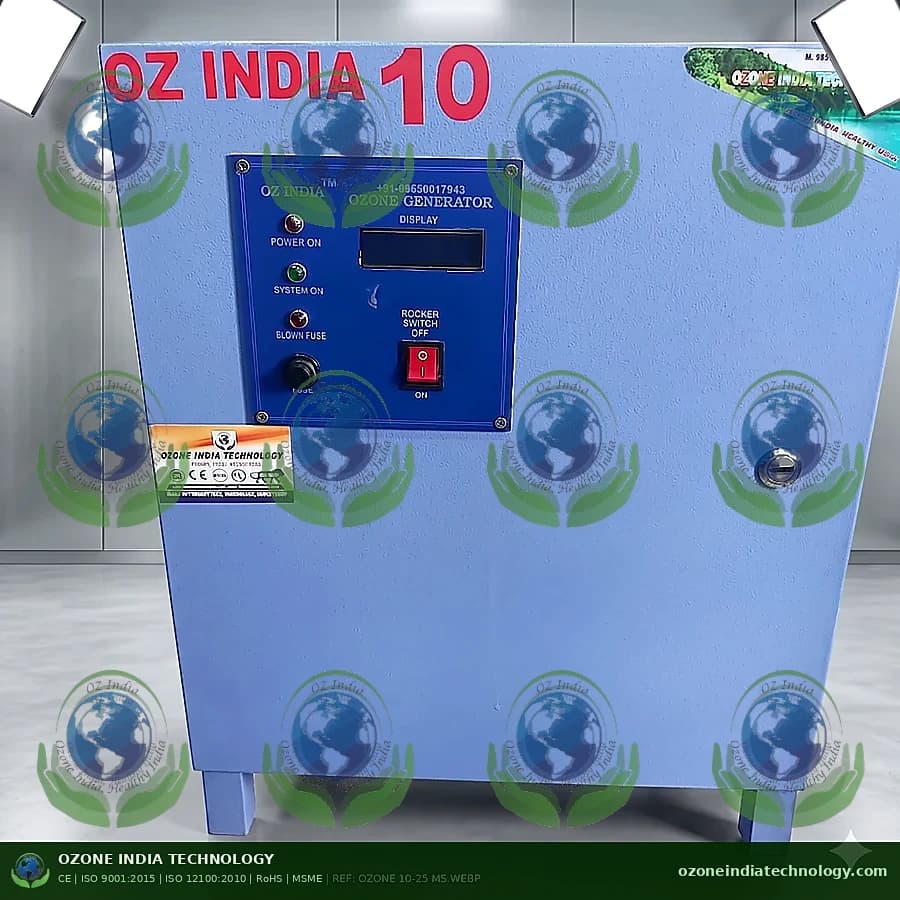
Ozone Generator — 25g/hr Industrial
Industrial 25g/hr ozone generator for medium STP ETP and water treatment plants up to 5 MLD
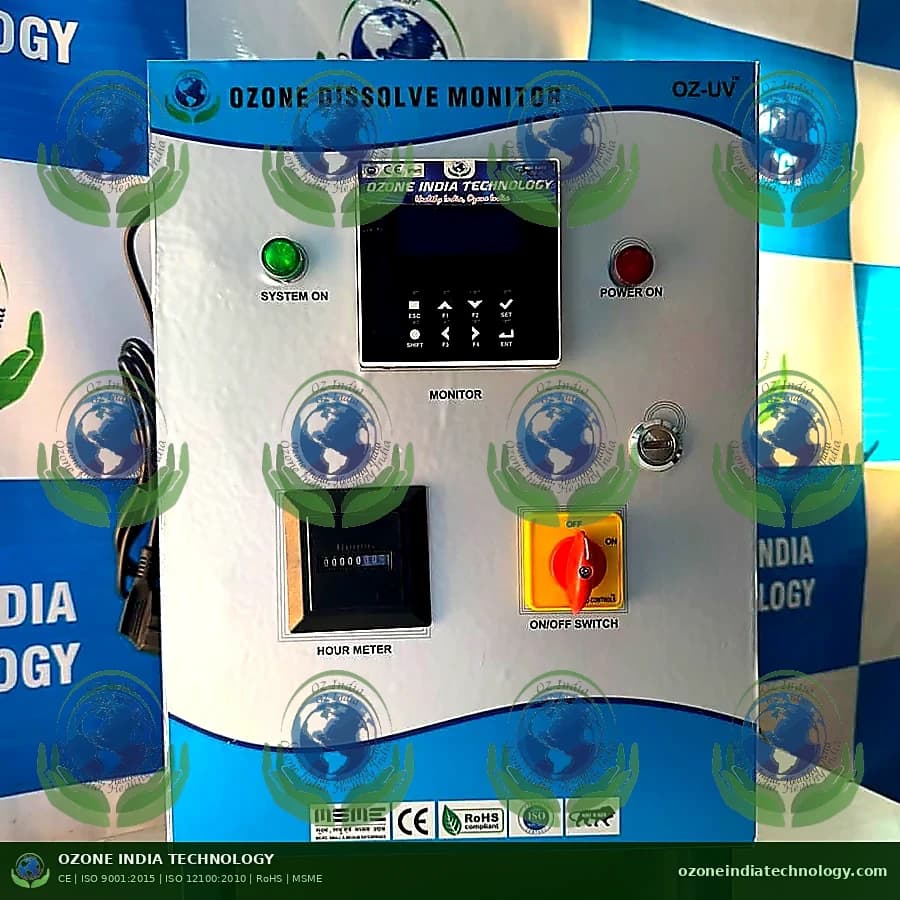
Ozone Dissolve Monitor with Contactor Support
In-line dissolved ozone monitor for water treatment process control with contactor support
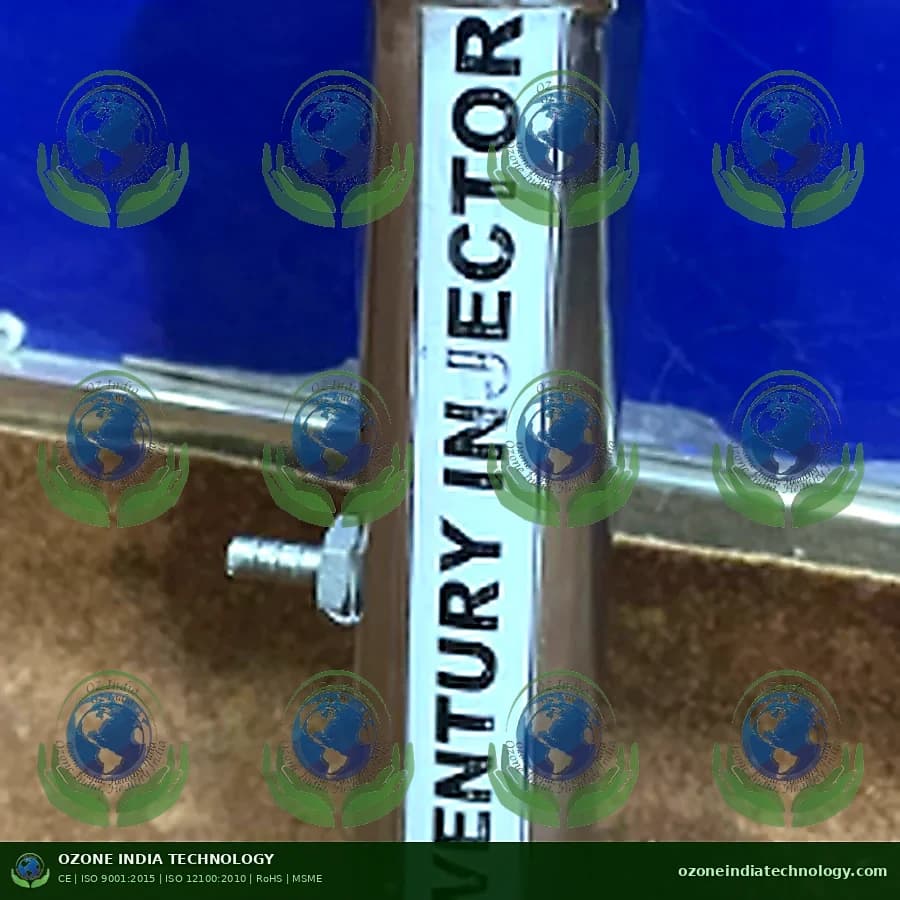
Ozone Venturi Injector
SS316L ozone venturi injector for efficient ozone dissolution into water under pressure
SIZING GUIDE
Installation & Sizing Guide
Sizing ozone for cooling tower water treatment begins with three measurements from the existing cooling tower: basin volume (m³), circulating flow rate (m³/hr), and a current water quality analysis (pH, TDS, conductivity, COD, ammonia, Legionella culture result). Ozone demand (g/hr) is calculated as: basin volume (m³) × target residual (0.5 ppm = 0.5 g/m³) × replenishment factor (3–5×/hour for active demand) + side-stream flow (m³/hr) × dose (1–2 g/m³). This formula typically yields ozone requirements of 0.5–1.5 g per m³ of basin volume per hour. A conservative safety factor of 1.5× is applied to the calculated demand to ensure residual maintenance during peak summer load and fouling periods.
For Indian commercial cooling towers, the following sizing table provides initial estimates. Cooling capacity 100–300 RT (basin 50–120 m³): OZ India 10–25 g/hr system. Capacity 300–800 RT (basin 120–350 m³): 30–50 g/hr system. Capacity 800–2000 RT (basin 350–900 m³): 75g/hr system. Capacity 2000+ RT or industrial process cooling (basin >900 m³): multiple 75–350 g/hr units in parallel. Data centres with high sensible heat loads and tight temperature control requirements benefit from oxygen-fed systems, which produce 2–3× higher ozone concentration per unit gas volume and achieve faster residual recovery after peak load swings.
Side-stream flow rate for the ozone contact loop should be 5–10% of total circulating flow, ensuring the ozonated side-stream thoroughly mixes with and treats the full basin volume within a reasonable turnover time. Contact vessel sizing targets 2–3 minutes retention time at the side-stream flow rate, ensuring adequate ozone-water contact for dissolution before return to the basin. OZ India standard contact vessels are available in 50L, 150L, 300L, and 600L capacities — pre-fabricated in 316L stainless steel with ozone-compatible EPDM gaskets, pressure rated to 6 bar, and supplied with inlet/outlet flanges matching standard pipe sizes.
The target ozone residual of 0.3–0.5 ppm in the cooling tower basin must be validated during commissioning using a portable dissolved ozone analyser and confirmed as stable over 72 hours of normal operation before the system is handed over. OZ India's commissioning engineer conducts Legionella culture sampling at commissioning (week 0), at 4 weeks, and at 12 weeks post-commissioning — comparing results to baseline samples taken before ozone installation. This three-point validation protocol, aligned with CDC MMWR guidance on Water Management Program validation (2021), provides documentary evidence of system efficacy for ASHRAE 188 compliance documentation and satisfies the risk assessment validation requirements of major hotel chains and hospital groups.
CASE STUDY
Legionella Elimination at 5-Star Hotel Cooling Tower, Aerocity Delhi
A 450-room international hotel at Delhi Aerocity operating under a European brand standard was facing mandatory ASHRAE 188 compliance verification for its annual brand audit. The hotel operated two 1000 RT cooling towers with a combined basin volume of 420 m³. Quarterly Legionella culture testing had returned positive results (>100 CFU/100mL) in two consecutive quarters despite conventional bromine-based biocide dosing and monthly hyperchlorination shock treatment. The hotel's facilities director requested a technically robust, auditor-acceptable solution before the brand audit scheduled six months later.
OZ India Technology conducted a water quality audit and specified two 50g/hr ozone generators (one per cooling tower) with oxygen feed from an existing bulk LOX supply, side-stream Venturi injectors, 300L contact vessels, and integrated dissolved ozone monitoring with BMS integration via Modbus TCP/IP. Installation was completed during a weekend maintenance window without interrupting hotel HVAC operation. Within 30 days of commissioning, basin residual stabilised at 0.4 ppm, Legionella culture results returned <10 CFU/100mL, and biofilm swab tests from tower fill showed 94% reduction in ATP (adenosine triphosphate) — the standard measure of biological activity.
At the 6-month brand audit, the hotel presented continuous BMS logs showing ozone residual maintained above 0.3 ppm for 99.2% of operating hours, Legionella culture results below detection at months 2, 4, and 6, and water savings data showing blowdown reduction of 62% due to CoC increase from 3.5 to 7.2. Chemical procurement costs for biocides fell by 78%. The brand auditor accepted the ozone system documentation as fully compliant with ASHRAE 188 Water Management Plan requirements. The hotel's annual water bill reduced by ₹24 lakh and chemical costs by ₹18 lakh — payback on the ozone installation achieved in 14 months.
FAQ
Frequently Asked Questions
Does ozone for cooling tower water treatment completely replace biocides?+
In most applications, ozone for cooling tower water treatment reduces biocide usage by 80–95% but does not necessarily eliminate all supplementary chemicals. Many operators maintain a very low-dose non-oxidising biocide (isothiazolinone at 25% of conventional dose) as a belt-and-suspenders backup during seasonal high-load periods. However, OZ India systems installed at several Delhi and Mumbai hotels have achieved full biocide elimination after 6 months of stable ozone for cooling tower water treatment operation, with ASHRAE 188 Legionella culture results consistently below detection. The decision to eliminate biocides entirely depends on site-specific risk assessment under the building's Water Management Plan.
What ozone residual is safe for cooling tower components — will ozone corrode the heat exchangers?+
At the recommended operating residual of 0.3–0.5 ppm dissolved ozone in the cooling tower basin, corrosion rates for copper, admiralty brass, and mild steel are not significantly elevated above conventional biocide-treated systems, provided pH is maintained at 7.5–8.2. Above 1.0 ppm, ozone can accelerate copper corrosion. OZ India systems include automatic dose control that prevents over-dosing. The dissolved ozone monitor provides a continuous safety check, and system setpoints are validated during commissioning with corrosion coupon tests at 30, 60, and 90 days per ASHRAE 188 monitoring requirements. Properly operated ozone for cooling tower water treatment runs indefinitely without accelerated corrosion.
How does ozone for cooling tower water treatment help achieve ASHRAE 188 compliance?+
ASHRAE 188-2018 requires a documented Water Management Plan (WMP) with control measures for Legionella, routine monitoring, and corrective action procedures. Ozone for cooling tower water treatment provides continuous residual disinfection — documented by the automated dissolved ozone data log — versus periodic chemical dosing, which leaves gaps between treatments. The continuous monitoring record is the single strongest piece of evidence for WMP validation. OZ India provides ASHRAE 188 WMP documentation templates with every ozone for cooling tower water treatment installation, covering control limits, monitoring frequency, corrective actions, and responsible party assignments.
What is the payback period for ozone for cooling tower water treatment in Indian commercial buildings?+
For a typical 500 RT hotel cooling tower in Delhi NCR, ozone for cooling tower water treatment system capital cost is ₹12–18 lakh. Annual savings break down as: water cost reduction (₹6–10 lakh at ₹50–80 per kL municipal tariff, based on 60% blowdown reduction), chemical cost elimination (₹8–14 lakh per year for biocides, scale inhibitors, and pH chemicals), energy savings from scale-free heat exchangers (₹3–6 lakh per year), and avoided Legionella-related liability (not quantified). Total annual savings typically range ₹17–30 lakh, yielding payback in 8–18 months. Mumbai and Chennai properties with higher water tariffs see faster payback.
Can ozone for cooling tower water treatment be installed on existing cooling towers without replacing the tower?+
Yes — ozone for cooling tower water treatment is a side-stream retrofit that connects to existing cooling tower pipework without any modification to the tower structure, fill, or basin. The ozone generator skid, contact vessel, and Venturi injector install in a plant room or equipment space adjacent to the tower, with PVDF pipework connecting to a side-stream takeoff on the circulating water pipe. OZ India has retrofitted ozone for cooling tower water treatment onto towers as old as 25 years. The only prerequisite is access to a power supply (415V 3-phase, 10–30A depending on system size) and 1–3 m² floor space for the skid.
How does ozone compare to UV for cooling tower Legionella control?+
UV disinfection inactivates planktonic Legionella in the side-stream flow but provides no residual effect in the basin — bacteria that bypass the UV unit or regrow in the basin are untreated. Ozone for cooling tower water treatment maintains a measurable basin residual (0.3–0.5 ppm), providing continuous disinfection throughout the basin and on all wetted surfaces. For this reason, ASHRAE 188 guidance references residual disinfectants (chlorine, bromine, ozone) as primary Legionella control measures, while UV is classified as a supplementary treatment. In practice, many high-risk applications (hospitals, aged-care facilities) combine ozone for cooling tower water treatment with UV for defence-in-depth Legionella management.
What monitoring is required for an ozone-based cooling tower water management programme?+
OZ India recommends the following monitoring schedule for ozone for cooling tower water treatment, aligned with ASHRAE 188-2018 and CDC MMWR Legionella guidelines: continuous dissolved ozone residual (automated, logged every 60 seconds); daily visual inspection of basin and tower fill; weekly pH and conductivity measurement (automated with OZ India system); monthly heterotrophic plate count (HPC) culture; quarterly Legionella culture (culture method per ISO 11731); annual full water chemistry analysis and corrosion coupon evaluation. OZ India's control panel logs ozone residual data to SD card with CSV export for inclusion in the annual Water Management Plan review documentation.
RELATED
Related Applications
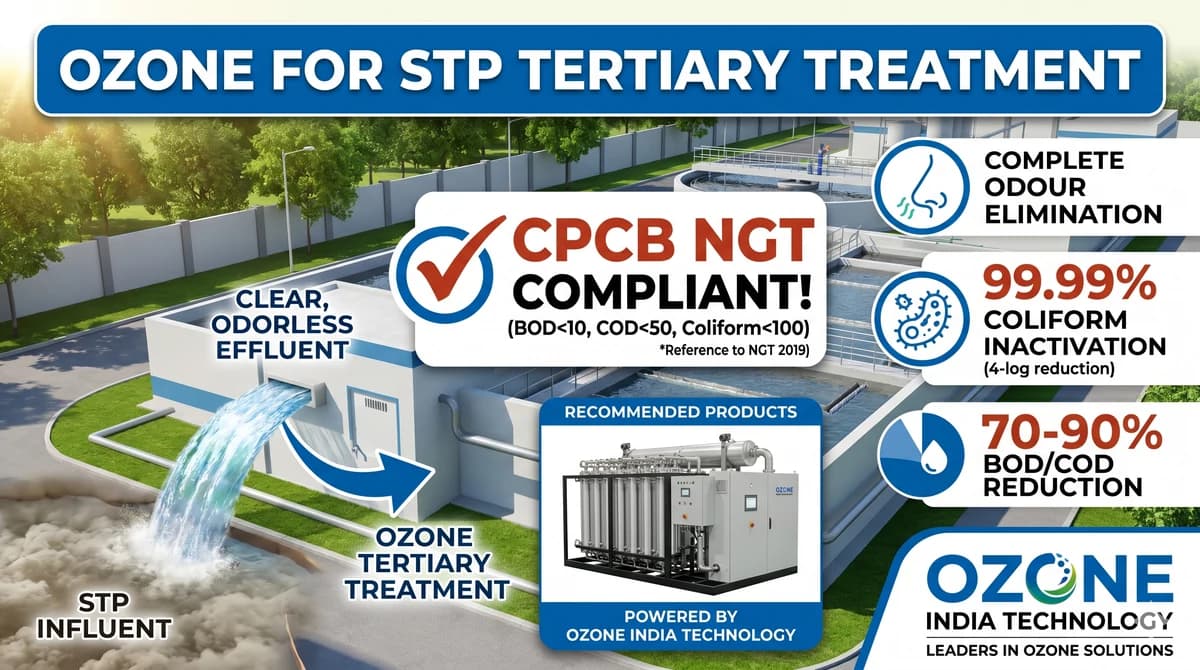
Sewage Treatment Plant (STP)
CPCB-compliant tertiary ozone disinfection — eliminating pathogens, BOD, and odour from STP effluent
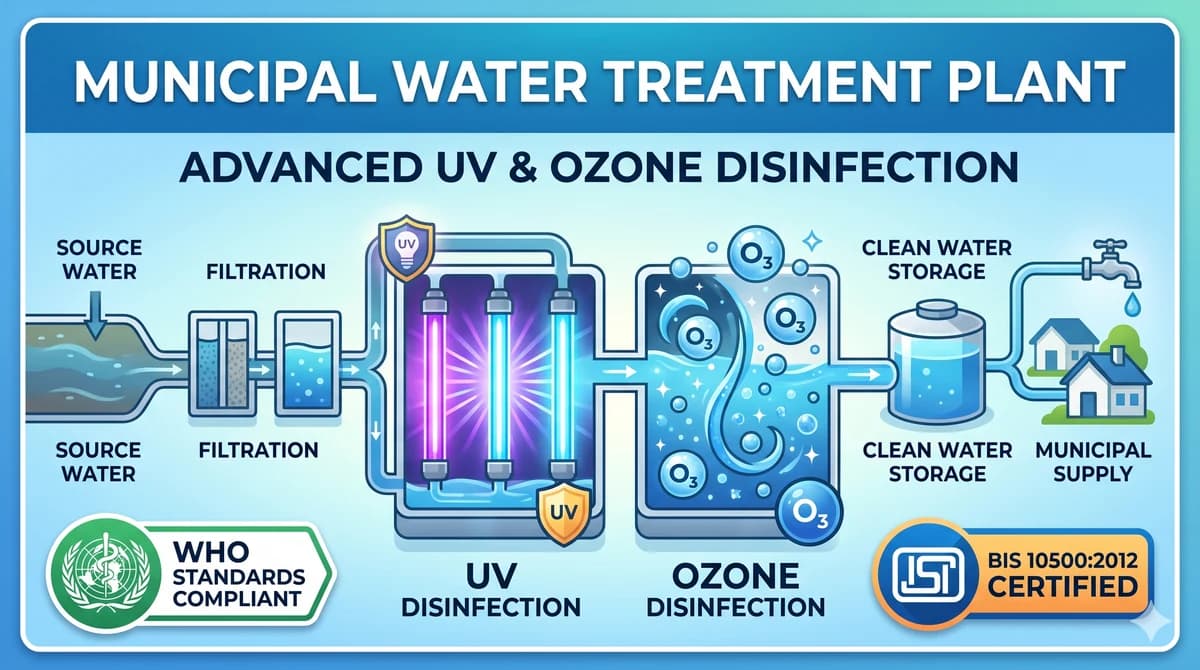
Water Treatment Plant (WTP)
Ozone and UV for superior raw water treatment — iron, manganese, taste, odour, and Cryptosporidium control
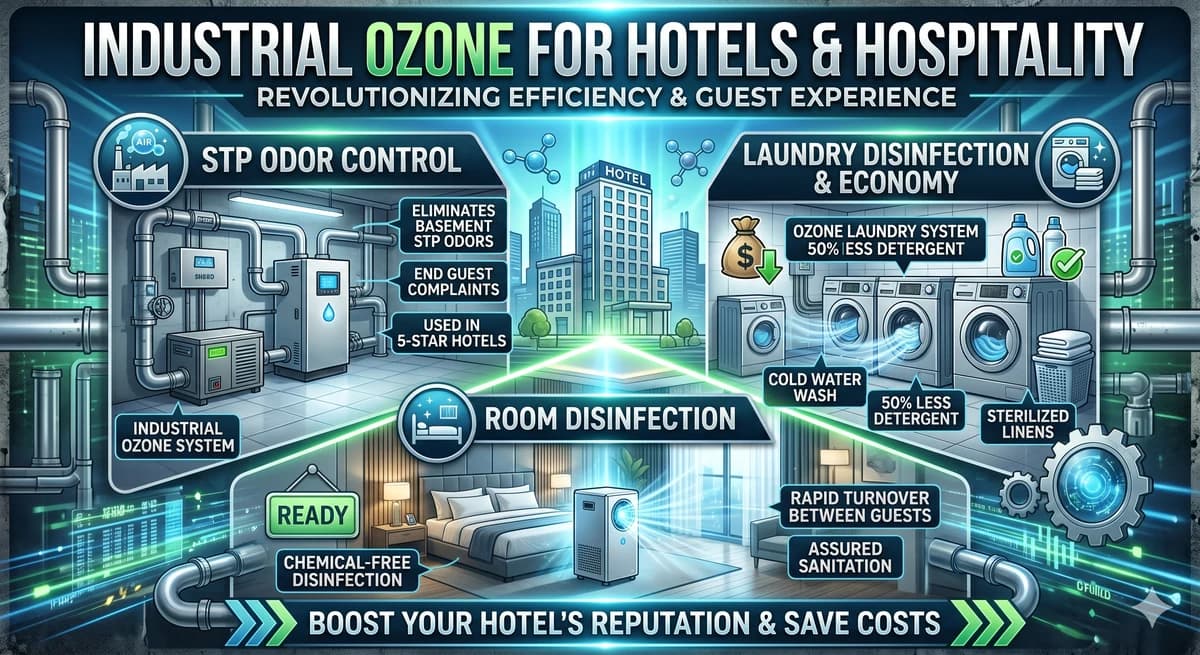
Hotel and Hospitality
Comprehensive ozone and UV solutions for hotel laundry, pool, kitchen, and indoor air quality
Have a question about Cooling Tower?
Talk to our engineers — free technical consultation
WhatsApp Us Now