
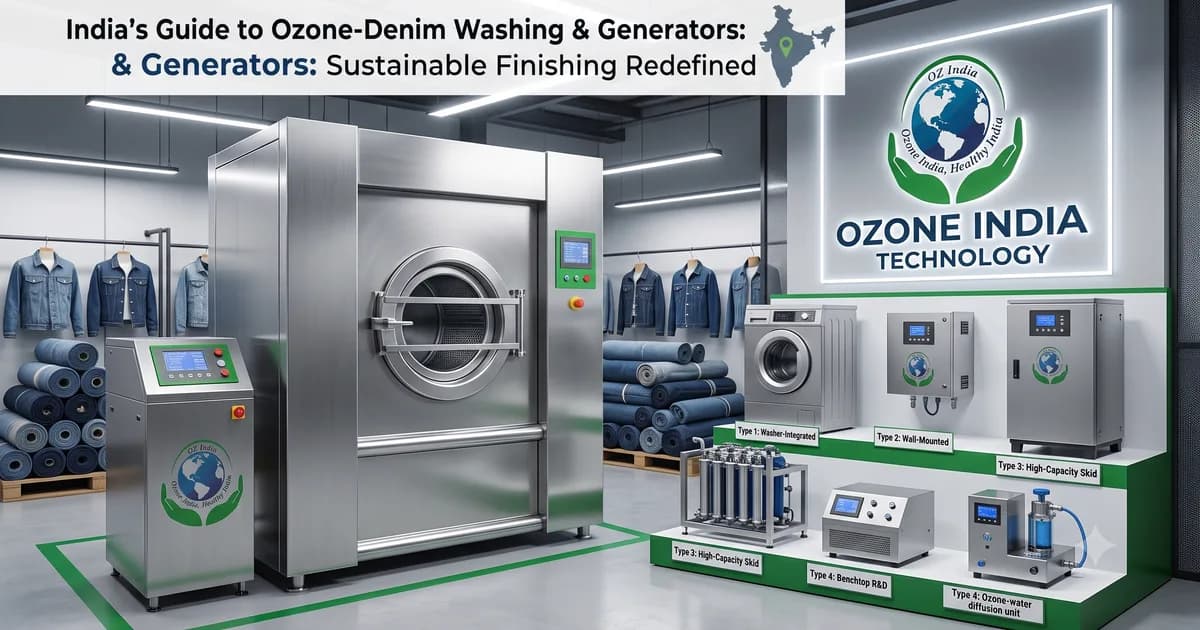
The ozone denim machine is transforming denim finishing in India, Bangladesh, Turkey, and across the global garment supply chain. Where conventional stone wash requires pumice stone, potassium permanganate, hot water, and 2–3 hours per cycle, the ozone denim machine produces the same faded stone-wash appearance in 30 minutes — using no stones, no chemicals, and 70% less water. This guide explains how ozone denim technology works, what savings it delivers, GOTS and ZDHC compliance, and how to select the right ozone denim machine for your production volume.
How the Ozone Denim Machine Works
Indigo-dyed denim gets its iconic faded appearance through one mechanism: the controlled removal of indigo dye molecules from the surface fibres of the denim fabric. In conventional stone wash, pumice stones physically abrade the fabric surface, breaking off dye-loaded fibre tips. In the ozone denim machine, high-concentration ozone gas (50–100 ppm) inside a sealed rotating drum achieves the same effect chemically — by oxidising the chromophore groups in indigo dye molecules.
The ozone denim machine process:
- Ozone generation: A corona discharge ozone generator produces ozone gas at high concentration
- Garment loading: Denim garments are loaded into the sealed stainless steel drum
- Ozone injection: Ozone gas is introduced into the sealed drum at controlled concentration
- Dye oxidation: Ozone attacks the chromophoric azo bonds in indigo dye molecules, breaking them into smaller, colourless organic compounds
- Effect development: Controlled oxidation replicates stone-wash fading uniformly across all garment surfaces
- Off-gas treatment: Remaining ozone is destroyed by the integrated ozone destructor before venting
- Garment discharge: Faded garments are discharged — no wet rinsing required for dry ozone process
The ozone denim machine from Ozone India Technology uses corona discharge technology with precise concentration control — the digital ozone controller maintains ±5 ppm accuracy throughout the cycle, ensuring reproducible fading effects batch-to-batch.
Ozone Denim Machine vs Conventional Stone Wash — Resource Comparison
Ozone Denim Effects — What Can Be Achieved
The ozone denim machine is not limited to replicating conventional stone wash. By varying ozone concentration, cycle duration, and drum speed, the following denim effects are achievable:
Vintage Fade (Light): 50–60 ppm ozone, 10–15 minute cycle. Subtle lightening of the denim body, maintaining the indigo character. Used for premium "naturally worn" looks.
Stone Wash (Medium): 70–80 ppm ozone, 25–35 minute cycle. Strong overall fading that matches conventional pumice stone wash appearance. Most common commercial effect.
Bleached / Snow Wash (Heavy): 90–100 ppm ozone, 45–60 minute cycle. Near-white fading of fabric body with preserved indigo in seams and folds. Replaces potassium permanganate spray and hypochlorite bleach.
Localised Effects: When combined with laser etching or spray masking, the ozone denim machine creates localised fading patterns (whiskers, honeycombs, thigh fade) with precise repeatability — impossible with stone wash.
All effects are reproducible with ±5% consistency using the digital concentration controller, eliminating the batch-to-batch variation inherent in conventional stone wash where pumice stone hardness, drum load, and water chemistry all introduce variation.
Savings from Ozone Denim Machine
For a mid-scale denim unit processing 2,000 garments per day, ozone denim machine technology delivers these measurable annual savings versus conventional stone wash:
| Cost Category | Conventional Stone Wash | Ozone Denim Machine | Annual Saving |
|---|---|---|---|
| Water (m³/day) | 80 m³ | 24 m³ | ₹8.4 lakh/yr |
| Energy (kWh/day) | 600 kWh | 240 kWh | ₹5.5 lakh/yr |
| Pumice stone | ₹120/100 garments | Zero | ₹8.8 lakh/yr |
| KMnO₄ spray | ₹85/100 garments | Zero | ₹6.2 lakh/yr |
| ETP operating cost | High load | 65% reduced | ₹4.0 lakh/yr |
| Total annual saving | ₹32.9 lakh/yr |
Capital cost of the Ozone India Technology ozone denim machine: ₹15–25 lakh depending on drum capacity. Typical payback: 6–9 months.
Denim Finishing Cost Breakdown — Conventional vs Ozone Denim Machine (₹/100 garments)
GOTS, ZDHC, and Export Compliance
The ozone denim machine directly addresses the two major compliance challenges for Indian denim exporters:
GOTS (Global Organic Textile Standard)
GOTS requires that textile processing uses permitted substances only. Potassium permanganate and pumice stone (which leaves silica dust in garments) both present challenges under GOTS Annex 6. Ozone is permitted as a processing aid under GOTS because it decomposes to oxygen with zero chemical residue. GOTS-certified manufacturers in India using the ozone denim machine maintain certification without the need for permitted substance waivers.
ZDHC Roadmap to Zero
The ZDHC programme — mandatory for suppliers to H&M, Inditex, Nike, PVH, and other major brands — restricts potassium permanganate as an "unrestricted use" substance due to environmental hazard. The ZDHC MRSL (Manufacturing Restricted Substances List) places heavy scrutiny on permanganate residues in effluent. Ozone produces no residue and generates no ZDHC-restricted byproducts in wastewater.
BIS and CPCB ETP Compliance
Indian denim ETPs must meet CETP colour and COD discharge standards. The ozone denim machine reduces ETP influent load by 65% through the dry ozone process — and when combined with a separate ozone generator for ETP colour removal, full compliance becomes straightforward. The effluent treatment plant application page and ozone generator 10-25g/hr for textile ETP cover the ETP ozone sizing.
Ozone vs Conventional Denim ETP Load Reduction (%)
Ozone Denim Machine Selection Guide
Ozone India Technology ozone denim machines are available in drum capacities from 20kg to 500kg per batch, matched to ozone generator output:
| Drum Capacity | Batch Size | Cycle Time | Daily Throughput | Generator |
|---|---|---|---|---|
| 20 kg | 80 garments | 30 min | 960 garments | 10g/hr |
| 50 kg | 200 garments | 30 min | 2,400 garments | 25g/hr |
| 100 kg | 400 garments | 30 min | 4,800 garments | 50g/hr |
| 200 kg | 800 garments | 35 min | 8,000 garments | 100g/hr |
| 500 kg | 2,000 garments | 40 min | 16,000 garments | 200g/hr |
All Ozone India Technology ozone denim machines include: integrated ozone generator, drum with PVDF-sealed shaft, ozone concentration controller, integrated ozone destructor, ambient air safety monitor with automatic shutdown, and CE certification.
Integration with Existing Denim Wet Processing Lines
The ozone denim machine from Ozone India Technology is designed for standalone operation or integration into existing wet processing lines. In standalone mode, the drum replaces a single conventional washing machine position — minimal space requirement. In line integration, the ozone machine processes garments between the washing and dyeing stages, or as a final finishing step.
The ozone process is compatible with:
- Post-wash finishing (enzyme wash → ozone fade → rinse → softener)
- Pre-wash treatment (ozone fade → enzyme wash → rinse)
- Combination with laser finishing (ozone overall fade → laser localised effects)
For integration design and line layout advice, contact the Ozone India Technology textile team at [email protected] or through the contact page.
Conclusion
The ozone denim machine is the definitive solution to the cost, compliance, and sustainability challenges of conventional denim stone wash. With 70% water saving, 60% energy saving, complete elimination of potassium permanganate and pumice stone, and 30-minute cycle times, the ozone denim machine from Ozone India Technology delivers payback in 6–9 months for a mid-scale denim unit. GOTS and ZDHC compliance, CE certification, and integration with ETP ozone treatment make the system complete for Indian manufacturers supplying to global brands. Contact Ozone India Technology at +91 96500 17943 or WhatsApp for a demonstration and quotation.
